




Test Drive: Detroit Diesel's DD13 and DD15 - Driving With SCR
Call it pre-need planning. When Detroit Diesel rolled out its DD15 engine in October 2007, the company said it was a clean-sheet design, birthed EPA-'07-compliant and 100 percent ready for EPA-201

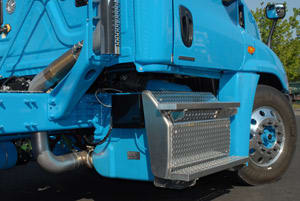
This 2011 Cascadia with EPA 2010 DD15 engine, above, is a customer demo unit already in revenue service. We drove it first. We liked it a lot.
Call it pre-need planning. When Detroit Diesel rolled out its DD15 engine in October 2007, the company said it was a clean-sheet design, birthed EPA-'07-compliant and 100 percent ready for EPA-2010
. Much of the fuss surrounding the use of selective catalytic reduction to meet 2010 standards may have overshadowed the fact that this engine - and the DD13 and DD16 engines like it - will not change come 2010.
Engineering tweaks have been performed since the launch, software upgrades, changes in material, component design, etc., but all are part of the natural evolution of any complex machine. Readers may recall my initial impressions of the DD15 back in October '07 were very favorable, so what I've been waiting for is the addition of the 2010-related hardware. I can say confidently that DD15's on-road performance hasn't changed a bit, and may have improved in ways I can't quantify in a three-hour test drive. I should say, too, that I suffered no ill effects from my brief exposure to diesel exhaust fluid.
All the new stuff, of course, is downstream of the turbocharger - software, controllers, sensors, etc. notwithstanding. If there's any noticeable difference in the engine, I think it's even quieter than previous versions I've driven. At the Engineering Test Center garage in Portland, Ore., techs had a truck hooked up to some monitoring equipment. I walked within 20 feet of the truck - which was running - and all I could hear was a subtle rumble and the clicking of what I presume were the injectors, valves, and things under the rocker cover. It was amazingly quiet, I tell you, and equally so out on the road at speed.
Aftertreatment system
For those who never thought an exhaust system had a place in a test drive ... welcome to 2010. The exhaust/aftertreatment system is very much a part of the engine now, and a big consideration for chassis fitters, body builders, and truckers.
There was much discussion in the early years of SCR development about where they'd hang all that new hardware. It's been resolved. Daimler Trucks North America will offer three aftertreatment configurations based on chassis requirements and the intended application.
In addition to the Blue-Tec 1-Box system, a two-box vertical system called 2V2 features separate SCR and diesel oxidation catalyst/diesel particulate filter units mounted vertically behind the cab. This configuration lends itself to applications where frame space and ground clearance are larger concerns than a clear back-of-cab area. It permits larger fuel tanks and a right-hand PTO option. It's available on day cabs in left- and right-hand mounting. The back-of-cab protrusion is said to be similar to the EPA '07 vertical DPF.
There's also the 2HV system - 2-box, horizontal DPF/vertical SCR - designed for fleets demanding large-capacity fuel tanks on shorter, 220- to 230-inch-wheelbase tractors. It'll be available on day cabs and sleeper cabs, but not on 58/60- and 70/72-inch models.
"If we hadn't chosen SCR at a very early stage, we wouldn't be ready with these various configurations now," said Randy DiBortoli, Daimler program manager for EPA 2010. "It's taken four years to get this packaging right."
Cummins will supply engines with proprietary aftertreatment systems, different from those used on Detroit Diesel engines.
DEF tanks
Also new for 2010 is the tank for the diesel exhaust fluid. They're mounted on the left-hand side under and just behind the cab. The fill necks are fitted with a 19mm orifice so you can't get a diesel pump nozzle in there. There's also a magnetic lock ring fitted into the filler neck. DEF dispensing pumps will need to detect this ring before the fluid will flow, preventing DEF from being pumped into a diesel fuel tank.
The tanks have a temperature-controlled coolant-loop heater to keep the DEF warm in winter, and fluid lines running from the tank to the metering unit are electrically heated. A transfer pump is located on the side of the DEF tank.
The Environmental Protection Agency has granted a 70-minute grace period at startup in cold weather before DEF injection is required. On the coldest days, when the DEF might be frozen, dosing won't be required until the fluid thaws. During recent winter testing at ambient temps of minus 20 and minus 30 degrees, even with a cold-soaked, frozen-solid DEF supply, the system was dosing in just 50 minutes (tested using EPA guidelines). Real-world operating conditions will see the fluid heated faster in most cases.
In other words, you won't be sitting idle waiting for the tank to thaw. You can start up, warm up for a few minutes, and then drive away.
Drive time
I split my day of driving between three trucks on two laps of the 165-mile loop Daimler uses to test trucks. It's a combination of four-lane Interstate, two-lane road with mountain grades, and stop-and-go urban traffic. It runs east out of Portland on I-84, around Mt. Hood on Highways 26 and 35, and back into the city from the south.
I got to drive three engines, actually, two DD15s and a DD13. My first drive was the red Cascadia - a customer-spec'd demo unit awaiting delivery. Its DD15 was mated to a 9-speed manual transmission, attached to a rather tall set of rear ends. It clearly wasn't set up for this terrain. It cruised 1,150 rpm at 55 mph - 150 rpm above peak torque - which is rather low for the DD15's sweet spot. It did better at 65 mph, but Oregon has a 55-mph speed limit.
On the first loop, I ran alongside a day cab equipped with a DD13 and a 10-speed, which actually out-pulled the gear-bound DD15 I was driving on the uphill side of the loop - though not through any fault of the bigger engine. I couldn't keep the engine within the proper torque range for the pull (1,100-1,200 rpm) at an appropriate road speed because the gear steps of the 9-speed were so vast. Dropping a gear put the engine speed too high, or the road speed too low. It's a flatlander, that truck.
I switched to the day cab halfway around the loop, on the downhill side, and have to say the difference in driveability was stunning. The closer steps of the 10-speed and the more reasonable 3.70 gears made all the difference.
Later in the day, I made the entire loop in a third truck, equipped with a DD15, a 10-speed Eaton UltraShift, and even taller gears than the first one. 2.64:1. A direct-drive transmission and low-pro wide-base single drive tires leveled the playing field. It worked like a charm, too.
The second DD15 and the DD13 both did a remarkable job in the hills, and pulled like champs in their peak torque ranges. Likewise on the downside, the engine brake was so strong at higher rpm that it was slowing the truck down on the grade. Switching the Jake to position 2 was the solution.
The DD13 boasts all the same features as its bigger brother (it's essentially the same engine, just a smaller package), including the broad, flat torque curve. You actually gain about 150 pounds-feet of torque as the revs fall from 1,400 to 1,100 rpm, meaning it pulls harder as the revs drop. Throttle and turbo response are like no other North American engine - in my opinion - and will please performance-demanding drivers immensely.
Driving with SCR
So, what about the SCR implications? There weren't any. The system is totally transparent to the driver. There's no need to manually intervene at any time, no switches to flip or gauges to watch -- save for the tank level for the diesel emissions fluid. So, 2010 is something of a non-event in that regard.
Another OEM has stated its engines will not need active regen events in normal service. Detroit Diesel is being a little more circumspect. DiBortoli told me that in over-the-road service, passive regeneration will continue as it always has - completely unbeknown to the driver, and driven entirely by exhaust temperature. He said active regen events will occur under conditions where
More Equipment
Engine Technology Forum Launches SCR, DEF Resource Center Amid Emissions Debate
The Engine Technology Forum’s new online hub aims to provide fleets, policymakers, and equipment owners with fact-based information about selective catalytic reduction technology, diesel exhaust fluid and emissions compliance.
Read More →
Prime Inc. to Open $7.9M Flagship Used-Truck Dealership
A new driver-focused facility to sell Prime Inc's used trucks and trailers will be the first purpose-built location in the company's history.
Read More →
Lessons Learned About Alternative Fuels: Start Small, Stay Flexible
Practical advice on adopting alternative fuels and ZEVs from HDT's 2026 Top Green Fleets, from renewable diesel and natural gas to electric trucks.
Read More →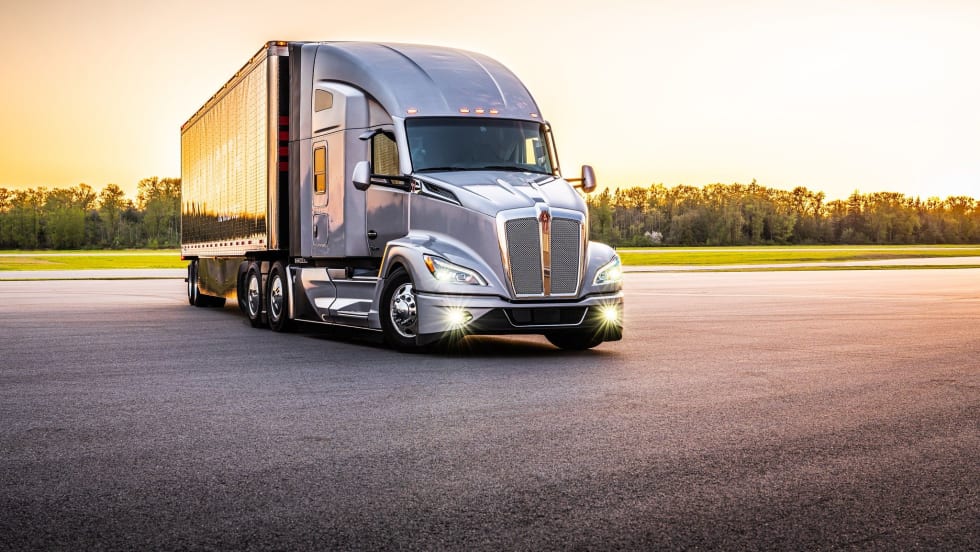
Kenworth Names Peter Ahrens General Manager
Leadership changes at Kenworth take effect July 1 as the OEM promotes two longtime Paccar executives to key management roles.
Read More →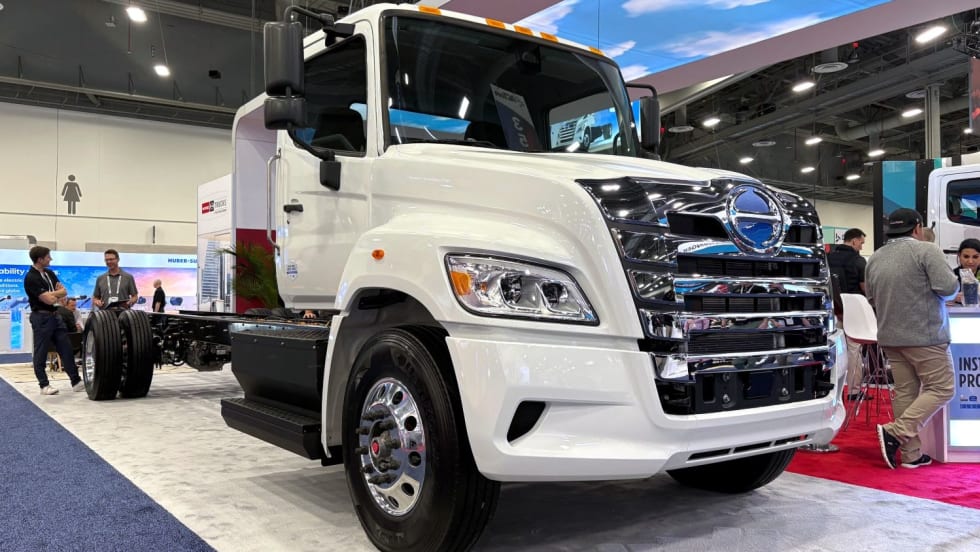
Hino Adds Electric Class 6/7 Truck
Hino says the Le Series is an important step in the company's efforts to reduce environmental impact and support its customers’ sustainability goals.
Read More →
ACT Expo 2026: Highlights in Photos
The 2026 Advanced Clean Transportation Expo featured a broad range of commercial vehicle technologies, from EVs to autonomous trucks to the latest diesel and alternative-fuel engines.
Read More →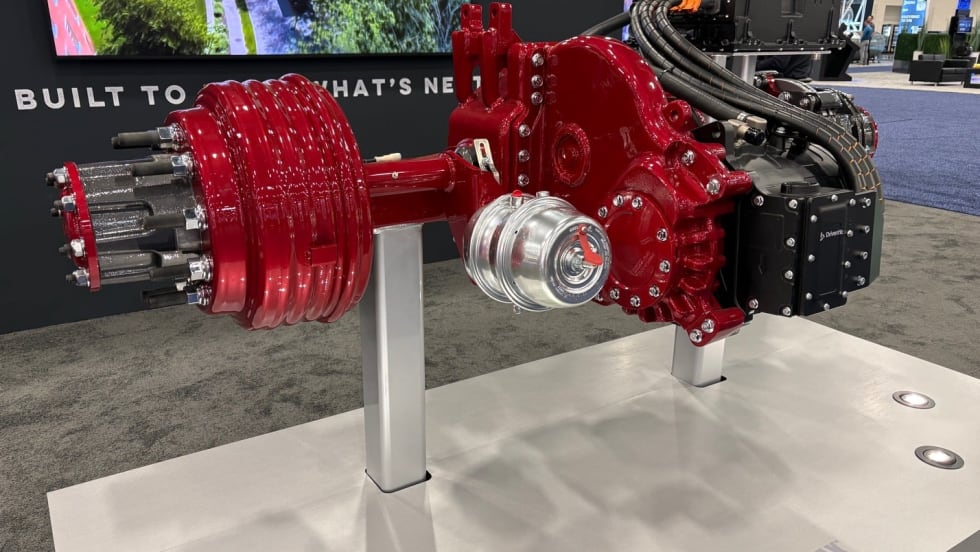
Hendrickson Debuts Electraax E-Axle for Medium-Duty Trucks
Developed with Driventic, Hendrickson's new integrated e-axle is designed to improve efficiency, reduce weight, and extend range in Class 6-7 EV applications.
Read More →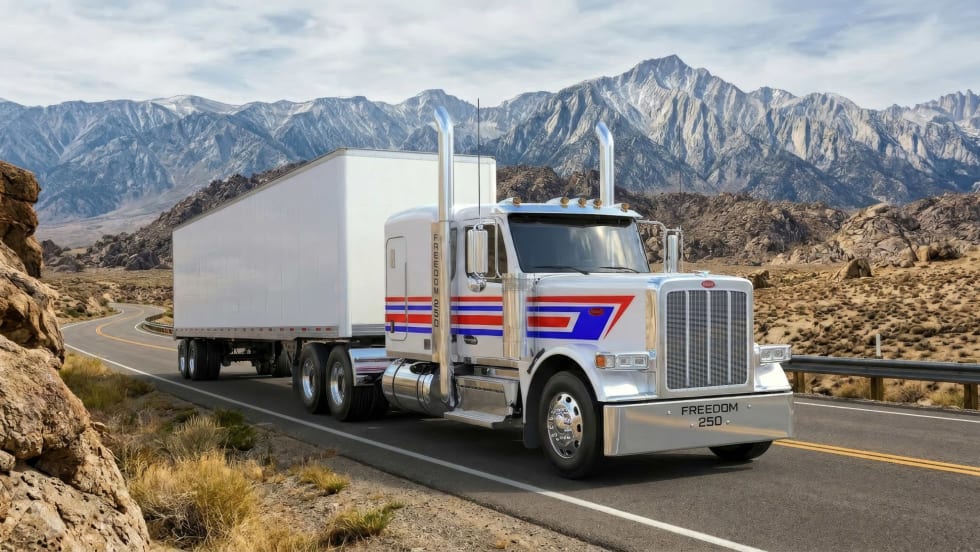
Peterbilt Unveils Freedom 250 Special Edition Model 589
Peterbilt’s just-announced limited-run patriotic Model 579 tractor celebrates America’s 250th birthday with custom styling and premium features.
Read More →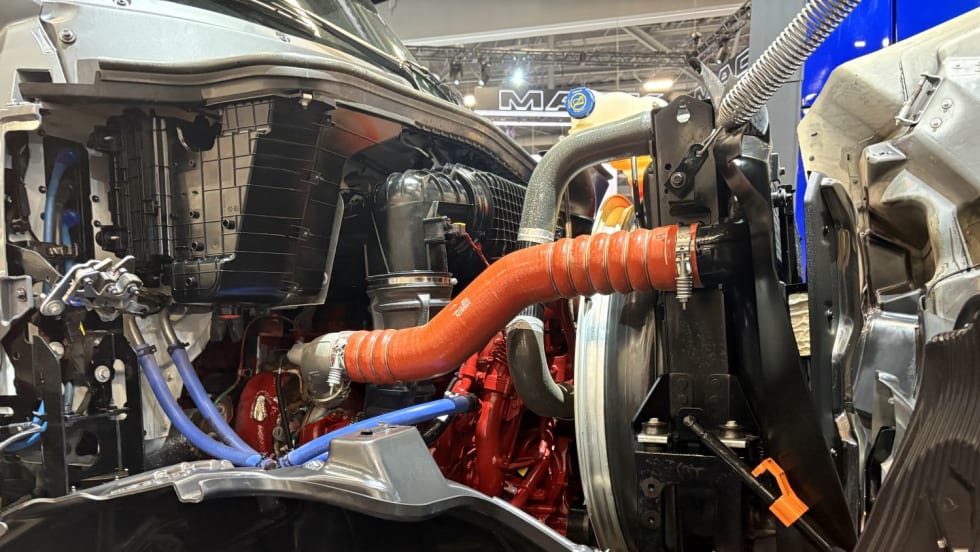
Mack Unveils EPA 2027-Compliant MP13 Engine With More Power, Better Fuel Economy
Along with unveiling its EPA 2027-compliant MP13 engine, Mack outlined powertrain changes across its Class 6-8 lineup, including new Cummins-based X10 engines.
Read More →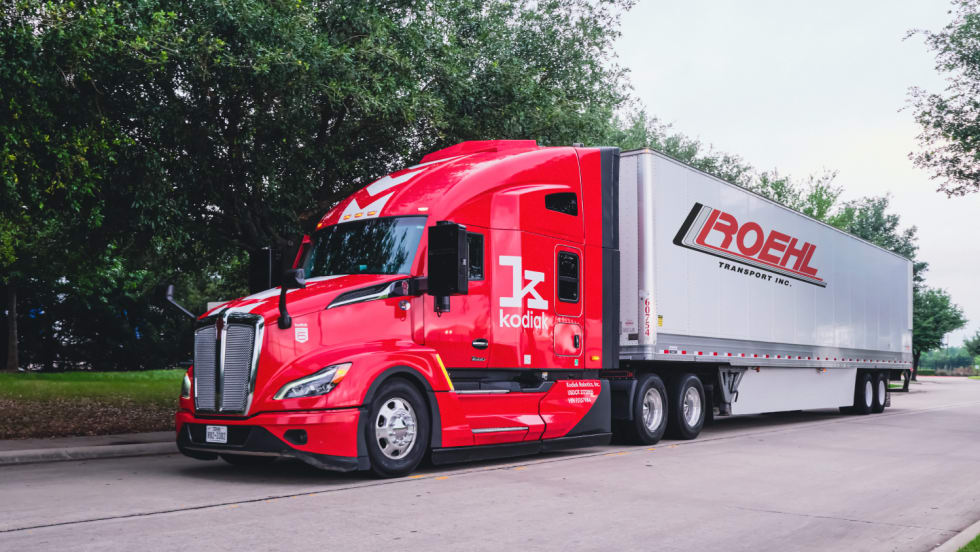
Kodiak and Roehl Transport Launch Autonomous Route Between Dallas and Houston
Kodiak AI and Roehl Transport have begun autonomous freight operations on a regular Dallas-Houston route, marking another step toward Kodiak’s planned driverless launch by the end of 2026.
Read More →