





As we head into winter, springtime may seem far away. But it's the aftereffects of winter's messy roads and de-icing compounds that lead to one of the sounds of spring: drivers complaining about their fifth wheels.
It's as perennial as grass. The truth is, while fifth wheels generally require little maintenance, winter's messy roads and the ice-melting compounds in use today can bind up the locking mechanisms, making them difficult to disengage, or worse, difficult to lock. Either way, you're going to hear about it.
"They come through the winter just fine because water is a great lubricant," says Rob Nissen, SAF Holland's manager of technical services and training. "But when spring hits and all that sodium and magnesium chloride is left behind to dry everything out, that's when the lock mechanisms start to bind up."
That's why SAF Holland recommends a seasonal spring PM service that addresses the underside of the fifth wheel, including a cleaning, visual inspection, lubrication, and an adjustment check. Following a steam-cleaning to remove built-up grease and winter contamination, a visual inspection should be carried out to identify cracked, missing, or broken parts, like springs, cotter pins, etc.
Drivers will usually let you know if there are coupling issues, but they may not be aware of an adjustment issue, particularly if it's minor. CVSA's out-of-service criteria for horizontal movement between the upper and lower couplers is 1/2 inch (393.70). A driver should be able to sense that, but don't count on it. Most OEs recommend something like 1/32 to 1/16 inch of slack, making the maintenance standard a lot tighter than CVSA's OOS standard. If any question exists about free play in the kingpin locks, the spring PM is a good time to address it.
This whole procedure (except the adjustment) would take someone who knows what they are doing about 10-15 minutes after cleaning the underside and removing the old grease, Nissen says. But there are some keys to make sure it's done right.
For instance, old grease can be a problem. It tends to build up in the throat area of the fifth wheel and around the locking mechanism. Over time, that old grease collects crud from the road, and all sorts of other debris off the underside of the trailer.
"A grease is made up of a lubricant contained in a soap. When the lubricant package is depleted, what's left is just the gooey soap," says Al Anderson, Jost International's director of national accounts. "That material gets all crusty and cruddy down there - especially in the throat because that's kind of a dead-end for grease - and can cause the lock mechanism to operate sluggishly or perhaps not work properly at all."
With the old grease removed, using a proper SAE standard 2-inch test kingpin, insert the tester into the throat of the fifth wheel and verify proper lock function. It should take minimal effort to engage the locks, and the release handle should slip easily (and securely) into its locked position.
Always use a test kingpin, not just any trailer that's handy. The lock tester must be a standard dimension to ensure accurate adjustment.
This isn't a place for retired kingpins. "You take an old kingpin off of a decommissioned trailer, and it probably won't be a standard SAE dimension of 2 inches anymore, and that's going to screw up your adjustment," Nissen says. "If it's worn down, and you adjust for that diameter, a proper-sized kingpin will be too tight in the jaws. That will cause at least excessive wear on the newer kingpin, and maybe even difficulty in locking the jaws."
A typical new lock tester costs about $150. In other words, there's no excuse for not using the right tool. But still ...
Nissen recalls a Tennessee-based fleet that experienced a rash of de-coupling events a few years ago, right after the fifth wheels had been serviced. As it happened, the mechanics had fashioned a tester from an old kingpin they had lying around, welded to a piece of pipe. It was about 1/8 inch shy of the SAE diameter, Nissen says. That caused the adjustment to be too tight.
"They were dropping trailers left and right," he says. "The good news was they weren't even making it out of the yard."
When he visited the fleet to check out the problem, he found a brand new tester in the tool crib with the parts tag still on it. It had never been used. Imagine what might have happened if one of those unscheduled decoupling events had happened out on the street and subsequently wound up in court.
In that same vein, Nissen says technicians - and drivers, for that matter - should never attempt to adjust a fifth wheel to a specific trailer.
"If there is excessive slack in the locks with only that trailer, that's an indicator the trailer might have a worn kingpin," he cautions. "One might be tempted to make the adjustment to take out the slack, but that could compromise the hook-up to another trailer."
Make any necessary adjustments as per the manufacturer's instructions, and retest with the SAE tester. Then, follow the lubrication recommendations.
Rebuild or Replace?
There are no rubber-stamp recommendations on when a fifth wheel might need to be rebuilt or replaced. Rebuild or replace intervals are driven by type of service and application, rather than time or mileage.
More severe applications demand more frequent service. In linehaul or truckload service, you probably won't ever need to do more than routine maintenance, assuming a three- to four-year trade cycle of 500,000 to 600,000 miles. Some LTL carriers keep a truck in service a million miles or more, so they'll probably be looking at a rebuild somewhere later in its life.
"Carriers with higher utilization rates, or those with a high number of drop-and-hook cycles, will see more wear over time," says Jost's Anderson. "Carriers working in urban environments with lots of stop and start driving, tight turns, and lots of docks to back up to will see higher wear rates than an over-the-road truck. You're putting a lot more stress on that coupling."
Whether to replace or rebuild is another matter. An older top plate may not hold a rebuild kit if it's worn to the point it won't hold new parts. If your top plate is okay, Anderson says cost will drive much of the repair/rebuild decision.
"If you could replace it at or close to the same cost as rebuilding it, and get a new component on the truck with warranty, why wouldn't you? You've got to consider labor costs for either procedure too, as well as possible inventory costs, or downtime, if you're waiting for parts," he says.
At, say, $500 for a whole new top plate, compared to maybe $350 for a rebuild kit that demands four hours of a mechanic's time, it's close to a wash, Anderson says.
Top-plate wear could be an issue, depending on the application. Wear in the throat area, called keyhole wear, is caused by friction between the trailer kingpin and the throat of the top plate. Jost offers a replaceable cushion ring that fits into the locking area. The ring wears rather than the expensive cast top plate, eliminating a major replacement because of throat wear.
The need to replace or rebuild is often not a decision based on schedule. Problems typically show up during a PM inspection or are driven by driver complaints or difficulties in the field, Anderson says.
"These things are perceived as a piece of safety equipment - you don't want a trailer breaking away while it's going down the road," he says. "Depending on the nature of the problem, it might be an out-of-service item, or it might need a cleaning and adjustment. Either way, it's probably not a decision to be put off for another day."
SAF Holland's Nissen says there's a trend toward keeping equipment longer today, and it's become more prevalent in the past three years than the previous 25. "Fleets are hanging on to equipment longer and longer," he says, and that's for
Crud Catcher: Fifth Wheel Maintenance
As we head into winter, springtime may seem far away. But it's the aftereffects of winter's messy roads and de-icing compounds that lead to one of the sounds of spring: drivers complaining about their fifth wheels
More Maintenance
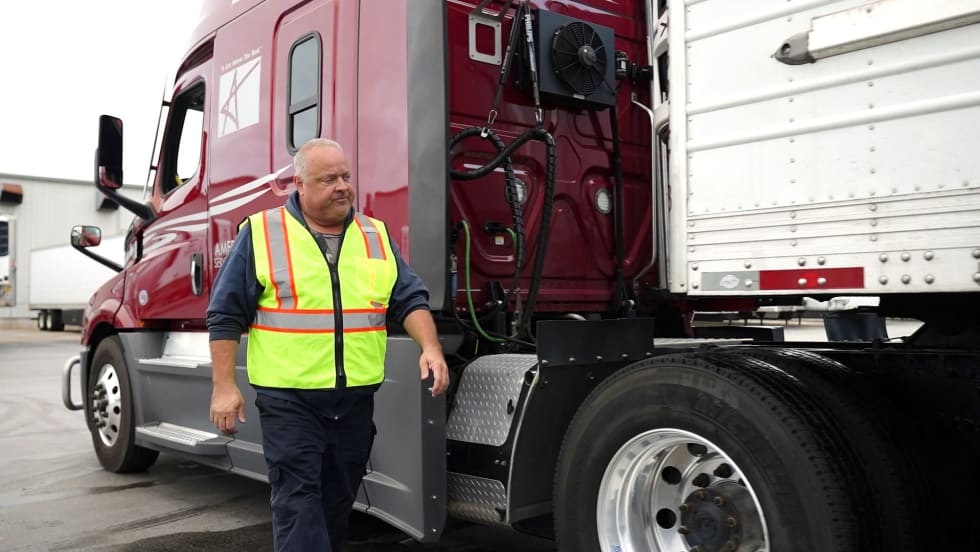
How One Company is Using Smart Suspension Technology to Reduce Driver Injuries and Improve Retention
America’s Service Line adopted Link’s SmartValve and ROI Cabmate systems to address whole-body vibration, repetitive strain, and driver turnover. The trucking fleet is already seeing measurable results.
Read More →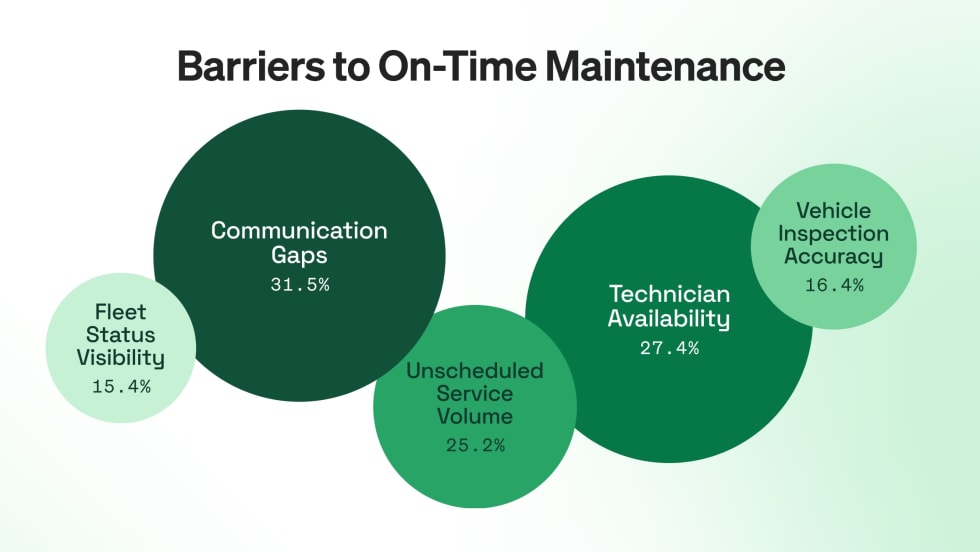
Fleetio Benchmark Report: Aging Vehicles, Rising Costs Strain Fleet Maintenance
Fleetio’s analysis of 1.2 million commercial vehicles finds older assets driving outsized service spend, while most fleets remain cautious on AI adoption.
Read More →
The Future of Class 8 Brake Telematics
Brakes are tough when it comes to telematics. But Hendrickson believes it is close to having a game-changing solution for fleets.
Read More →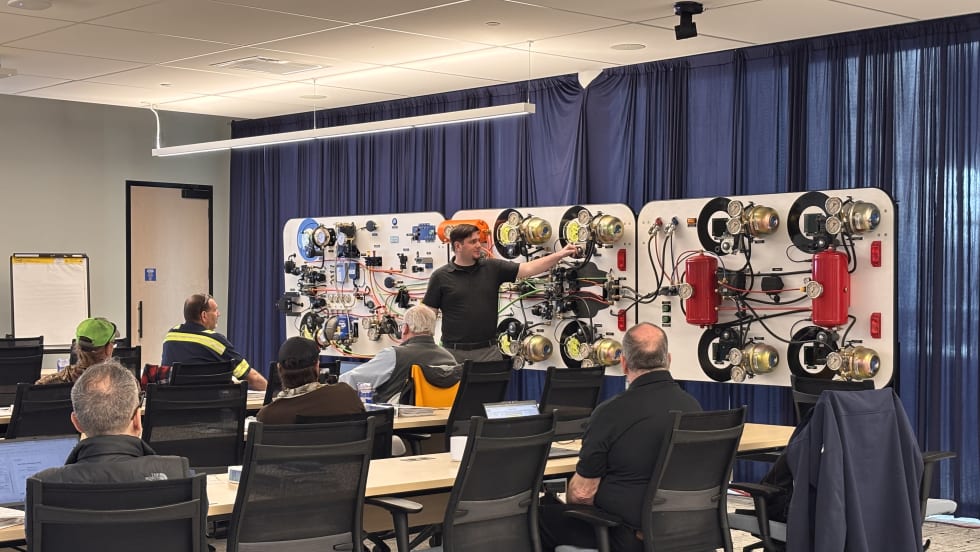
Bendix Expands 2026 Brake School Schedule with More Advanced Tech Training
Bendix Commercial Vehicle Systems will roll out its 2026 technical training calendar with expanded access to its Advanced Technology Training program, alongside its long-running Air Brake Training course.
Read More →
Western Star Expands Recall After Previous Battery Fix Fails to Prevent Fire Risk
After reports of corrosion and thermal events on trucks already repaired under a prior campaign, DTNA is recalling nearly 27,000 Western Star 47X and 49X models to address a battery junction stud defect.
Read More →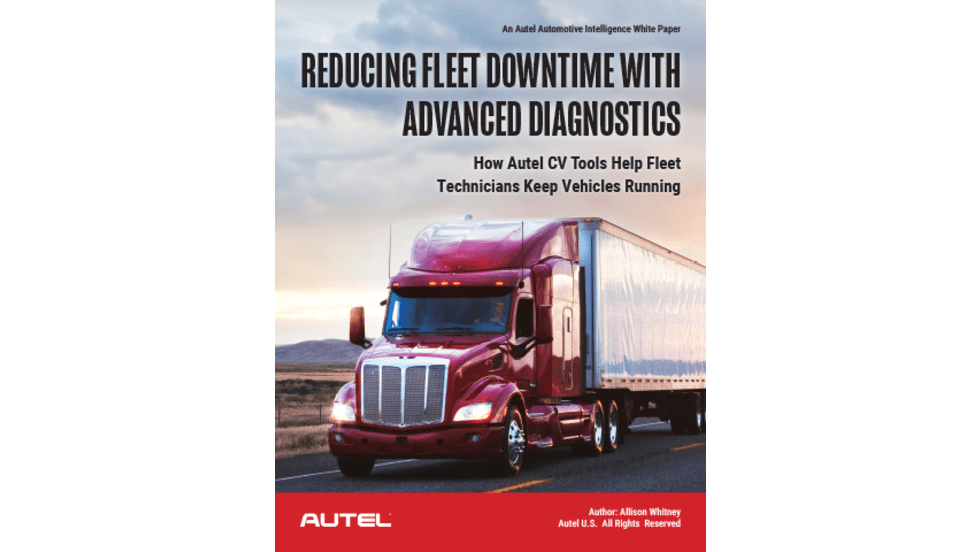
Reducing Fleet Downtime with Advanced Diagnostics
This white paper examines how advanced commercial vehicle diagnostics can significantly reduce fleet downtime as heavy duty vehicles become more complex. It shows how Autel’s CV diagnostic tools enable in-house troubleshooting, preventive maintenance, and faster repairs, helping fleets cut emissions-related downtime, reduce dealer dependence, and improve overall vehicle uptime and operating costs.
Read More →
Stop Watching Footage, Start Driving Results
6 intelligent dashcam tactics to improve safety and boost ROI
Read More →
Why Are Brake Telematics So Tough for Class 8 Trucks?
Brakes are the final frontier for telematics on Class 8 trucks. But Hendrickson is close to a breakthrough that could change the game in getting real-time brake system information back to fleets.
Read More →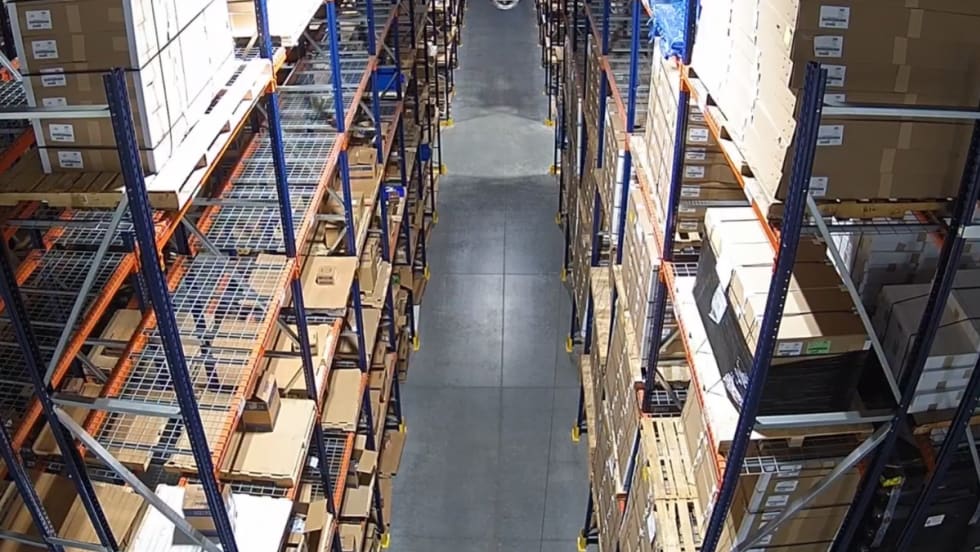
Phillips Opens High-Tech Distribution Center for Faster Parts Delivery
Phillips Industries’ new Cincinnati-area distribution center is now shipping aftermarket trucking parts nationwide, aiming to speed up delivery times for customers.
Read More →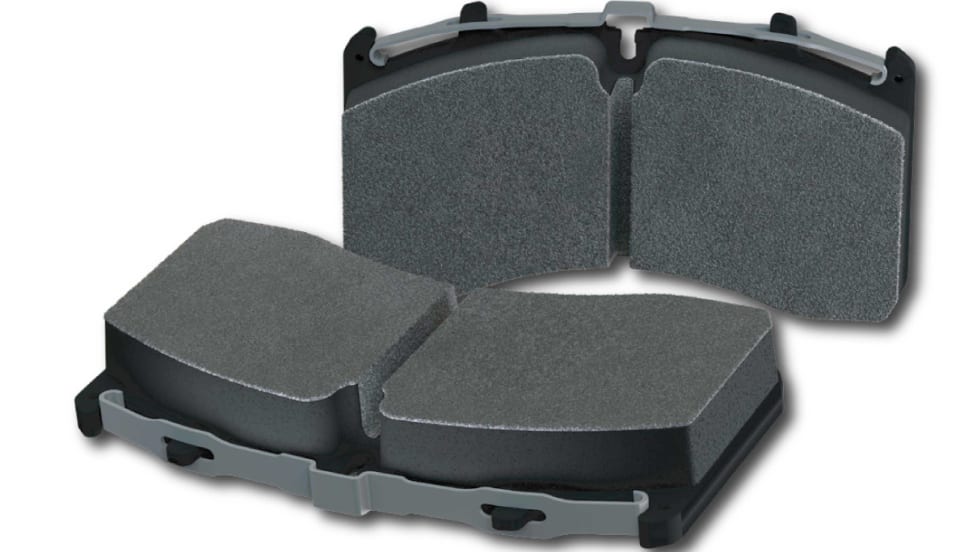
Cummins Launches MFlex4 Air Disc Brake Pad for Heavy Duty Aftermarket
Cummins used Heavy Duty Aftermarket Week (HDAW) to introduce a new brake pad platform aimed squarely at one of the aftermarket’s biggest pain points: Complexity.
Read More →