



The first solar-powered transport refrigeration unit on a city delivery truck has been successfully tested over five months in California's San Joachin Valley, according to eNow, which supplied solar panels for the test.
 MENU
MENU SEARCH
The eNow-supplied panels cut emissions and kept dairy products properly refrigerated in summer heat, the company said.
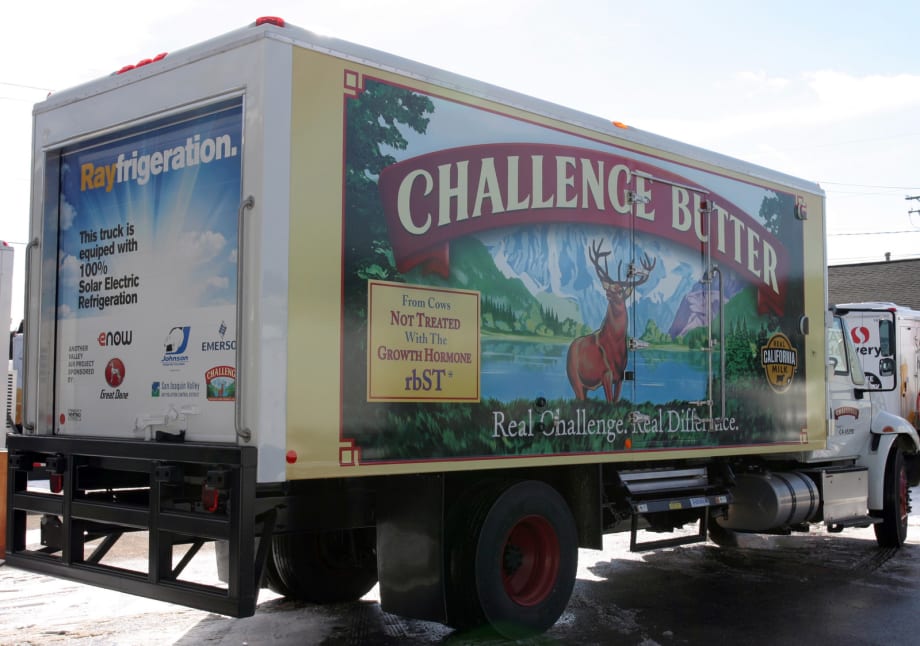
In addition to eliminating emissions, the Rayfrigeration unit is projected to reduce operations costs by up to 90%. Photo: eNow
The first solar-powered transport refrigeration unit on a city delivery truck has been successfully tested over five months in California's San Joachin Valley, according to eNow, which supplied solar panels for the test.
Compared to a diesel truck reefer unit, the "Rayfrigeration" reduced nitrous oxide by 98%, carbon dioxide by 86%, and particulate matter by 97%, said Jeff Flath, president & CEO of eNow.
The 1,800-watt eNow solar system provided more than enough energy to maintain proper temperature throughout a typical day of opening and closing the doors while the refrigerated truck delivered fresh dairy products in California's summer heat. The Rayfrigeration system worked on a Johnson Truck Bodies refrigeration unit and an Emerson high-efficiency compressor.

The unit's cold plates and batteries are initially charged from utility power overnight, but while on a delivery route, power is provided by eNow's solar photovoltaic (PV) panels mounted on the truck's roof.
The eNow team calculated that average emissions of CO2 were reduced from 2,525 lbs/week to 159 lbs. Nitrous Oxide emissions were reduced from 7162 grams to 1. This is after adjusting for the emissions from the power plant supplying grid electricity overnight; missions from solar are zero.
In addition to eliminating emissions, the Rayfrigeration unit is projected to reduce operations costs by up to 90%, Flath said. The savings are achieved through eliminating diesel fuel and maintenance costs, and an increased battery life thanks to consistent charge maintenance by eNow solar.
"Rayfrigeration is an important step forward in reducing emissions while maintaining the highest levels of efficiency and customer satisfaction for companies delivering perishable goods," he said. "eNow's solar technology is powerful, reliable, and efficient, and provides emissions-free energy for critical tasks such as refrigeration. We are proud to be part of this important project."
The San Joaquin Valley Air Pollution Control District funded the Rayfrigeration initiative through its Technology Advancement Program.
Flath said eNow designs and sells solar-powered idle-reduction systems that reduce fuel and maintenance costs, save energy, and reduce emissions. More information is at www.enowenergy.com
Watch local TV news coverage of the project:
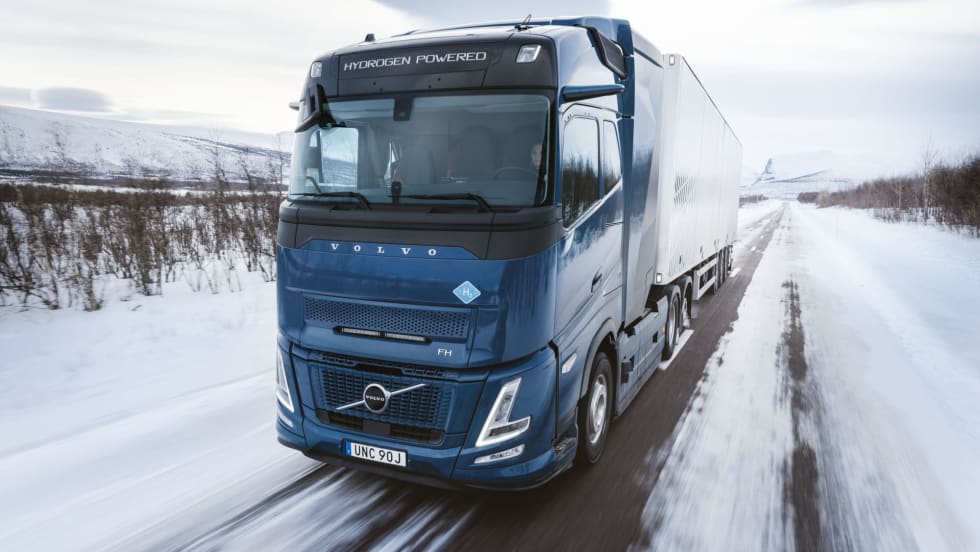
Hydrogen combustion engine trucks will be especially suitable over longer distances and in regions where there is limited charging infrastructure or time for recharging of battery-electric trucks, according to the company.
Read More →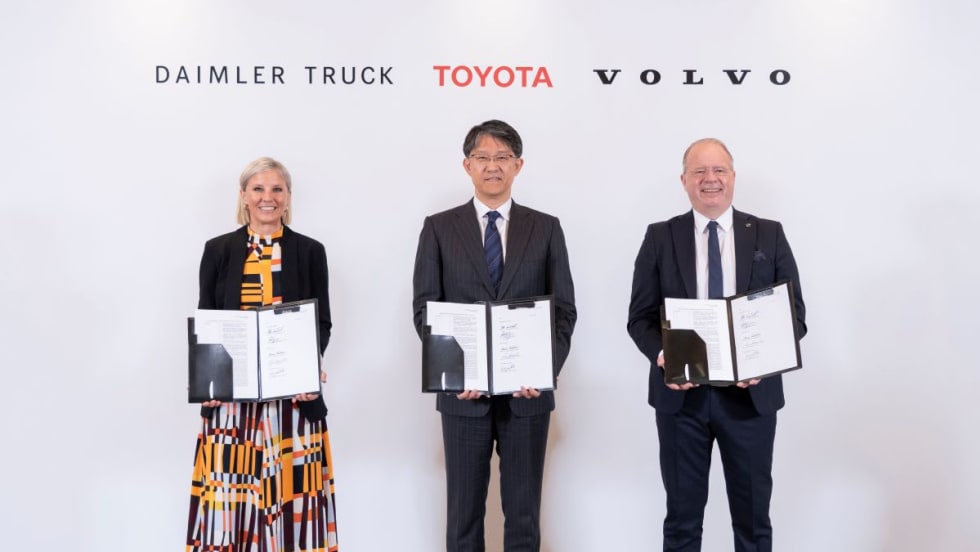
By joining Daimler Truck and Volvo, Toyota brings fuel cell expertise to a joint effort aimed at making hydrogen viable for heavy-duty transport.
Read More →
Trucking operators are slowing speeds, cutting empty miles, and declining unprofitable freight as diesel costs continue to rise due to conflict in the Middle East.
Read More →
New guidance allows engine makers to replace problematic DEF sensors with NOx-based systems, aiming to reduce unnecessary derates and downtime caused by failures in the sensors designed to monitor diesel exhaust fluid on trucks.
Read More →
Is your company a leader in sustainability efforts among trucking fleets? If so, Heavy Duty Trucking's editors want to hear from you.
Read More →
Artificial intelligence, the software-defined vehicle, telematics, autonomous trucks, electric trucks and alternative fuels, and more in this HDT Talks Trucking interview
Read More →With global oil flows disrupted, U.S. diesel prices have topped $5 across every region, climbing sharply in the past few weeks.
Read More →
The impact of the Iran conflict extends beyond fuel costs, bringing more fraud and cybersecurity risks to the trucking industry.
Read More →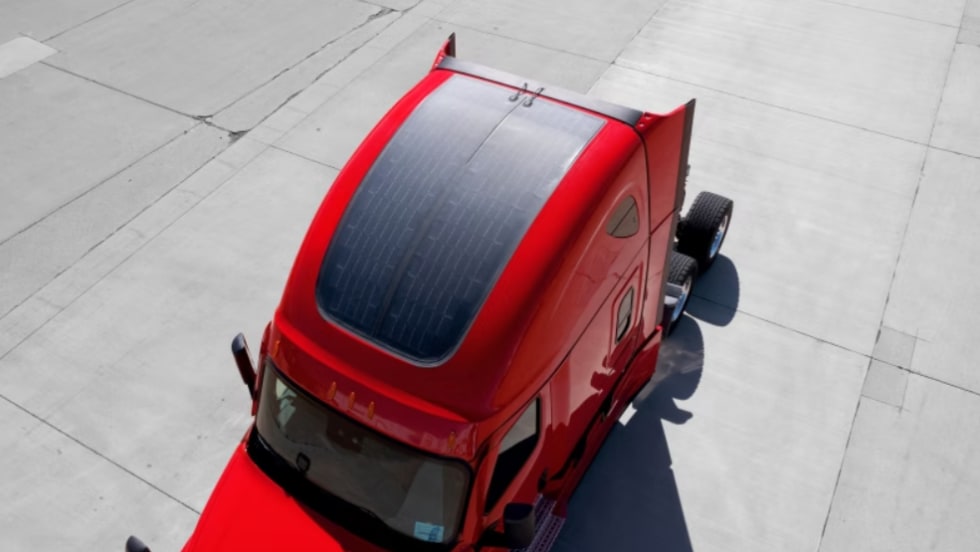
The company’s expanded EPEQ ecosystem includes flexible solar panels, lithium batteries, hydraulic power systems, and a portable fast charger for electric trucks.
Read More →
Listen as Mike Roeth of the North American Council for Freight Efficiency shares insights into battery-electric trucks, natural gas, biofuels, and clean diesel on this episode of HDT Talks Trucking.
Read More →