




Cummins Improves MidRange Engine Lineup for 2017
Cummins announced improvements to its MidRange engine lineup for 2017 at the Work Truck Show in Indianapolis, including fuel economy improvements in the B6.7.
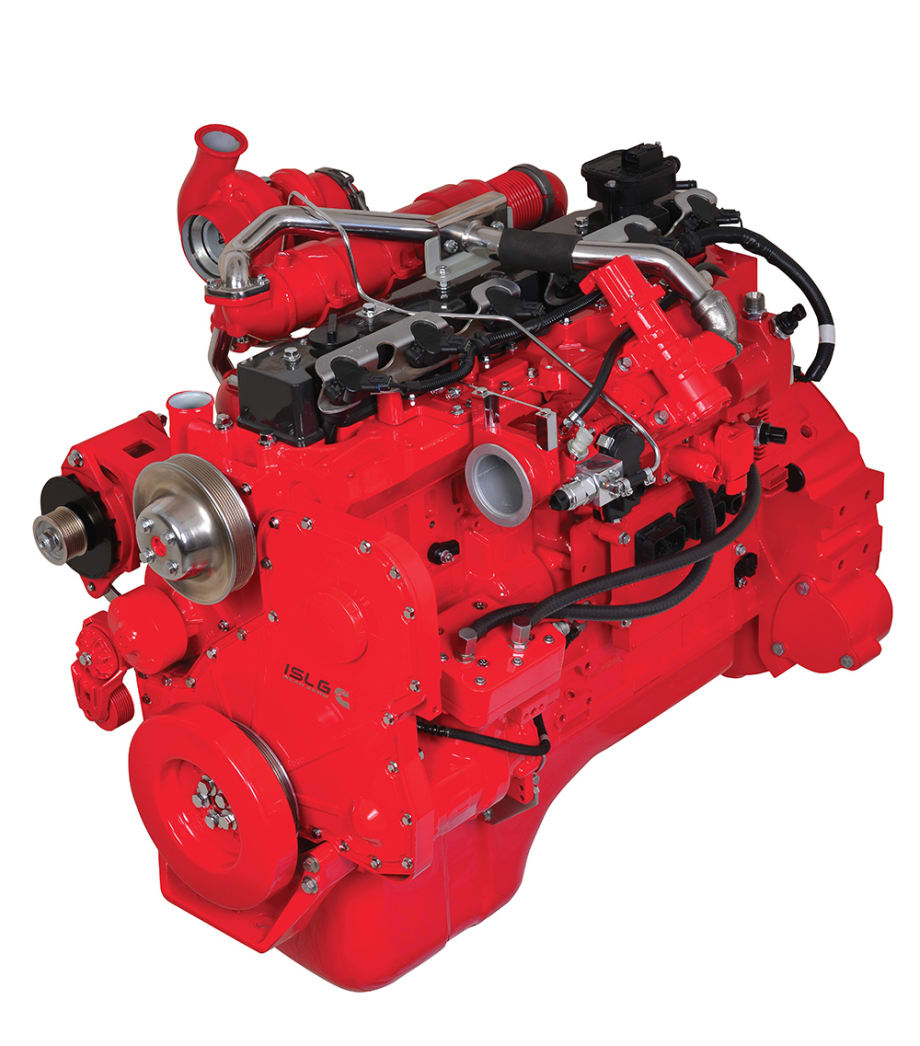
Cummins Westport ISL G Near Zero engine
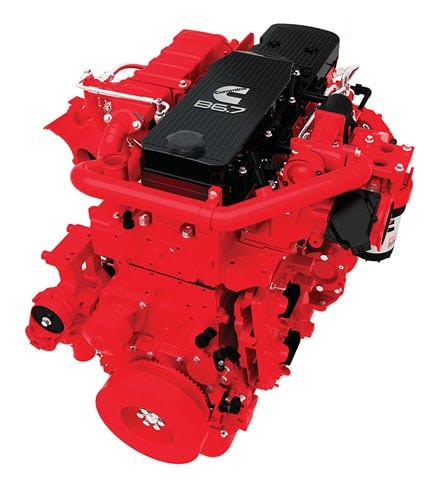
Cummins 2017 B6.7 engine has improved fuel economy.
Cummins announced improvements to its MidRange engine lineup for 2017 at the Work Truck Show in Indianapolis.
The MidRange lineup features engines ranging from the diesel V5.0, B6.7 and L9 to the Cummins Westport natural gas ISB6.7 G and ISL G Near Zero engines.
"Cummins announced our new MidRange engine platforms last year, but we haven't been resting on our laurels,” said Jeff Caldwell, executive director of North American Truck OEMs for Cummins.
B6.7
Fuel economy improvements mean the B6.7 engine is seeing an average improvement of 8.5% on efficiency ratings and 5% on performance ratings over Cummins’ EPA-2013 ISB6.7, says Cummins.
For some applications and duty cycles, specifically pickup and delivery, the efficiency ratings have demonstrated up to a 13% fuel economy improvement.
"The program started with a goal of delivering 7% better fuel economy on the efficiency ratings and 1% better fuel economy on the performance ratings over the 2013 product,” Caldwell said. “As the program progressed, we found opportunities to tune and optimize the engine, delivering further efficiency, and allowing us to surpass initial expectations."
Apart from base engine fuel economy enhancements, Cummins also has Stop-Start capability with the B6.7, which will provide additional fuel economy improvement from 3% to 15%. Stop-Start technology allows the engine to operate only when necessary, by shutting off the engine during idle.
The 2017 B6.7 also includes a longer warranty, a complete 3-year/unlimited-mile warranty in truck applications.
Cummins Westport Natural Gas Engines
Cummins Westport ISL G Near Zero engine
Now in full production for bus, medium-duty truck and vocational applications are the ISB6.7 G and the ISL G Near Zero.
Based on the B Series diesel engine platform, the ISB6.7 G is Cummins Westport’s most compact natural gas offering, according to Rob Neitzke, president of Cummins Westport.
Also available is the ISL G Near Zero, which has emissions certification from both the EPA and the California Air Resources Board to meet the optional 0.02 g/bhp-hr Near Zero oxides of nitrogen (NOx) emissions standards. The NOx emissions of the ISL G Near Zero are 90% lower than the 2010 EPA standard of 0.2 g/bhp-hr.
Both the ISB6.7 G and ISL G Near Zero operate exclusively on compressed natural gas (CNG), liquefied natural gas (LNG) or renewable natural gas (RNG). Both use CWI’s proprietary spark-ignited stoichiometric combustion with cooled exhaust gas recirculation (SEGR) technology.
More Fuel Smarts
Trucking’s Diesel Squeeze Isn’t Letting Up
With diesel topping $6 a gallon nationally, ATA's Bob Costello explains why fleets should prepare for continued pressure at the pump.
Read More →
FlowBelow Redesigns Trailer AeroSlider to Cut Fuel Use
The lighter trailer aerodynamic system installs in less than 45 minutes, according to the company, with potential payback in under a year depending on fuel prices and trailer mileage.
Read More →
Why Diesel Price Relief Efforts May Fall Short
Diesel prices have eased from September’s record high, but doubts about additional Russian supply and limits on dyed-diesel tax relief mean trucking fleets still face expensive fuel. And prices could go higher.
Read More →
Why Small Fuel Savings Matter in Trucking
Can better fuel economy help pay for driver raises? In this podcast, GP Transco explains how small efficiency gains create room to reinvest in its people.
Read More →
How GP Transco Cuts Trucking Fuel Costs, a Tenth of a Gallon at a Time
What’s another tenth of a mile per gallon worth? GP Transco shares how equipment upgrades and driver coaching turn small gains into meaningful fuel savings.
Read More →
Electric Yard Tractors Move Beyond Pilots
Operating-cost savings have overtaken sustainability goals as the leading reason surveyed fleets are adopting battery-electric terminal tractors, according to new NACFE research.
Read More →
Geotab Links Fleet Card to Vehicle Data
The new card combines fuel discounts with telematics-based purchase controls. Geotab’s analysis also points to potential savings from choosing lower-priced fuel stops.
Read More →
Fleet Economics Shape Electric Truck Outlook
ACT Research expects costs, charging infrastructure, and technology improvements to drive zero-emission commercial vehicle adoption as federal regulations and incentives retreat.
Read More →
Wex Adds Cardless Fuel Payments for Over-the-Road Customers
A new fuel card feature for Wex customers offers convenience and security.
Read More →
New California Law Could Shed Light on Electric Truck Prices
Why do battery-electric Class 8 trucks remain so expensive? A California bill signed by Gov. Gavin Newsom would give fleets and state agencies more visibility into what manufacturers charge.
Read More →