Truck-Mounted Instruments to Measure Pavement Friction
The project will help states develop pavement friction management programs and demonstrate measuring equipment.
by Staff
July 13, 2015
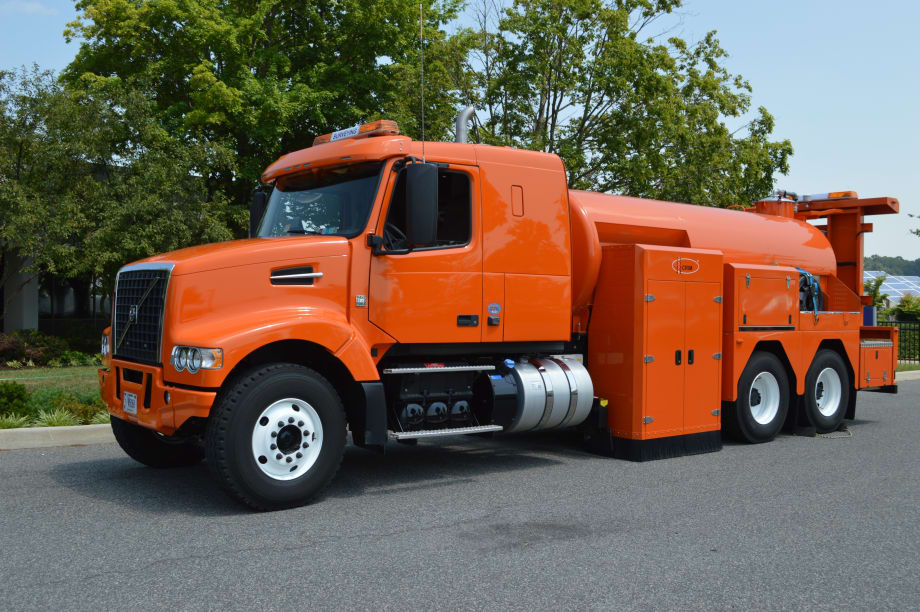
A specially equipped Volvo VHD 430 totes a Sideway-force Coefficient Routine Investigation Machine (SCRIM) – to evaluate friction on roadways to determine whether highway improvements could reduce crashes. Photo: Volvo Trucks
2 min to read
A specially equipped Volvo VHD 430 totes a Sideway-force Coefficient Routine Investigation Machine (SCRIM) – to evaluate friction on roadways to determine whether highway improvements could reduce crashes. Photo: Volvo Trucks
The Virginia Tech Transportation Institute will use a truck-mounted Sideway-force Coefficient Routine Investigation Machine, or SCRIM, to measure pavement friction and possible slick spots on U.S. highways.
In a project funded by the Federal Highway Administration, a special truck body and instruments were mounted aboard a Volvo VHD 430 chassis that will drive thousands of miles through Florida, Texas, Indiana, and Washington, collecting data.
Ad Loading...
The equipment will continuously measure friction, cross-slope values, minute textures, grades, temperatures, and curvature while driving at up to 50 mph. These various measurements will be cross-referenced with crash data to identify potentially high-risk friction areas that can be treated.
A key feature of the SCRIM is a special tire housed in the truck’s body that collects data. The blue nozzle in front of the tire sprays water from a 2,000-gallon tank. Photo: Volvo Trucks
“The continuous friction measurement equipment has the potential to pinpoint pavement sections where the probability of crashes is greater,” said Gerardo Flintsch, director of the institute’s Center for Sustainable Transportation Infrastructure and a VT civil engineering professor.
“This system is unique because with one data collection pass on the road, we will collect data that allows us to segment the road network into friction demand categories,” said Andrew Mergenmeier, senior pavement and materials engineer for FHWA.
“For example, in areas where the potential for conflict is greater, such as tight horizontal curves, this data can inform the need for a countermeasure.”
Sleeper compartment houses the information hub, gathering data from various sensors and an in-cab video camera and matching it with satellite positioning data as the truck moves along a highway. Photo: Volvo Trucks
Pavement friction can sometimes be the difference between life and death on roadways. The higher the friction, the better grip a vehicle’s tires will have with the road. Higher friction can help a vehicle stop or maneuver its way out of a crash. The data collection phase begins this summer, a VT announcement said.
Ad Loading...
Volvo Trucks North America’s plant at Dublin, Va., built the VHD chassis, and it was shipped to the United Kingdom, where the instrumentation was installed and certified by the Transport Research Laboratory. The lab recommended the chassis because of the “build quality” of European-built Volvo trucks, the company said.
The project objective is to assist states in the development of pavement friction management programs and demonstrate measuring equipment.
Kodiak has integrated HAAS Alert’s Safety Cloud platform into its autonomous vehicle control system to send real-time digital hazard alerts to nearby motorists.
Cargo theft has shifted from parking-lot break-ins to organized international schemes using double brokering, phishing, and even spoofing tracking signals. In this HDT Talks Trucking video podcast episode, cargo-theft investigator Scott Cornell explains what’s changed and what fleets need to do now.
After pushback from states and industry groups, FMCSA is proposing to reverse a 2023 rule change and lengthen the duration of state-issued emergency exemptions for disaster relief.
After reports of corrosion and thermal events on trucks already repaired under a prior campaign, DTNA is recalling nearly 27,000 Western Star 47X and 49X models to address a battery junction stud defect.
Motor carriers using the affected ELDs must switch to paper logs immediately and install compliant devices by April 14 to avoid out-of-service violations.
After a legal pause last fall, FMCSA has finalized its rule limiting non-domiciled commercial driver's licenses. The agency says the change closes a safety gap, and its revised economic analysis suggests workforce effects will be more gradual than first thought.
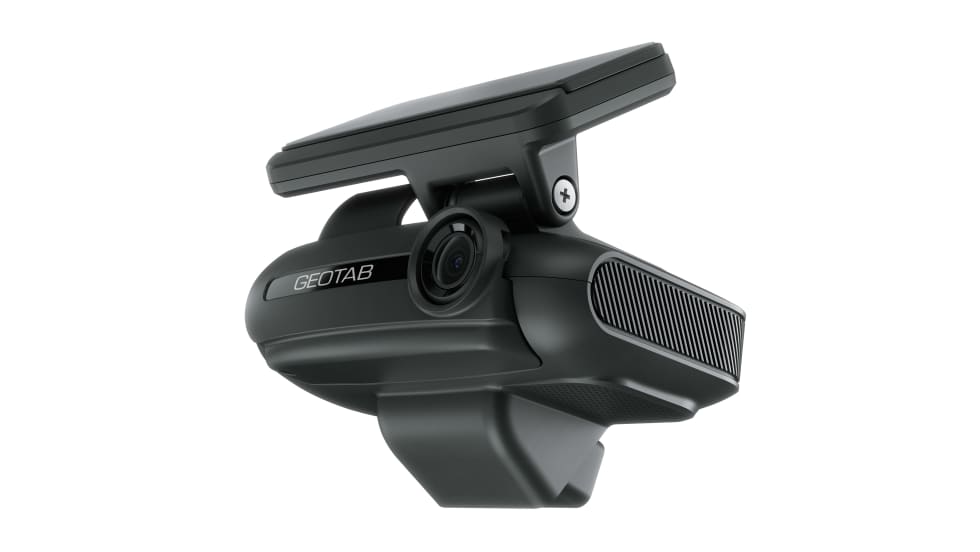
Geotab launches GO Focus Pro, an AI-powered 360-degree dash cam designed to reduce collisions, prevent fraud, and protect fleets from nuclear verdict risk.
A high-visibility enforcement effort conducted January 13–15 removed hundreds of unqualified drivers and unsafe commercial vehicles from major freight corridors nationwide.