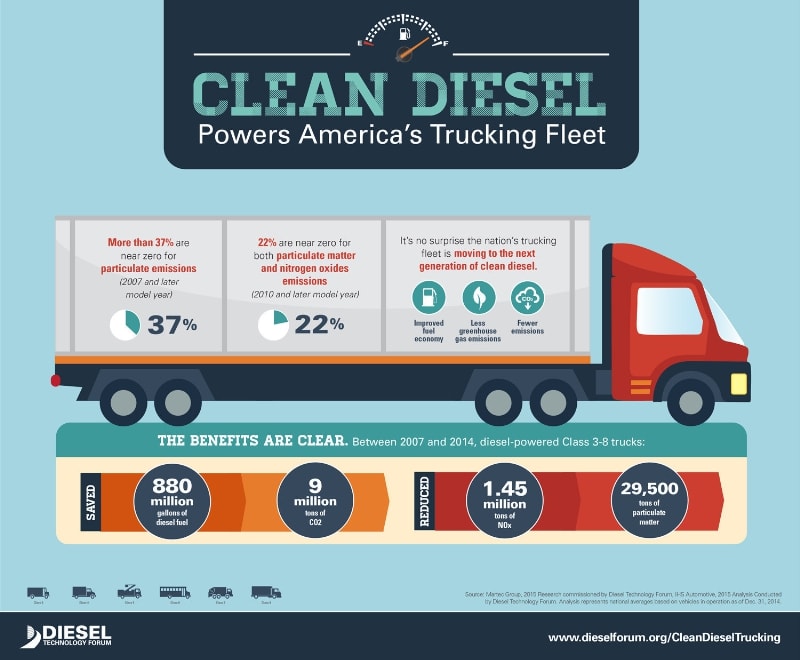
More than 37 percent of all diesel medium and heavy duty commercial trucks registered in the U.S. are now equipped with newer technology clean diesel engines (MY-2007 or newer with near-zero particulate emissions), according to new data compiled by IHS Automotive for the Diesel Technology Forum.
by Staff
June 19, 2015
Illustration courtesy of Diesel Technology Forum.
2 min to read
Illustration courtesy of Diesel Technology Forum.
More than 37 percent of all diesel medium- and heavy-duty commercial trucks registered in the U.S. are now equipped with newer technology clean diesel engines (2007-MY or newer with near-zero particulate emissions), according to new data compiled by IHS Automotive for the Diesel Technology Forum.
Ad Loading...
In addition, nearly 22 percent of all diesel trucks in operation are equipped with the newest clean diesel technology (2010-MY or newer) that also produce near-zero nitrogen oxide (NOx) emissions.
Ad Loading...
More than 95 percent of all heavy-duty trucks are diesel-powered, as are a majority of medium-duty trucks, according to the Diesel Technology Forum.
"New diesel vehicles are increasing their penetration in the marketplace because they are more fuel efficient, in part, due to meeting the requirements of Phase 1 of the U.S. EPA/NHTSA Fuel Efficiency standards that went into effect in 2014. We fully expect that diesel technology will remain a dominant factor in achieving the president's newly proposed second round of truck efficiency and emissions standards," said Allen Schaeffer, the forum's executive director.
Class 3-8 trucks on the road from 2007 to 2014 saved 880 million gallons of diesel fuel, and nine million tons of carbon-dioxide, and the new technology diesel engines reduced 1.45 million tons of NOx and 39,500 tons of particulate matter, Schaeffer added.
Beginning in 2007, all heavy-duty diesel trucks sold had to meet particulate emissions levels of no more than 0.01 grams per brake horse-power hour (g/HP-hr).
The analysis of new technology penetration is based on 2014 data of Class 3-8 vehicles in operation in all 50 states and the District of Columbia through Dec. 31.
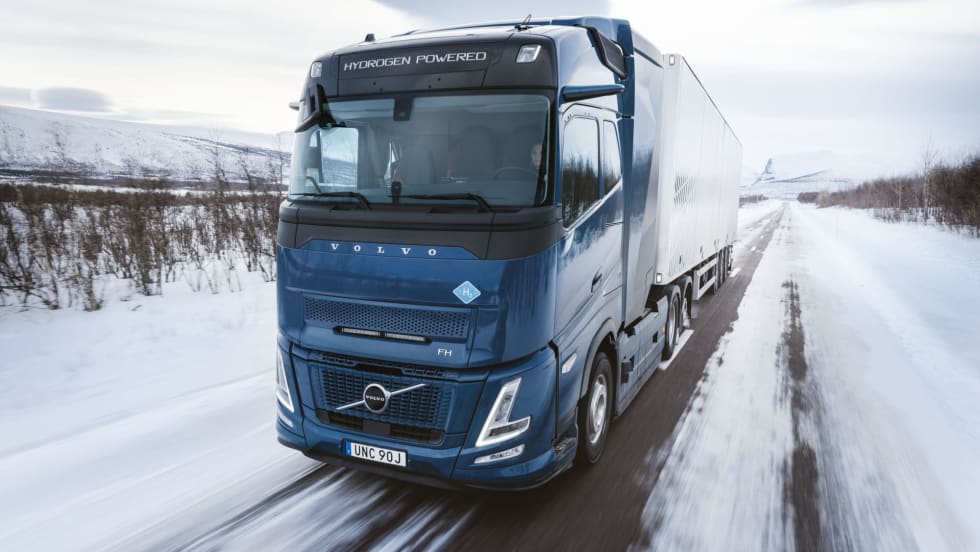
Hydrogen combustion engine trucks will be especially suitable over longer distances and in regions where there is limited charging infrastructure or time for recharging of battery-electric trucks, according to the company.
Trucking operators are slowing speeds, cutting empty miles, and declining unprofitable freight as diesel costs continue to rise due to conflict in the Middle East.
New guidance allows engine makers to replace problematic DEF sensors with NOx-based systems, aiming to reduce unnecessary derates and downtime caused by failures in the sensors designed to monitor diesel exhaust fluid on trucks.
Artificial intelligence, the software-defined vehicle, telematics, autonomous trucks, electric trucks and alternative fuels, and more in this HDT Talks Trucking interview
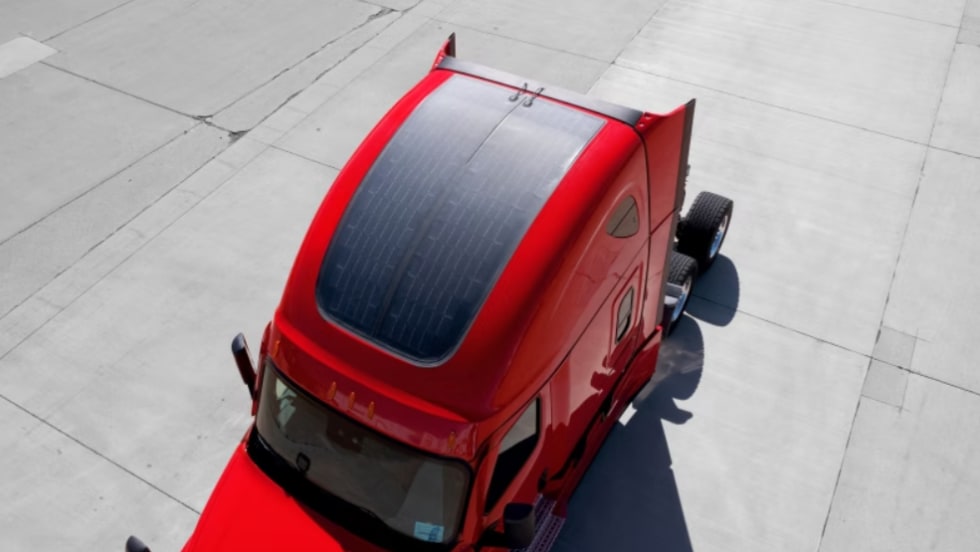
The company’s expanded EPEQ ecosystem includes flexible solar panels, lithium batteries, hydraulic power systems, and a portable fast charger for electric trucks.
Listen as Mike Roeth of the North American Council for Freight Efficiency shares insights into battery-electric trucks, natural gas, biofuels, and clean diesel on this episode of HDT Talks Trucking.