



The average U.S. cost of on-highway diesel continues moving closer to the $3 per gallon mark with it recording its sixth straight weekly increase, according to the U.S. Energy Department.
 MENU
MENU SEARCH
The average U.S. cost of on-highway diesel continues moving closer to the $3 per gallon mark with it recording its sixth straight weekly increase, according to the U.S. Energy Department.

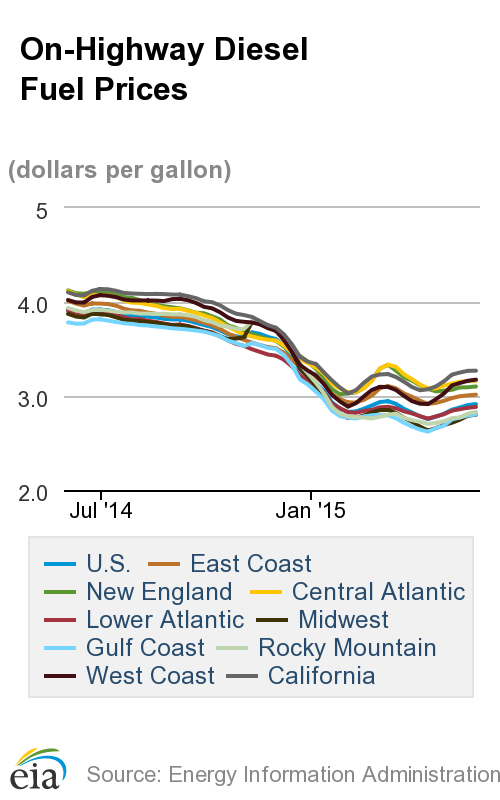
The average U.S. cost of on-highway diesel continues moving closer to the $3 per gallon mark with it recording its sixth straight weekly increase, according to the U.S. Energy Department.
It increased 1 cent from last week to $2.914 per gallon, its highest level in more than two months.
Over the past six weeks, the average diesel price has increased 16 cents but is $1.011 less than compared to this week in 2014.
Prices increased in all parts of the country from last week, ranging from 0.4 cent in the Central Atlantic states, for an average of $3.162, to 1.7 cents in the Rocky Mountain region, where the average is $2.83.
The price range for diesel extends from a low of $2.80 in the Midwest, up 0.9 cent over the past week, to a high of $3.174 in the West Coast region, an increase of 1.2 cents.
Likewise, the cost of regular grade gasoline continues increasing, up 3 cents from last week, for a national average of $2.774. This is the sixth straight weekly gain and the highest price since last December.
Despite the hike it remains 90 cents less than compared to the same time last year.
Prices increased in all regions but the West Coast, where it fell 2.6 cents for an average of $3.487, also the highest priced section of the country and far ahead of the second most expensive area, the Central Atlantic states at $2.735.
The least expensive regional gasoline price is the Gulf Coast at $2.486, up 2 cents from last week.
This happened as the price of oil has declined in New York trading, shedding $1.69 a barrel on Tuesday, settling at one month low of $58.03 per barrel on news that the dollar strengthened against foreign currencies.
Also, the investment firm Goldman Sachs reported the number of oil rigs in service in the U.S. increased last week for the first time since November. Compared to the opening market price a week ago oil is down by more than $2 in New York.
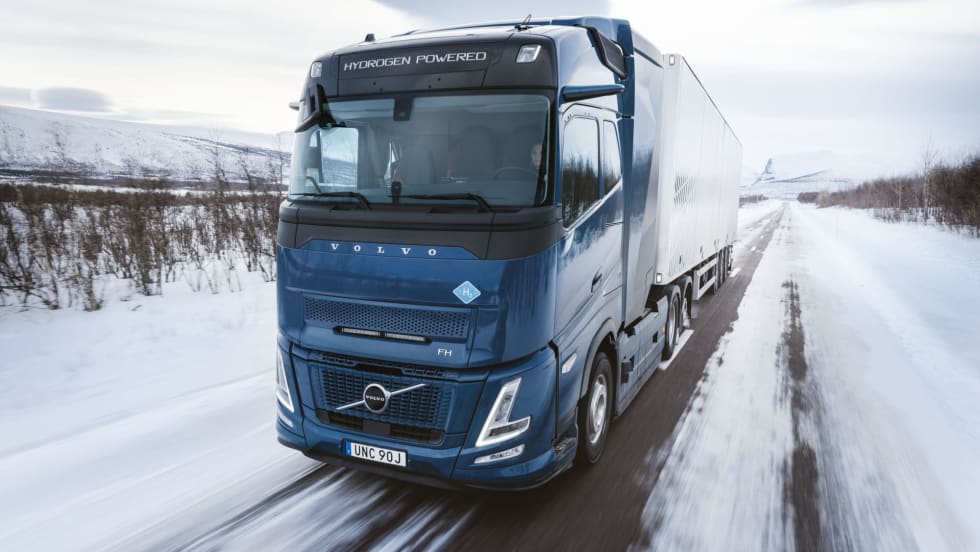
Hydrogen combustion engine trucks will be especially suitable over longer distances and in regions where there is limited charging infrastructure or time for recharging of battery-electric trucks, according to the company.
Read More →
By joining Daimler Truck and Volvo, Toyota brings fuel cell expertise to a joint effort aimed at making hydrogen viable for heavy-duty transport.
Read More →
Trucking operators are slowing speeds, cutting empty miles, and declining unprofitable freight as diesel costs continue to rise due to conflict in the Middle East.
Read More →
New guidance allows engine makers to replace problematic DEF sensors with NOx-based systems, aiming to reduce unnecessary derates and downtime caused by failures in the sensors designed to monitor diesel exhaust fluid on trucks.
Read More →
Is your company a leader in sustainability efforts among trucking fleets? If so, Heavy Duty Trucking's editors want to hear from you.
Read More →
Artificial intelligence, the software-defined vehicle, telematics, autonomous trucks, electric trucks and alternative fuels, and more in this HDT Talks Trucking interview
Read More →With global oil flows disrupted, U.S. diesel prices have topped $5 across every region, climbing sharply in the past few weeks.
Read More →
The impact of the Iran conflict extends beyond fuel costs, bringing more fraud and cybersecurity risks to the trucking industry.
Read More →
The company’s expanded EPEQ ecosystem includes flexible solar panels, lithium batteries, hydraulic power systems, and a portable fast charger for electric trucks.
Read More →
Listen as Mike Roeth of the North American Council for Freight Efficiency shares insights into battery-electric trucks, natural gas, biofuels, and clean diesel on this episode of HDT Talks Trucking.
Read More →