By the time 2020 rolls around, you can expect new trucks to be equipped with mandatory stability control and collision avoidance technology, according to Fred Andersky, director of government and industry affairs for Bendix.
by Staff
April 6, 2014
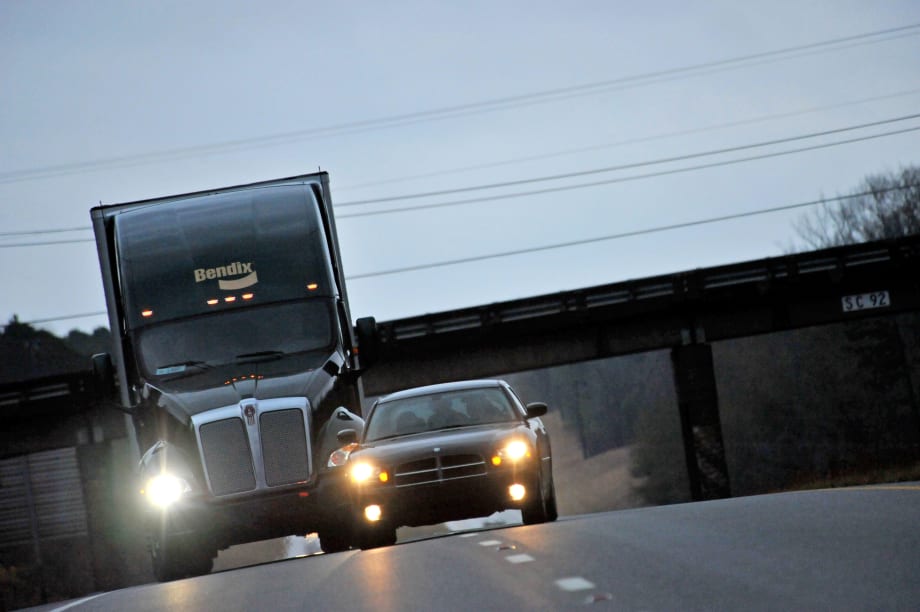
Bendix expects a mandate for collision avoidance systems.
3 min to read
Bendix expects a mandate for collision avoidance systems.
By the time 2020 rolls around, you can expect new trucks to be equipped with mandatory stability control and collision avoidance technology, according to Fred Andersky, director of government and industry affairs for Bendix.
Anderseky briefed reporters on his predictions for the future of truck safety technology regulation during the Mid-America Trucking Show last month in Louisville, Ky.
Ad Loading...
The final rule on the stability control mandate from the National Highway Traffic Safety Administration has been delayed for the third time, he says. The agency currently estimates it will be published in October.
The Notice of Proposed Rulemaking originally was published on May 23, 2012, requiring stability technology for commercial vehicles. NHTSA plans to have full-stability technology, also known as electronic stability control, – standard on tractors and motorcoaches in the future. The agency cites the higher level of effectiveness of ESP/ESC over RSC (Roll Stability Control) in helping drivers mitigate rollovers and loss-of-control situations.
Bendix expects the final rule will mandate electronic stability control for most model year 2017 heavy-duty air-braked tractors and for all motorcoaches.
"We do expect a final rule this year, but I think it will be more of a Christmas gift that a Halloween treat," Andersky said.
Andersky noted that market penetration for ESC is up to 18%, and that about 30% of the Class 6-8 vehicles sold in 2013 had some type of stability system. ESC, he said, outsold roll stability control by a three-to-two margin. Full-stability technology such as BendixESP is more comprehensive than roll-only stability since it addresses both roll and directional stability, says the company.
Ad Loading...
One oddity, he noted, is that so far you can't buy stability control for school buses. Bendix is working to see that change.
Last year Andersky predicted Bendix would hit the 300,000 mark for sales of its ESPElectronic Stability Program shortly after MATS 2014, but in fact the company reached that milestone before the March show. The company introduced Bendix ESP in early 2005. It took six full years for Bendix to reach 100,000 units sold, but only about half that time to triple it.
The next area Bendix sees a rulemaking forthcoming is what safety agencies are calling FCAM – forward collision avoidance and mitigation. He sees implementation of a mandate for these technologies, such as the Bendix Wingman Advance, in the 2019 timeframe.
Andersky predicts the mandate will require next-generation collision avoidance technologies that will not only warn of stationary objects in the vehicle's path, but actually brake to avoid hitting them. Look for a notice of proposed rulemaking next year or in 2016, he says.
Such technology is vital in the development of cars and trucks that can drive themselves. The issue with driverless vehicles, he says, is not the technology. What will keep them from being widely adopted in the near future are cost, public acceptance, privacy and liability issues. Who's responsible when two Google cars get in a crash? Predicting that it will be the mid 2020's at the earliest, Andersy said, "I'm not going to give up my CDL any time soon."
Daimler’s new factory-installed system integrates side and forward-facing cameras with in-cab touchscreen to improve jobsite visibility and reduce upfit complexity.
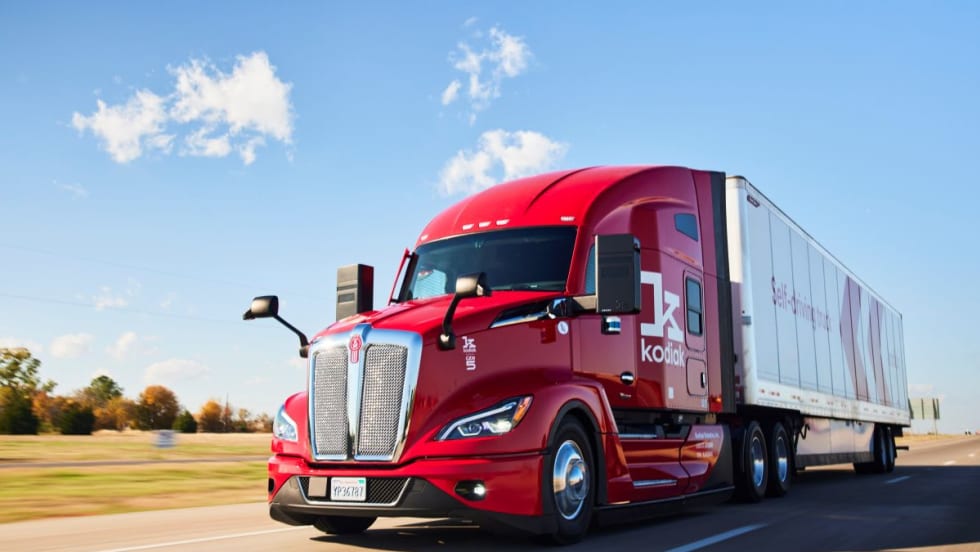
Kodiak has integrated HAAS Alert’s Safety Cloud platform into its autonomous vehicle control system to send real-time digital hazard alerts to nearby motorists.
Cargo theft has shifted from parking-lot break-ins to organized international schemes using double brokering, phishing, and even spoofing tracking signals. In this HDT Talks Trucking video podcast episode, cargo-theft investigator Scott Cornell explains what’s changed and what fleets need to do now.
After pushback from states and industry groups, FMCSA is proposing to reverse a 2023 rule change and lengthen the duration of state-issued emergency exemptions for disaster relief.
After reports of corrosion and thermal events on trucks already repaired under a prior campaign, DTNA is recalling nearly 27,000 Western Star 47X and 49X models to address a battery junction stud defect.
Motor carriers using the affected ELDs must switch to paper logs immediately and install compliant devices by April 14 to avoid out-of-service violations.
After a legal pause last fall, FMCSA has finalized its rule limiting non-domiciled commercial driver's licenses. The agency says the change closes a safety gap, and its revised economic analysis suggests workforce effects will be more gradual than first thought.