




Transport Experts Say Public Must Push Congress to Act on Highways
Congress can't do its job on the highway bill, so the public is going to have to take the lead, says a group of infrastructure experts including five former secretaries of transportation. The federal highway program is now running on its ninth temporary extension because Congress will not compromise on how to pay for it, said the 60 experts brought together by the University Virginia's Miller Center
Congress can't do its job on the highway bill, so the public is going to have to take the lead, says a group of infrastructure experts including five former secretaries of transportation.
The federal highway program is now running on its ninth temporary extension because Congress will not compromise on how to pay for it, said the 60 experts brought together by the University Virginia's Miller Center.
"Absent a greater sense of urgency about the need to act, Congress is likely to continue defaulting to repeated extensions, and comprehensive reauthorizing legislation will remain caught in larger disputes about the federal debt and spending," they say in their analysis.
The solution, they say, is to ratchet up public pressure.
"The right message carried with the right mix of compelling voices on the local and national stage could spur political leaders to set aside their differences, rise above the current quagmire of inaction, and take steps to adopt and pursue a vision of transportation policy for the 21st century that will drive economic growth, enhance U.S. competitiveness and create jobs."
Their prescription calls for a message with a positive tone that stresses economic growth, jobs and competitiveness. It must take the timing of the presidential election into account. It must use traditional and social media, and it must link local transportation investment opportunities to national policy decisions.
That's a tall order in the short time left before Congress has to either agree on a bill or pass yet another extension.
The current extension expires June 30. The Senate has a bill, a two-year, $109 billion measure. The House has not been able to pass its five-year, $260 billion proposal, so it recently passed another extension in order to set up a conference with the Senate.
There are important similarities between the Senate and House approaches, notably in the reforms they make in transportation governance. Both streamline the program structure at the Department of Transportation, eliminate earmarks and take steps to speed up project completion.
But the differences will be difficult to overcome. The House extension, for instance, would force completion of the Keystone XL pipeline, which if it survives conference could lead to a veto by President Obama.
Yesterday the Senate named eight Democrats and six Republicans to the conference committee charged with negotiating the final highway bill.
The Democrats are: Max Baucus, Mont., Barbara Boxer, Calif., Jay Rockefeller, W.Va., Dick Durbin, Ill., Tim Johnson, S.D., Bill Nelson, Fla., Charles Schumer, N.Y., Bob Menendez, N.J.
The Republicans are: James Inhofe, Okla., David Vitter, La., Orin Hatch, Utah, Richard Shelby, Ala., Kay Bailey Hutchison, Texas, and John Hoeven, N.D.
The House is scheduled to name its negotiators today.
The University of Virginia group, which includes former Transportation Secretaries Norman Mineta, Sam Skinner, Mary Peters, Rodney Slater and James Burnley, is looking further down the road than the conference committee is likely to see.
Their vision includes a campaign that will commence this year and run through all of next year, targeting the next highway legislation.
They listed five communication "hooks" to gather public support, starting with the expiration of the current extension June 30. This could be the occasion to highlight local projects that deserve federal support.
The next event would be the July 4 weekend, when editors like to run feature stories about driving, fuel prices and traffic congestion. After that come the Democratic and Republican conventions, where infrastructure needs to be a leading issue.
The next priority is to ensure that the candidates lay out their policies and plans as the election nears. And after the election, the infrastructure campaign must send a message that the public is demanding action from the next Congress and administration.
"Through a smart, aggressive, and coordinated new communications effort, transportation advocates and stakeholders can elevate their issue to a level not experienced since President Eisenhower's era," the group said.
"It is our belief that once citizens become aware of the significant costs and risks associated with a compromised transportation system operating at less than optimal capacity, they will feel more compelled to demand calls for action that will, in turn, prompt policy makers to act."
More Drivers

When Language Stops the Truck: The Return of ELP Out-of-Service Orders
English language proficiency rules for commercial drivers aren’t new, but renewed out-of-service enforcement has raised the stakes. Here’s what carriers need to know before a driver reaches a roadside inspection.
Read More →
Samsara Launches Custom AI Agent Builder
Agent Studio lets fleets create AI tools for hours-of-service monitoring, reporting and driver support, including agents that communicate by phone.
Read More →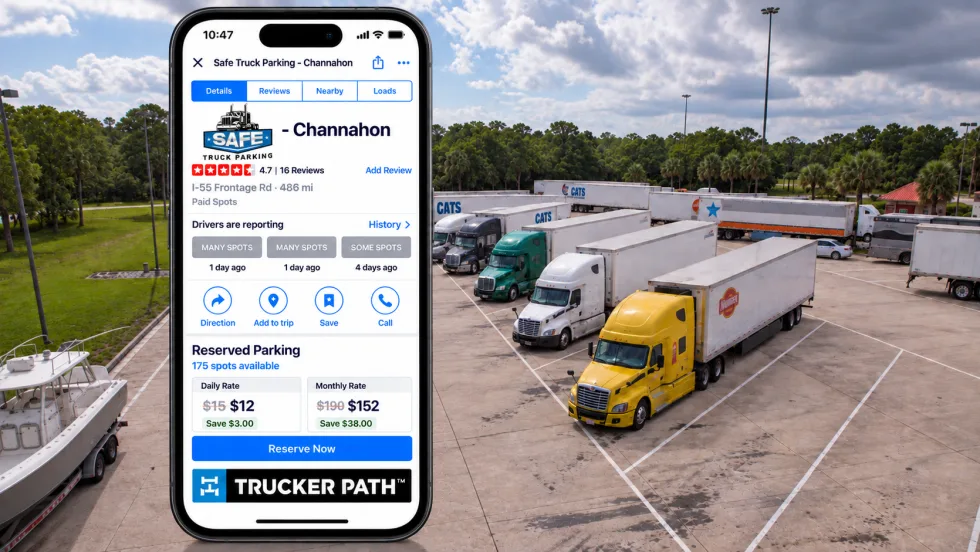
Trucker Path Expands Reserved Parking Network
Trucker Path has added close to 6,000 more truck parking spaces to its Trucker Path Reserved Parking Network with the addition of Safe Truck Parking.
Read More →
EEOC Sues Texas Trucking Company Over Driver Age Limits
The agency says Trancasa USA rejected applicants over 65 and applied tougher driving-record standards to those over 60.
Read More →
Nussbaum, Roehl Announce Second Driver Pay Increase This Year
This year has seen a swath of major truck driver pay increases as freight capacity has tightened.
Read More →
From One Generation to the Next: How Mentorship Builds Safer Truck Drivers
After three decades in trucking, Harold Perry shares what he's learned about driver safety, mentorship, and helping the next generation build confidence behind the wheel.
Read More →
Truck Drivers Need More Than Another Alert
Fleets have more visibility into truck health, safety events, and driver activity than ever. The next challenge is turning all that information into useful guidance for the person who has to decide what to do next.
Read More →
FMCSA Removes 110 Truck Driver Training Schools from Certified ELDT List
Federal regulators also are targeting more than 160 additional training providers and launching a nationwide audit of third-party CDL skills testers as part of a broader crackdown on trucking fraud.
Read More →
Hours of Service Pilot Programs: FMCSA Readies for 2027 Rollout
Two pilot programs could eventually reshape hours-of-service rules, giving truck drivers options to pause their 14-hour clock or use longer split sleeper rest periods.
Read More →
Medical Cards, English Proficiency Reshape Roadcheck Violations
Medical-card violations jumped to the top of the driver out-of-service list during CVSA’s 2026 International Roadcheck, while English-language proficiency violations appeared among the leading violations for the first time.
Read More →