




Package Delivery Fleets Obtain Hydraulic Hybrids for Evaluations
The first hydraulic hybrid package delivery vans produced for regular service are now in the hands of three major fleets for evaluations, according to the Hybrid, Electric and Advanced Truck Users Forum (HTUF)
The first hydraulic hybrid package delivery vans produced for regular service are now in the hands of three major fleets for evaluations, according to the Hybrid, Electric and Advanced Truck Users Forum (HTUF).
The walk-in vans were assembled by Freightliner Custom Chassis Corporation (FCCC) with bodies by Morgan Olson and drivetrain components from Parker Hannifin. HTUF noted that previously produced hybrids use electric drivetrains, and that hydraulic versions are alternatives that might hold operational and cost advantages.
FedEx Ground, Purolator, and United Parcel Service each have one of the trucks, purchased with grants from the U.S. Department of Energy administered through CalStart, a management and advocacy group headquartered in Pasadena, Calif. The three fleets are members of HTUF's Parcel Delivery Working Group.
"Parker is excited to deploy our first three hydraulic hybrid drive systems with the CALSTART-led HTUF Working Group. After recent EPA testing, Parker's system came out best in class compared to similar hybrid systems. We are anxiously waiting to see real world test results from our three customers," said Shane Terblanche, general manager of Parker's Hybrid Drive Systems Division.
The Parker system in these trucks is designed for medium duty, start-stop applications, he said. Advancing upon Parker's RunWise heavy duty system presently available for refuse applications, this midrange version incorporates an infinitely variable transmission.
Braking energy is recovered and stored in hydraulic accumulators, where it is used to power the truck during acceleration, the company said.
Power from Parker's hydraulic pump/motors and accumulators is blended with engine power depending on driver demand.
Parker's onboard controller uses an advanced engine-off strategy to minimize unnecessary run time. Thus fuel use can be reduced by 40% or more, depending on route profile.
UPS previously tested hydraulic hybrids, said Mike Britt, director of vehicle engineering. So "we are optimistic that this new technology will perform as well as it did in the test vehicles, improving fuel economy and reducing emissions."
The three package delivery companies will be cooperating with CalStart and FCCC to gather data on the operation of the vehicles to establish expected fuel economy improvements and reduced brake and engine maintenance costs.
Although hydraulic hybrid systems have shown promise over the last few years, commercial deployment of these systems has been limited to Class 8 refuse trucks, HTUF said. This evaluation will assess a hydraulic hybrid system for the lighter, Class 6 vehicle applications.
Successful demonstration could lead to additional purchases of hydraulic hybrid vehicles throughout the trucking industry, the group believes.
More Drivers

Nussbaum, Roehl Announce Second Driver Pay Increase This Year
This year has seen a swath of major truck driver pay increases as freight capacity has tightened.
Read More →
From One Generation to the Next: How Mentorship Builds Safer Truck Drivers
After three decades in trucking, Harold Perry shares what he's learned about driver safety, mentorship, and helping the next generation build confidence behind the wheel.
Read More →
Truck Drivers Need More Than Another Alert
Fleets have more visibility into truck health, safety events, and driver activity than ever. The next challenge is turning all that information into useful guidance for the person who has to decide what to do next.
Read More →
FMCSA Removes 110 Truck Driver Training Schools from Certified ELDT List
Federal regulators also are targeting more than 160 additional training providers and launching a nationwide audit of third-party CDL skills testers as part of a broader crackdown on trucking fraud.
Read More →
Hours of Service Pilot Programs: FMCSA Readies for 2027 Rollout
Two pilot programs could eventually reshape hours-of-service rules, giving truck drivers options to pause their 14-hour clock or use longer split sleeper rest periods.
Read More →
Medical Cards, English Proficiency Reshape Roadcheck Violations
Medical-card violations jumped to the top of the driver out-of-service list during CVSA’s 2026 International Roadcheck, while English-language proficiency violations appeared among the leading violations for the first time.
Read More →
Driver Trust Can Make or Break the Success of Fleet Safety Technology
New Teletrac Navman research suggests that onboarding, transparency about driver data, and positive feedback can play a significant role in how commercial drivers respond to safety and coaching technology.
Read More →
EEOC Sues KLLM Over Alleged Sex Discrimination in Driver Training
KLLM is facing a federal sex-discrimination lawsuit over policies the EEOC alleges put female truck driver trainees at a disadvantage.
Read More →
FMCSA Moves to Codify English Language Requirements for Commercial Drivers
By changing regulations on English-language proficiency requirements for commercial drivers, rather than relying on a guidance memo, the FMCSA said future administrations won't be able to walk back the Trump administration's stricter enforcement with just a memo.
Read More →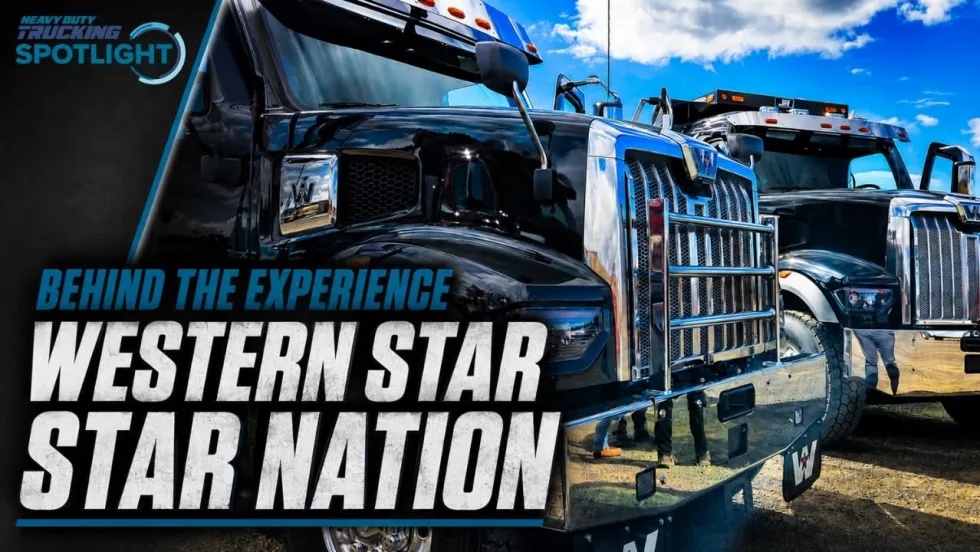
Drivers Put Western Star Trucks to the Test at Star Nation Experience
Watch to get an inside look at the Western Star trucks, technology, and community behind the Star Nation Experience 2026!
Read More →