




OOIDA, Teamsters, Rep. DeFazio Decry Start of Mexican Truck Program
Two U.S. trucker groups and several lawmakers stood in bipartisan opposition to cross-border trucking with Mexico at a news conference at Otay Mesa, California's busiest border crossing
Two U.S. trucker groups and several lawmakers stood in bipartisan opposition to cross-border trucking with Mexico at a news conference at Otay Mesa, California's busiest border crossing.
U.S. Rep. Bob Filner (D-CA), U.S. Rep. Duncan Hunter (R-CA), Todd Spencer, executive vice president of the Owner-Operator Independent Drivers Association, and Teamsters General President, Jim Hoffa, each condemned the program as unsafe, unlawful, and hurtful to the U.S. economy and job prospects for American truck drivers.
The bipartisan stance comes just as the Obama administration officially began the program by awarding full U.S. operating authority to one trucking company in Mexico while moving forward with efforts to allow others full access to U.S. highways.
"People in Washington are constantly talking about two things these days, creating good jobs for Americans and cutting wasteful spending. This program does exactly the opposite for both," said Spencer. "This program will jeopardize the livelihoods of tens of thousands of U.S.-based small-business truckers and will undermine the standard of living for the rest of the driver community."
The pilot program got off to a rocky start when the Federal Motor Carrier Safety Administration approved trucking operator Grupo Behr from Tijuana, Mexico. The carrier owned one 20-year-old semi-tractor trailer with numerous safety issues. FMCSA had to disqualify it from the program after the Teamsters Union and others brought Grupo Behr's safety record to light. A second carrier, Transportes Olympic, of Monterrey, Mexico, has been approved to start operating in the U.S. as early as this Friday. Safety concerns have also been raised about Transportes Olympic, Hoffa pointed out.
"This pilot program will be a fiasco, just like the last one was. You know it's in trouble when the very first carrier that DOT approves is axed because of safety concerns. DOT has never been able to verify the safety of Mexican trucks. That's why the Teamsters, for 17 years, kept the border closed to a permanent program that would let any Mexican truck travel anywhere in the United States," Hoffa said. "Opening the border to unsafe Mexican trucks isn't in America's interest. Multinational corporations are the only ones that will benefit from this program."
Trumped by Congress
Congress has repeatedly ordered similar programs shut down, voting 411-3 in the U.S. House of Representatives and 75-23 in the U.S. Senate to scuttle a Bush-era pilot program. Further, the Teamsters have filed a lawsuit in the 9th Circuit Court challenging the legality of the current program.
"Not only are Mexican trucks unable to meet U.S. safety standards, but there's a drug war going on in Mexico that DOT seems to be ignoring. The U.S. State Department has issued travel advisories for Mexico. This is not a reciprocal agreement - no U.S. drivers would dare venture into Mexico," Hoffa said. "The chaos in Mexico and the lack of safety standards will force the DOT to shut down this ill-advised program as it has in the past."
Earlier this month, Rep. Peter DeFazio (D-Springfield) reiterated his concerns about the U.S. Department of Transportation's announced first permit to a Mexican-domiciled carrier in the so-called pilot program for cross-border trucking.
"As I have said many times, a cross-border trucking program stands to have significant impacts on safety, security and job loss. Until these impacts are fully addressed, we should put the brakes on cross-border operations," he said in a statement. "Unfortunately, the Federal Motor Carrier Safety Administration [has already] issued the first permit to launch a new pilot program. Adding insult to injury, the Mexican carriers approved will be outfitted with vital safety equipment (EOBRs) paid for by American taxpayers."
DeFazio noted that it is unacceptable that U.S. truckers, through their fuel tax, are subsidizing the cost of doing business for certain Mexican carriers.
"I will continue to push my legislation that would forbid this kind of expenditure from the Trust Fund, DeFazio stressed. "I have said for years that NAFTA must be renegotiated. Until that happens, we will remain hostage to provisions that opened the door for this ill-conceived cross-border trucking program, and expose yet another American industry to lost jobs."
Uneven Playing Field
Every year, U.S. truckers are burdened with new safety, security and environmental regulations. The regulations come with considerable compliance costs. Mexico-domiciled trucking companies do not contend with a similar regulatory regime or with the corresponding compliance costs, OOIDA says.
"The onus is on Mexico to raise the safety, security and environmental standards for their trucking industry. We should not allow ourselves to be harassed or blackmailed into lowering ours," Spencer pointed out. "Mexico has done nothing to raise their trucking industry's standards or address safety and security issues associated with their trucks crossing into the United States."
Pointing to a report issued by the Congressional Research Service in February 2010, OOIDA says U.S. taxpayers won't be the beneficiaries of the supposed efficiencies that cross-border trucking proponents suggest will accompany the new program.
"The rationale of eliminating the truck drayage segment at the border, and of NAFTA in general, is to reduce the cost of trade between the two countries, thus raising each nation's economic welfare," the report states. "However, the cost to federal taxpayers of ensuring Mexican truck safety -- estimated by the US DOT to be over $500 million as of March 2008* -- appears to be disproportionate to the amount of dollars saved thus far by US importers or exporters that have been able to utilize long-haul trucking authority. … Any accumulated savings in trucking costs enjoyed by shippers therefore should be weighed against the public cost of funding the safety inspection regime for Mexican long-haul carriers."
*The amount cited by the US DOT does not include money spent by other federal and state government entities for drug interdiction, homeland security or immigration enforcement.
"How many more taxpayer dollars should we spend on efforts that at best won't help us and in all likelihood will actually hurt us?" asked Spencer.
More Equipment
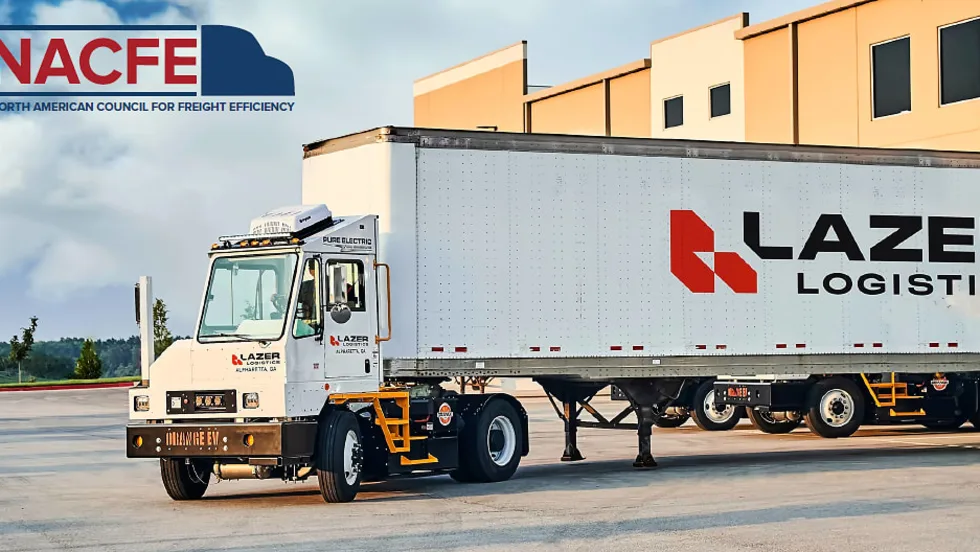
Electric Yard Tractors Move Beyond Pilots
Operating-cost savings have overtaken sustainability goals as the leading reason surveyed fleets are adopting battery-electric terminal tractors, according to new NACFE research.
Read More →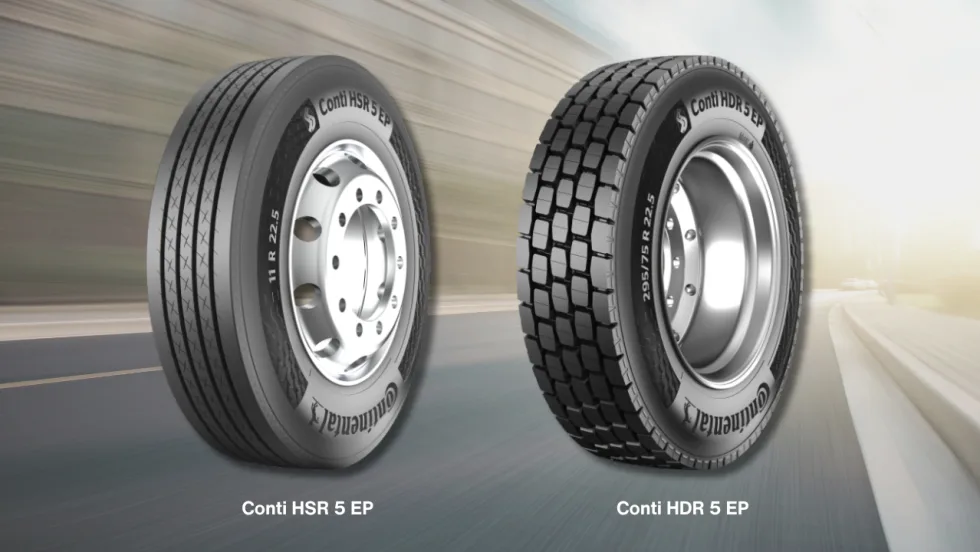
Continental Introduces New Regional Truck Tires
Continental says its new Generation 5 steer and drive tires for regional operations offer longer tread life, with estimated mileage gains of 22% and 19%, respectively.
Read More →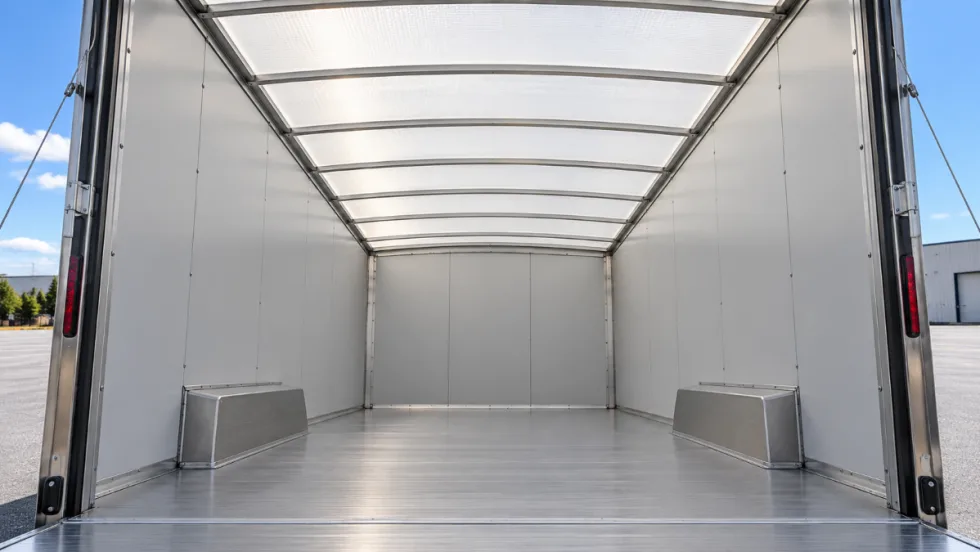
Tekmodo Introduces CargoBright Brand for Translucent Trailer Roofs
CargoBright is designed to diffuse daylight across the cargo area while performing as a working vehicle roof.
Read More →
Fleet Economics Shape Electric Truck Outlook
ACT Research expects costs, charging infrastructure, and technology improvements to drive zero-emission commercial vehicle adoption as federal regulations and incentives retreat.
Read More →
Kodiak Targets Dallas–Houston for Driverless Trucks
The company says its autonomous trucks are completing the I-45 run without a safety observer taking control. It plans to remove the observer by the end of 2026.
Read More →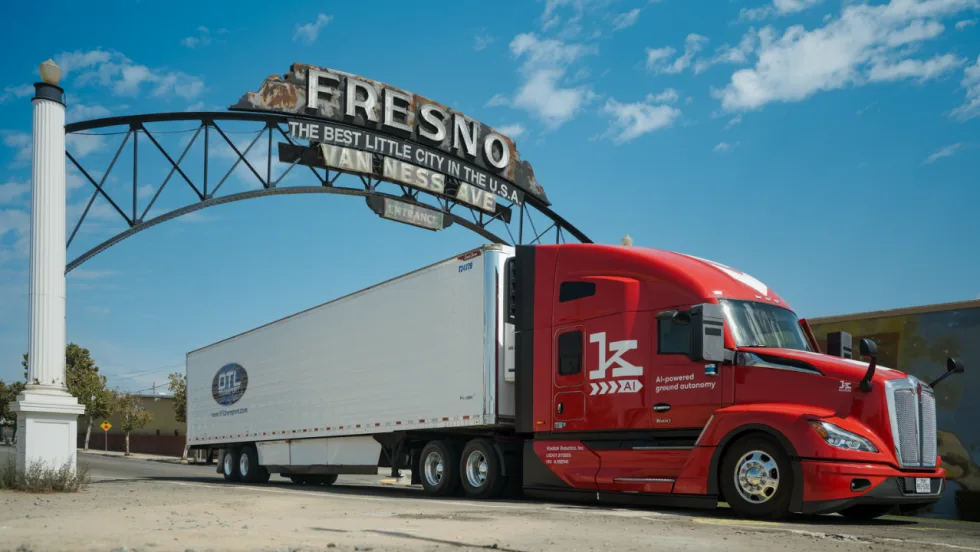
Kodiak Hauls Produce in California Autonomous Truck Pilot
Kodiak AI and DTL Transport have begun hauling produce between Fresno and Los Angeles under California’s new rules for testing heavy-duty autonomous trucks. A safety driver remains behind the wheel.
Read More →
Used-Truck Remarketing Math Is Changing
Used-truck value is no longer just a concern at trade-in. Decisions made throughout a truck’s first life can influence what it’s worth years later.
Read More →
How Volvo Updated Its D13 for EPA 2027 [Watch]
Volvo’s updated D13 promises lower emissions without sacrificing performance or fuel economy. Take a closer look at what changed inside the engine in this HDT Spotlight video.
Read More →
Michelin Tire Improves Efficiency and Durability for Regional Fleets
The Michelin X Multi Energy D2 is a regional haul drive tire engineered to help fleets improve fuel efficiency, durability and traction in demanding stop-and-go operations.
Read More →
ZF Expands Commercial Vehicle Push in North America
ZF is expanding its North American commercial-vehicle presence with new transmission applications, electrification, trailer technology and autonomous-driving systems.
Read More →