




The worst is behind us, but economic recovery will likely be slower than we would like, according to two economic analysts speaking at last week's Heavy Duty Dialogue, a one-day business conference for heavy-duty suppliers.
Economists Say Better Days Ahead, But Growth to be Moderate
The worst is behind us, but economic recovery will likely be slower than we would like, according to two economic analysts speaking at last week's Heavy Duty Dialogue, a one-day business conference for heavy-duty suppliers
by Staff
January 24, 2010
4 min to read
Bill Strauss, a senior economist with the Chicago Federal Reserve, explained that the economy, as measured by gross domestic product, expanded by 2.2 percent in the third quarter. We should see "pretty significant" growth going forward, he said, but not as much as you might think, thanks to the financial crisis and continuing consumer reluctance to spend.
"We're still getting reports that some businesses, especially smaller businesses, are finding financing to be a challenge," Strauss said. "Certainly consumers are. Secondly, we're seeing consumers have taken on a new religion when it comes to savings."
Personal savings has increased sharply, he said. While long-term this is a good thing, short-term, it will slow down the recovery. "Consumer spending represents two thirds of our economy, and if they are saving more, they are spending less." The stock market, he noted, has done "incredibly well" since last March, but it's still well below previous levels.
BLUE CHIP NUMBERS
Strauss pointed to numbers from the Blue Chip panel, a highly respected monthly survey of America's top business economists. This panel, he said, expects a pretty good growth rate of around 4 percent for fourth quarter 2009, but more of a moderate pace going forward for 2010, around 2.9 percent for the year, and 3.2 percent for 2011 - "half of the type of growth levels you once would have anticipated" coming out of such a deep recession.
The good news, he said, is that this more moderate growth should put us at less of a risk for a "double dip" recession.
One of the big concerns coming out of this recession, he said, is the loss of jobs. Unemployment rates are expected to peak at about 10.2 percent. The change in payroll employment has been a much worse drop compared to previous recessions; employment has fallen by more than 7.2 million jobs since December of 2007.
"We cannot go much further, in my opinion," Strauss said. "The unemployment rate is forecast to peak at 10.2 percent early this year and begin to edge lower, but it is still expected to be around 9 percent at the end of 2011. We are not comfortable with unemployment rates at this level."
MANUFACTURING OUTLOOK
Manufacturing, or industrial production, is helping to lead the economy out of the recession, Strauss said. Industrial output fell quite sharply during the recession. "The downturn in manufacturing was the deepest, and close to the longest, decline in the past 50 years." But industrial production has risen strongly for five months in a row, starting in July, and manufacturing industry has recovered nearly 24 percent of that drop in six months. Industrial production is forecast to rise at a solid pace through the end of 2011, over 4 percent this year according to the Blue Chip panel, and Strauss said he's even more optimistic.
Eli Lustgarten, senior vice president at Longbow Securities, noted that early signposts of the end of the recession have been met, such as housing data, the Purchasing Managers Index, and stabilizing commodity prices and equity markets. He said the economic recovery has largely been born of stimulus programs. "Whether you call it a good program or not, massive deficit spending works," he said, and nations around the world, not just the U.S., have been throwing money at solving the global economic problems.
Lustgarten said despite the improvement in industrial and manufacturing numbers reported by Strauss, we're looking at a slow industrial recovery in 2010. "We have dug a deep hole to climb out of," he said, nothing that manufacturing capacity utilization is well down from normal, so there won't be much need for capital spending this year. He cited Eaton as an example: the company's normal capital spending is around $600 million. In 2009, they spent $200 million. Even if they're up 50 percent in 2010, that's $300 million - still half of where it should be.
THE TRUCK MARKET
For the heavy duty industry, Lustgarten predicted that the market for trucks will likely return to more normal levels of demand as early as 2011, but said prior peak levels of over 300,000 units are unlikely.
Rising industrial production is clearly meaning improvement for the trucking sector, Lustgarten said, with freight volumes starting to go up. One of the problems, however, is tremendous excess capacity. In a normal year, average truck fleet utilization is between 85 and 90 percent. In 2009, it bottomed out at about 72 percent, improving in the second half of the year to about 74 percent.
"But we're going to get past that," he said.
Lustgarten predicted Class 8 NAFTA truck production for 2010 would be about 135,000, rising to 195,000 for 2011 and 250,000 for 2012, "assuming the government doesn't get in the way with policy."
More Fleet Management

Trucking's Digital Frontier: AI, Connected Vehicles, Alternative Fuels and More
There's an amazing amount of new technology for trucking out there. For fleets, the challenge is figuring out what’s real, what’s hype, and what’s worth investing in.
Read More →
What's Real in Advanced Truck Technology? ACT Expo's Erik Neandross Weighs In
Artificial intelligence, the software-defined vehicle, telematics, autonomous trucks, electric trucks and alternative fuels, and more in this HDT Talks Trucking interview
Read More →
ACT: Trucking Volumes Rise, Capacity Tightens as Fuel Prices Cloud Outlook
ACT Research data shows volumes hitting a four-year high and supply-demand balance strengthening, but higher oil prices are undercutting tariff relief and tempering optimism.
Read More →
Wabash Teams Physical Security With Digital Tech For Better Cargo Visibility
The patent-pending cargo solution integrates a digitally connected cargo door and an intelligent locking system with the TrailerHawk.AI technology platform.
Read More →
From Diesel Prices to Cyberattacks: How the Iran War Is Affecting Trucking
The impact of the Iran conflict extends beyond fuel costs, bringing more fraud and cybersecurity risks to the trucking industry.
Read More →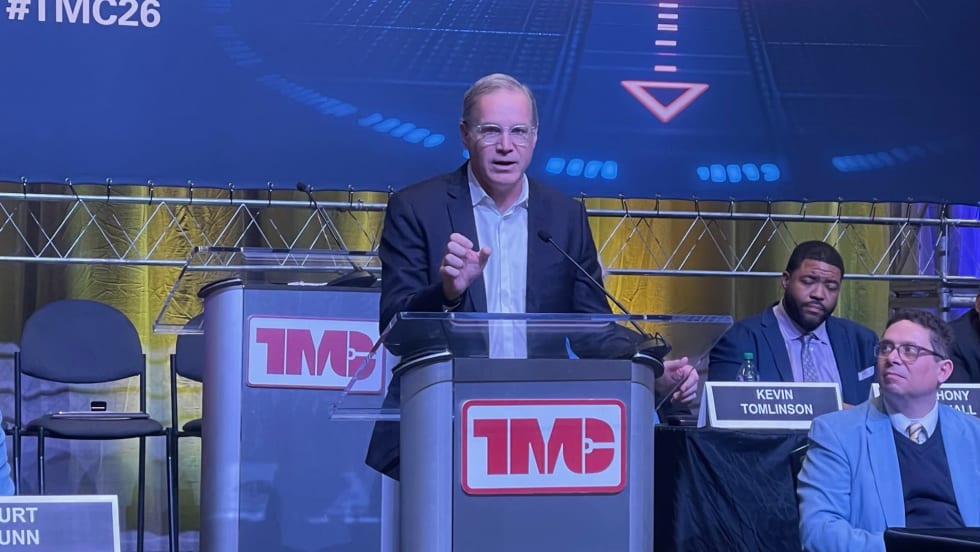
ATA’s Spear Warns Fuel Prices, Trade Policy, and Global Conflict Could Stall Trucking Recovery
Speaking at the TMC Annual Meeting in Nashville, ATA President Chris Spear said trucking faces mounting pressure from rising fuel prices, geopolitical instability, and uncertainty around trade policy.
Read More →
New Entrants, Chameleon Carriers, and Safety: Is It Too Easy to Start a Trucking Company?
More than 100,000 new trucking companies enter the industry each year, but regulators manage to audit only a fraction of them. That churn creates opportunities for inexperienced startups — and for “chameleon carriers” that shut down after safety violations and reappear under new identities. Read more from Deborah Lockridge in this commentary.
Read More →
Fleet Managers Invited to Apply for Exclusive HDT Exchange Event
HDTX is an intimate event that connects heavy-duty trucking fleet managers with industry suppliers through small-group discussions, educational sessions, and structured one-on-one meetings.
Read More →
DAT Launches iPhone Widget to Help Owner-Operators Find Loads Faster
New DAT One feature shows top-paying loads directly on an iPhone’s home screen, helping carriers react faster to spot-market opportunities.
Read More →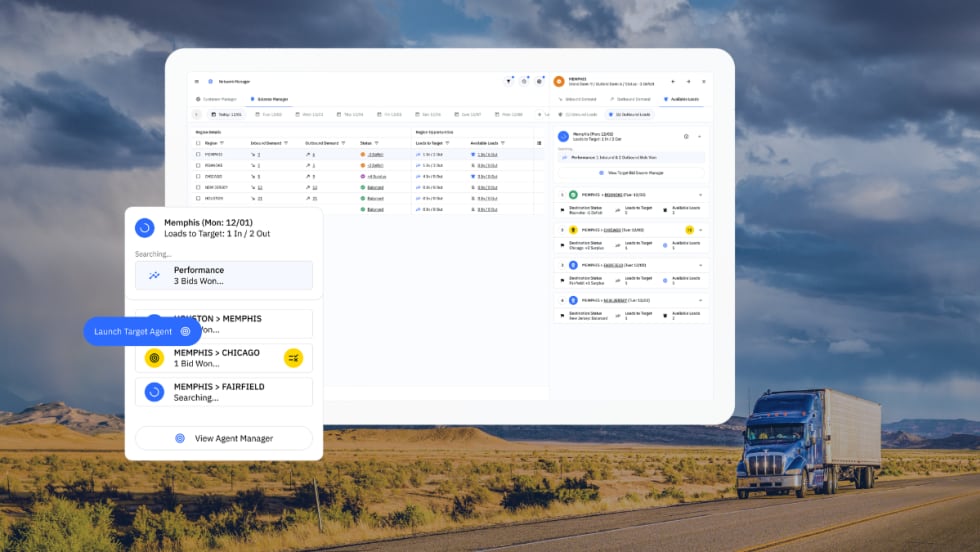
Optimal Dynamics Launches AI System to Help Carriers Choose Better Freight
Optimal Dynamics says its new Scale platform uses AI agents and optimization to help carriers find and secure freight that improves network balance and profitability.
Read More →