




Daimler Truck and Torc Robotics Tap Israeli Company for Lidar Systems
Daimler Truck and Torc Robotics have selected Innoviz as the short-range Lidar supplier for their series production SAE Level 4 autonomous Class 8 semi-trucks.

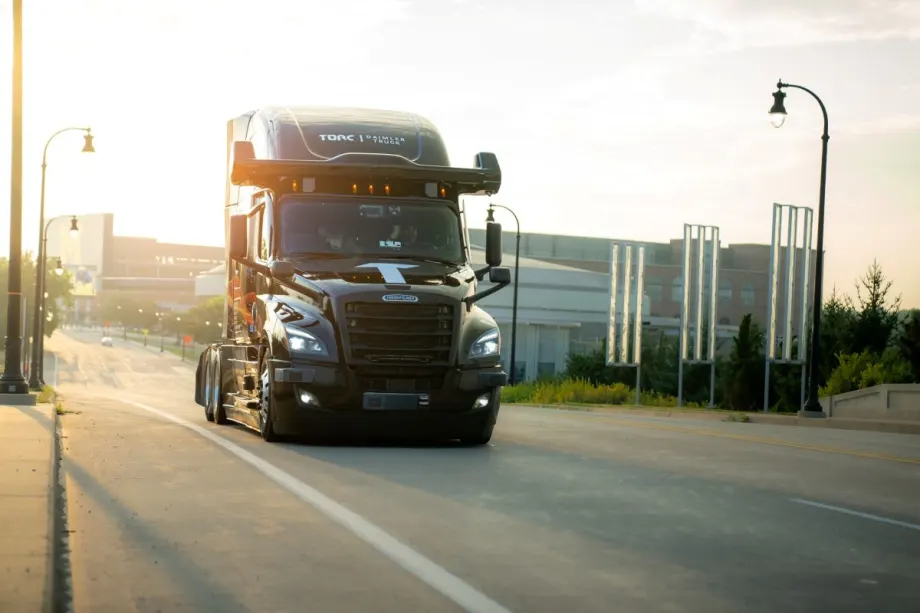
Daimler Truck and Torc Robotics plan to integrate Innoviz’s Lidar technology into the autonomous Freightliner Cascadia.
Photo: Daimler Truck North America
Innoviz Technologies has been selected as the direct supplier of high-performance, automotive-grade Lidar sensor platforms for Daimler Truck and Torc Robotics.
Torc Robotics is a subsidiary of Daimler Truck.
The deal includes a complementary software stack and will equip Daimler/ Torc Level 4 autonomous Class 8 trucks with Innoviz’s short-range Lidar series production.
Joint Development of Sensor Systems
Innoviz will supply its InnovizTwo short-range Lidar sensors to support Daimler Truck and Torc Robotics’ autonomous commercial vehicle program.
As part of a joint development effort, the companies will collaborate to advance the sensors for commercial trucking applications.
Daimler Truck and Torc Robotics plan to integrate Innoviz’s Lidar technology into the autonomous Freightliner Cascadia. This effort will be in combination with Torc’s virtual driver as one of several key components enabling Level 4 autonomous trucking.
The partnership positions Innoviz's technology as a critical component in Daimler Truck's strategy to bring autonomous trucks to market, the company said. Deployment is planned across highway and regional routes in North America to help fleet operators improve operational efficiency and enhance road safety.
"This partnership with Daimler Truck and Torc represents a significant validation of our technology and our position in the autonomous trucking market," said Omer Keilaf, CEO and founder of Innoviz. "The trucking industry demands Lidar sensors that can perform reliably in the most challenging conditions while delivering the precision and range needed for safe autonomous operation. Our InnovizTwo sensors have demonstrated compliance with these stringent requirements, and we're excited to support Daimler Truck and Torc in bringing this transformative technology to market."
"Selecting the right Lidar partner is fundamental to our autonomous trucking strategy," said Rakesh Aneja, head of corporate development at Daimler Truck North America. "Innoviz's proven track record in automotive-grade Lidar sensors makes them an ideal partner as we advance toward series production. This collaboration brings us closer to delivering autonomous trucks that will reshape the logistics industry."
Mike Avitabile, head of engineering at Torc, added, "Integrating Innoviz’s technology into our self-driving vehicle software solution enhances our system’s ability to detect, classify, and track objects in real time across diverse road and weather conditions. Innoviz’s sensors deliver the consistency and durability required for commercial operation, while supporting the redundancy needed for safe Level 4 autonomy."
Complementary Sensor Technologies
Daimler Truck and Torc rely on a combination of three complementary sensor technologies – state-of-the-art Lidar, radar, and camera systems. These systems work together to precisely detect the vehicle’s surroundings under all conditions.
This multi-layered approach enhances road safety both on highways and in challenging maneuvers such as turning at intersections or navigating ramps, according to the companies.
Lidar technology uses laser pulses to generate high-resolution 3D maps of the environment.
For maximum safety, autonomous trucks require both long-range Lidar systems to identify objects far ahead and short-range sensors to capture detailed, close-proximity data in complex driving situations.
More Safety & Compliance
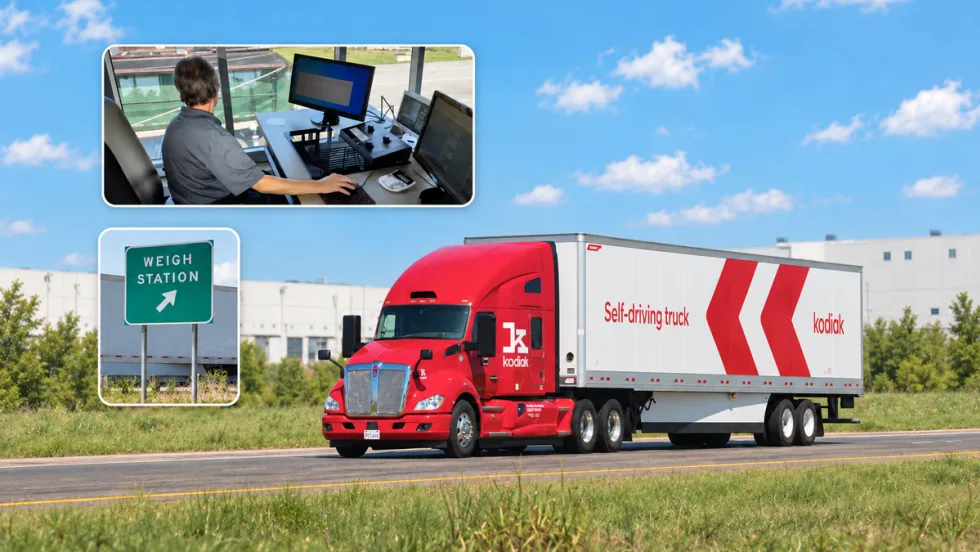
PrePass, Kodiak Connect Driverless Trucks to Roadside Enforcement
The system will allow enforcement agencies to verify Enhanced Inspection information and decide whether Kodiak’s autonomous trucks can bypass roadside screening sites.
Read More →
From One Generation to the Next: How Mentorship Builds Safer Truck Drivers
After three decades in trucking, Harold Perry shares what he's learned about driver safety, mentorship, and helping the next generation build confidence behind the wheel.
Read More →
FMCSA Pauses Biennial-Update Enforcement Amid Motus Transition
Carriers whose updates were due on or after June 1 have more time, while FMCSA works to stabilize its new registration system and warns of phishing sites impersonating its new carrier registration system, Motus.
Read More →
ZF Expands Commercial Vehicle Push in North America
ZF is expanding its North American commercial-vehicle presence with new transmission applications, electrification, trailer technology and autonomous-driving systems.
Read More →
Truck Drivers Need More Than Another Alert
Fleets have more visibility into truck health, safety events, and driver activity than ever. The next challenge is turning all that information into useful guidance for the person who has to decide what to do next.
Read More →
Tesla Wants a Self-Driving Semi. Are Cameras Enough?
Could Tesla’s camera-only autonomous driving technology work on an 80,000-pound Semi? In this commentary, HDT's Deborah Lockridge takes a look at Tesla, Cybercab, and how autonomous trucks see the road.
Read More →
What DOT’s Automated Vehicle Strategy Means for Trucking
The U.S. Department of Transportation issued a new automated-vehicle strategy that outlines plans for driverless-truck regulations, cross-state freight corridors, and federal safety standards.
Read More →
NYC Expands Speed, Pedestrian Safety Tech Across Fleet
New York City is expanding intelligent speed assistance and pedestrian-alert systems across its municipal fleet, moving the technologies from pilot programs into vehicle procurement and retrofit requirements.
Read More →
FMCSA Removes 110 Truck Driver Training Schools from Certified ELDT List
Federal regulators also are targeting more than 160 additional training providers and launching a nationwide audit of third-party CDL skills testers as part of a broader crackdown on trucking fraud.
Read More →
Beyond DOT Compliance: What Makes a Trucking Fleet Truly Safe?
A trucking fleet can follow every rule and still make unsafe decisions. The real test comes when safety conflicts with freight, productivity, or cost.
Read More →