




Volvo Trucks Introduces Stop/Start Diesel Engine Technology
Volvo Trucks has introduced new stop\start technology for its diesel engines in Europe.

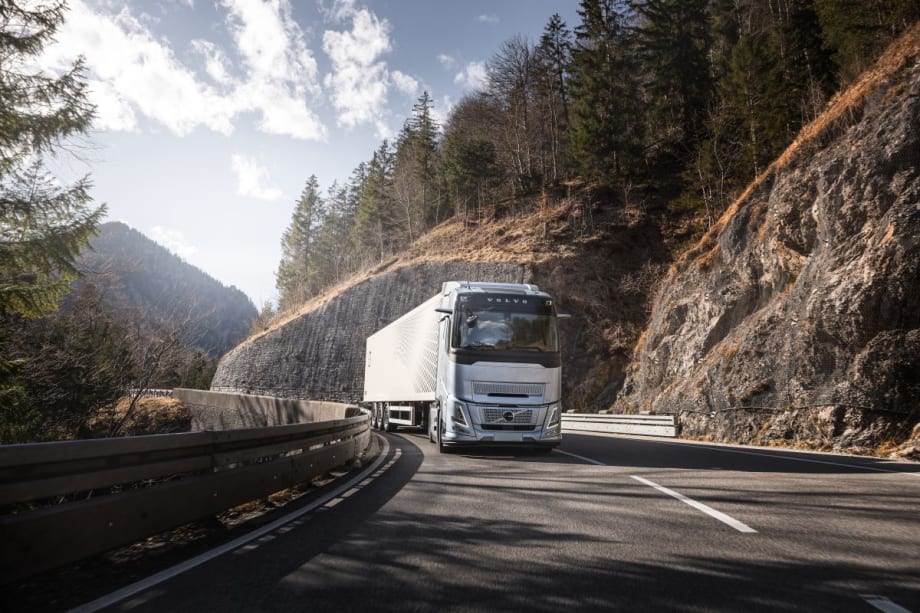
Volvo Trucks said its new stop/start function for diesel truck engines will cut fuel consumption and CO2 emissions.
Photo: Volvo Trucks
Volvo Trucks has introduced a new generation of its I-Roll technology. The upgrades adds new engine stop/start functionality.
Volvo said the technology is a world first in the heavy-duty truck industry.
According to the OEM, the new stop/start function will cut fuel consumption and CO2 emissions – the latest initiative from Volvo to reduce the climate impact and running costs of transportation.
Real Fuel Economy Improvements
Volvo Truck said its recent victory in the 2025 Green Truck Award test with the Volvo FH Aero is proof that its latest technologies and innovations have a real impact on fuel efficiency.
The new Aero cab that was introduced in 2024 and the further aerodynamic improvements since then pay off in terms of significant fuel consumption and CO2 emission reductions.
Building on this platform, Volvo Trucks' I-Roll with engine stop/start is a new feature to reduce fuel consumption and CO2 emissions
The technology was developed in-house at Volvo. It is based on the company’s existing I-See and I-Roll technologies.
The new stop/start engine feature is enabled by constantly monitoring road data and road curvature information.
The engine will be turned off temporarily when an oncoming downward slope is identified along the route.
While the engine is turned off, zero fuel will be consumed and consequently, there will be no CO2 tailpipe emissions.
More Fuel-Efficient Transport
“Our engineers have done it again – innovating a new engine technology that contributes to making transport by truck more fuel-efficient”, says Jan Hjelmgren, head of product management, Volvo Trucks. He continues: “As part of our decarbonization strategy, we will continue to innovate to make our combustion engines even better and to reduce our impact on the environment.”
The new engine stop/start functionality is activated at speeds above 60 km/h.
Depending on enabling conditions such as topography and ambient temperature, the new I-Roll with Engine stop/start will be able to cut up to one percent of fuel and CO2 emissions on top of already achieved savings.
Together, Volvo said its many innovations represent significant efficiencies and a positive impact on emissions from transport, as well as running costs for the operator.
The new feature will be offered on the Volvo FH and FH Aero with 13-liter diesel engines.
Customers can order it beginning September 2025.
Volvo Trucks’ strategy for decarbonization includes combustion engines powered by renewable fuels, battery-electric and fuel-cell electric trucks.
More Fuel Smarts

Geotab Links Fleet Card to Vehicle Data
The new card combines fuel discounts with telematics-based purchase controls. Geotab’s analysis also points to potential savings from choosing lower-priced fuel stops.
Read More →
Fleet Economics Shape Electric Truck Outlook
ACT Research expects costs, charging infrastructure, and technology improvements to drive zero-emission commercial vehicle adoption as federal regulations and incentives retreat.
Read More →
Wex Adds Cardless Fuel Payments for Over-the-Road Customers
A new fuel card feature for Wex customers offers convenience and security.
Read More →

New California Law Could Shed Light on Electric Truck Prices
Why do battery-electric Class 8 trucks remain so expensive? A California bill signed by Gov. Gavin Newsom would give fleets and state agencies more visibility into what manufacturers charge.
Read More →
How Volvo Updated Its D13 for EPA 2027 [Watch]
Volvo’s updated D13 promises lower emissions without sacrificing performance or fuel economy. Take a closer look at what changed inside the engine in this HDT Spotlight video.
Read More →
Diesel Price Spike Shortens Payback for Natural Gas Trucks, Report Says
Energy Vision estimates fleets could recover the higher purchase price of an RNG-fueled Class 8 tractor in 1.3 to 2.8 years under current fuel-price scenarios.
Read More →
Calstart Becomes Catalyst Mobility, Reflecting Broader Focus
Calstart is now Catalyst Mobility, reflecting the nonprofit’s growing national role in clean transportation, including zero-emission trucks, infrastructure and incentive programs.
Read More →
Record Diesel Prices Squeeze Trucking Fleets
Average U.S. diesel prices have climbed to nearly $6 a gallon, surpassing the 2022 record as tight refinery capacity and Middle East disruptions keep fuel costs elevated.
Read More →
How Fuel Delivery Shapes Engine Performance
Fuel delivery depends on more than what happens at the injector. For fleet, maintenance and technical professionals, looking at the full path from pump to injector can provide useful context for understanding engine performance.
Read More →
East Coast Port Launches $45M Electric Truck Push
The Port Authority of New York and New Jersey announced millions in incentives for zero-emission drayage trucks, yard tractors, and new charging hubs near the port.
Read More →