




Bills Would Kill Federal Speed Limiter Mandate
Will the Republican congress kill off the attempt to mandate speed limiters for heavy trucks? Read about the bills and the history of efforts to mandate speed limiters.


Among the latest legislation introduced on Capitol Hill are bills to ban FMCSA from mandating speed limiters for heavy trucks.
Image: HDT Graphic
A bill has been introduced in both the U.S. House and Senate to keep the Federal Motor Carrier Safety Administration from mandating speed limiters on trucks.
The Deregulating Restrictions on Interstate Vehicles and Eighteen-Wheelers (DRIVE) Act was introduced in the Senate by Sen. Steve Daines (R-MT).
The bill is a companion to legislation introduced by Rep. Josh Brecheen (R-OK) in the House last month.
This is not the first time these bills have been introduced. However, with a Republican-controlled legislature, they are more likely to pass than in the past.
How Common Are Truck Speed Limiters?
Many trucking fleets use speed limiters for their own safety and fuel efficiency goals. In the 2024 HDT/Work Truck Safety Study, speed limiters were the most common safety technology among the survey respondents, at 51%, with larger fleets being more likely to use them than smaller fleets. The most common maximum speed was 68-70 mph.
But there's a difference between a fleet choosing to use speed limiters and having them mandated.
Critics of mandatory speed limiters say they create unnecessary congestion and dangerous speed differentials among vehicles.
The History of the Mandatory Speed Limiter Proposal
There have been efforts to require speed limiters on heavy trucks for nearly 20 years.
In separate petitions in 2006, the American Trucking Associations and Road Safe America asked the National Highway Traffic Safety Administration to consider requiring limiters set at 68 mph in heavy trucks.
NHTSA spent several years gathering information and issued a proposal in 2013, which was rejected by DOT.
In 2016, after a decade-long push by trucking and safety advocates, NHTSA and FMCSA jointly proposed a rule that would require heavy-duty vehicles to be equipped with speed-limiting devices.
But that ran out of gas in 2017 in the face of the Trump Administration's push to cut federal regulations.
In 2019 there was a push in Congress to mandate speed limiters.
In 2021 under the Biden administration the speed-limiter issue was revived.
A 2022 Advance Notice of Supplemental Proposed Rulemaking proposed that carriers operating commercial trucks of 26,001 pounds or more equipped with an electronic engine control unit capable of governing the maximum speed "be required to limit the CMV to a speed to be determined by the rulemaking and to maintain that ECU setting for the service life of the vehicle.”
But the rulemaking was going nowhere fast, as HDT reported in 2022 and again in early 2024.
Last fall, before the election, former FMCSA official Jack Van Steenburg told attendees of Heavy Duty Trucking Exchange that the speed limiter rule was “not going anywhere. It’s dead on arrival.”
Shortly after the election, the Truckload Carriers Association pointed out that "the proposed rule has been delayed throughout Biden’s time in office....With a Trump Administration and a prominent Republican Congress, a speed limiter ruling may never come in place."
Although the comment period on the 2022 advanced notice of supplemental proposed rulemaking officially ended in June of 2022, the docket continues to draw comments, up to more than 15,000.
Opponents of Mandatory Truck Speed Limiters
One of the biggest critics of mandatory speed limiters has been the Owner-Operator Independent Drivers Association.
“No one is more committed to safe highways than America’s truck drivers,” said OOIDA President Todd Spencer in a news release.
“We share the same goal as every motorist — arriving safely," he continued. "But forcing trucks to operate below the speed of traffic makes roads less safe by creating speed differences and more risky interactions."
Other supporters of the bill to kill a speed limiter mandate include the National Association of Small Trucking Companies, the Mid-West Truckers Association, Towing and Recovery Association of America, the North American Punjabi Trucking Association, and a number of agricultural and construction-related organizations.
In January, the groups wrote a letter to then-President-Elect Trump asking him to indefinitely postpone the rulemaking.
The coalition pointed out that “while a speed limiter mandate may be thought as something affecting only the 'trucking' industry, FMCSA’s proposal would apply to every commercial truck weighing over 26,000 pounds."
In addition to making roads less safe, they said, a speed limiter mandate would make it more difficult for businesses to attract and retain professional drivers, and result in more trucks being needed to haul the same amount of freight, causing more congested highways.
What Do Other Trucking Associations Say About Speed Limiters?
The American Trucking Associations has supported the idea of a mandatory speed limiter rule in general, but had problems with the specifics of the proposal.
Official ATA policy supports speed limiters allowing up to 70 mph in trucks equipped with automatic emergency braking and adaptive cruise control. In trucks without these safety technologies, its policy supports a maximum set speed of 65 mph.
ATA has objected to efforts by anti-truck groups to pursue a speed-limiter rule setting speeds in the low 60s.
The Truckload Carriers Association in 2019 supported a bill that would require new trucks weighing over 26,000 pounds to be equipped with speed limiters set at a maximum speed of 65 mph. In a report issued last fall after the election, TCA said it has supported this safety technology, as many of its member carriers use speed limiters.
The Alliance for Driver Safety & Security, also known as the Trucking Alliance, said in 2023 that it "believes in the benefits that come with reasonably limiting speeds for commercial motor vehicles." And in fact, all of its fleet members use speed limiters in their own fleets for safety and fuel efficiency.
In 2022,the Trucking Alliancesubmitted comments on the proposed regulation for speed limit devices. Pointing out that excessive speed is often a factor in large-truck crashes, the alliance said it "supports a federal motor carrier safety standard that will require large commercial trucks not to exceed a reasonable maximum highway speed. Large commercial trucks manufactured since 2003 have the technology to easily govern the truck’s maximum speed."
TheNational Private Truck Council in its comments on the 2022 proposal questioned the need for a nationwide limit due to variances in geography, traffic congestion, and so on.
More Safety & Compliance
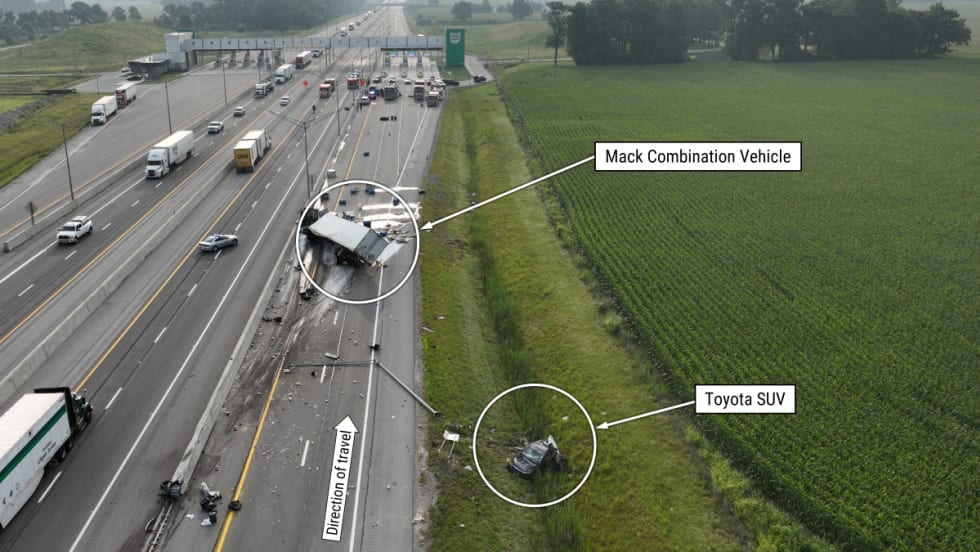
Fatal Crash Exposes Toll Plaza Risks
An NTSB investigation found that last-minute lane changes and large speed differences at an Ohio toll plaza created a hazard the truck driver couldn't avoid in time.
Read More →
When Language Stops the Truck: The Return of ELP Out-of-Service Orders
English language proficiency rules for commercial drivers aren’t new, but renewed out-of-service enforcement has raised the stakes. Here’s what carriers need to know before a driver reaches a roadside inspection.
Read More →
A Camera Isn't a Safety Program. Here's What Brokers Are Screening for Now
Footage alone may not be enough to pass broker vetting processes. Here's what counts as a defensible safety program now.
Read More →

Marijuana and Trucking’s Drug-Testing Dilemma
Marijuana is getting stronger, laws are changing, and drug tests still can’t reliably establish impairment. What does that mean for truck drivers and the fleets that employ them?
Read More →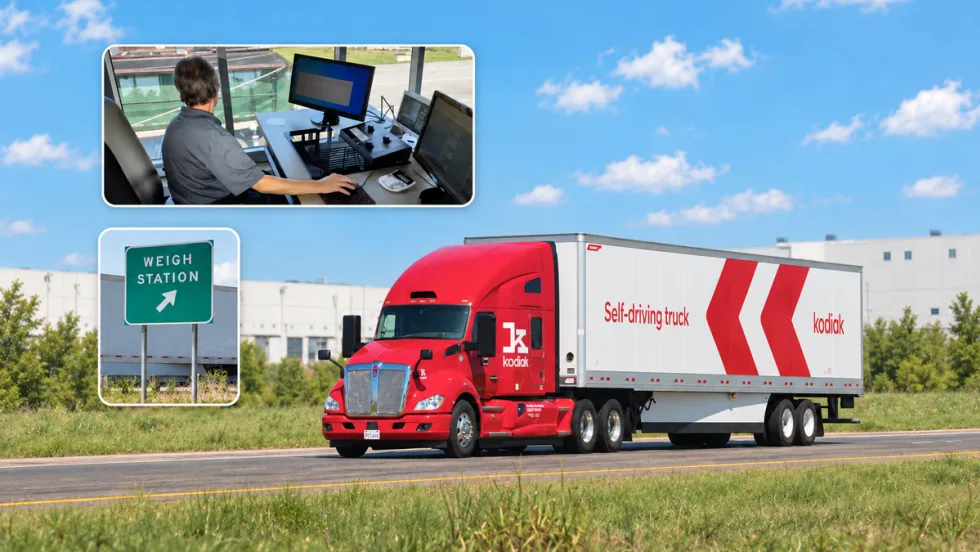
PrePass, Kodiak Connect Driverless Trucks to Roadside Enforcement
The system will allow enforcement agencies to verify Enhanced Inspection information and decide whether Kodiak’s autonomous trucks can bypass roadside screening sites.
Read More →
From One Generation to the Next: How Mentorship Builds Safer Truck Drivers
After three decades in trucking, Harold Perry shares what he's learned about driver safety, mentorship, and helping the next generation build confidence behind the wheel.
Read More →
FMCSA Pauses Biennial-Update Enforcement Amid Motus Transition
Carriers whose updates were due on or after June 1 have more time, while FMCSA works to stabilize its new registration system and warns of phishing sites impersonating its new carrier registration system, Motus.
Read More →
ZF Expands Commercial Vehicle Push in North America
ZF is expanding its North American commercial-vehicle presence with new transmission applications, electrification, trailer technology and autonomous-driving systems.
Read More →
Truck Drivers Need More Than Another Alert
Fleets have more visibility into truck health, safety events, and driver activity than ever. The next challenge is turning all that information into useful guidance for the person who has to decide what to do next.
Read More →
Tesla Wants a Self-Driving Semi. Are Cameras Enough?
Could Tesla’s camera-only autonomous driving technology work on an 80,000-pound Semi? In this commentary, HDT's Deborah Lockridge takes a look at Tesla, Cybercab, and how autonomous trucks see the road.
Read More →