




Truck Speed-Limiter Rule Stalls in Trump’s Washington
The drive to mandate speed-limiters on trucks has sputtered out— at least for now— courtesy of the Trump administration's push to cut federal regulations


Photo: FMCSA

Photo: FMCSA
The drive to mandate speed-limiters on trucks has sputtered out— at least for now— courtesy of the Trump Administration's push to cut federal regulations.
The revised “unified agenda,” published on July 20 by the Office of Management and Budget, reveals that a speed-limiter rule has fallen off the near-term agendas for both the Federal Motor Carrier Safety Administration and the National Highway Traffic Safety Administration.
“By amending and eliminating regulations that are ineffective, duplicative, and obsolete, the administration can promote economic growth and innovation and protect individual liberty," the White House Office of Management and Budget said in a statement upon posting the updated agenda.
After a decade-long push by trucking and safety advocates, last August the National Highway Traffic Safety Administration and FMCSA jointly proposed a rule that would require heavy-duty vehicles to be equipped with speed-limiting devices.
The rule would require each vehicle, as manufactured and sold, to have its device set to a speed not greater than a specified speed and to be equipped with means of reading the vehicle’s current speed setting and the two previous speed settings through its onboard diagnostic connection. And carriers would be required to maintain the speed-limiting device for the service life of the vehicle.
But no actual speed limit was proposed for the devices. DOT only proposed discussing “the benefits of setting the maximum speed at 60, 65, and 68 mph” and that it “will consider other speeds based on public input.”
Chris Spear, president and CEO of the American Trucking Associations, slammed the proposal last October for its lack of specificity and the dearth of research backing it up. “The various differentials in speed from what this rule proposes and what state speed limits are is dangerous,” he contended.
More than 5,400 public comments were filed on the proposal, after a 30-day extension granted because of high interest. Given that, it was highly unlikely-- even before President Trump took office-- that this rule was headed anywhere fast.
“Generally, FMCSA's latest agenda is light,” wrote Avery Vise, president of compliance consultancy TransComply in a blog post. “Most rulemakings [still listed] are those already proposed relating to military drivers and relaxing restrictions on commercial learner's permits.”
However, he also pointed out that “the Trump administration apparently plans to pursue a regulation related to moderate-to-severe obstructive sleep apnea. While FMCSA and the Federal Railroad Administration had eyed joint regulations on sleep apnea, the issue is not on FRA's latest agenda.”
Commenting on the speed-limiter rule coming off the agenda, Lane Kidd, managing director of The Trucking Alliance advocacy group, told HDT that the alliance “agrees with the U.S. Department of Transportation’s research that requiring transportation companies to simply turn on the speed limiter device that are already in every truck built since 1992, will reduce the severity of injuries and fatalities of people involved in large truck accidents.
“Limiting tractor trailers to a reasonable maximum speed makes common sense and companies that utilize speed limiters are safer and also more profitable because they gain fuel savings, and better brake and tire wear,” he continued. “Speed limiters are coming, either through the legislative or regulatory process because they will save lives, and we won’t give up the effort until we achieve that goal.”
Offering a less sanguine take on the rule’s fate, Norita Taylor, spokesperson for the Owner-Operator Independent Drivers Associations told HDT that, “We [at OOIDA] know that there are entities that still want to push dangerous speed limiters under the guise of safety.”
More Fleet Management

Nomination Deadline Extended for HDT Emerging Leaders
Just a few more days to nominate accomplished trucking fleet professionals under 40 who are making an impact and helping lead the industry forward for the HDT Emerging Leaders award. Deadline extended to October 20!
Read More →
What Will ATA’s New Leader Bring to Trucking's Table?
Incoming President and CEO Mark Colson’s record in Alabama offers clues about his priorities and approach following Chris Spear’s abrupt departure as the head of the American Trucking Associations.
Read More →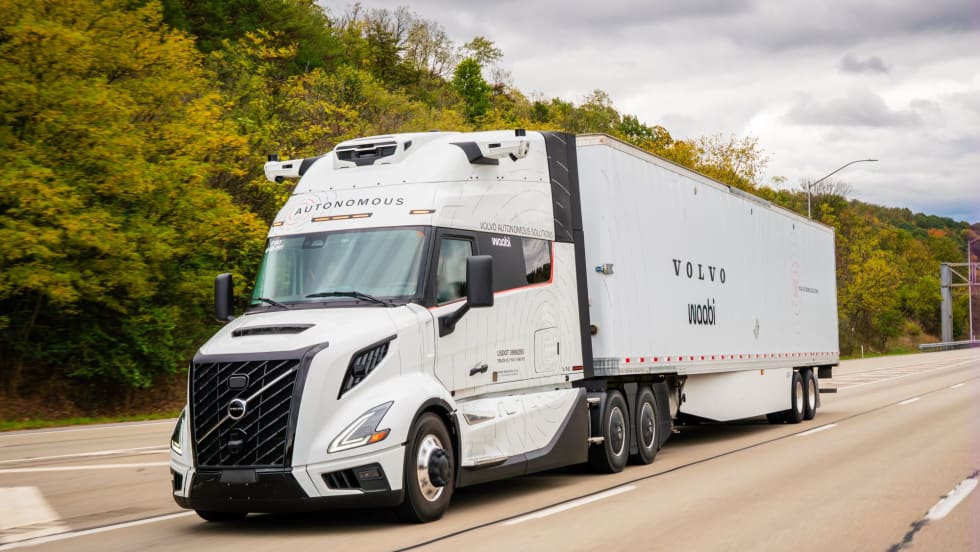
Volvo, Waabi Start Commercial Autonomous Operations in Texas
Volvo VNL Autonomous trucks, powered by the Waabi Driver, are hauling freight directly to third-party facilities for a customer in Texas.
Read More →
Samsara Launches Custom AI Agent Builder
Agent Studio lets fleets create AI tools for hours-of-service monitoring, reporting and driver support, including agents that communicate by phone.
Read More →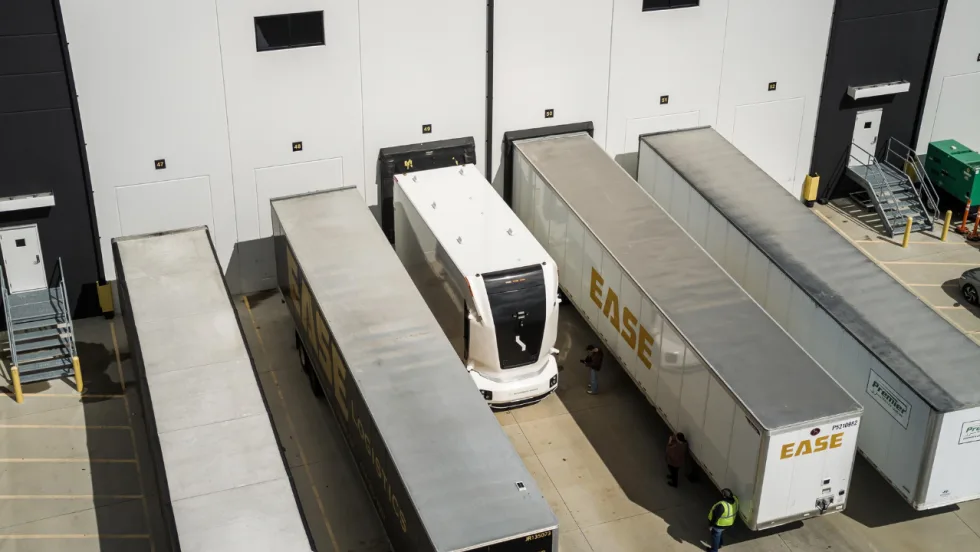
Einride Driverless Electric Trucks Begin Daily Freight Operations in Ohio
Two cabless electric trucks are hauling freight between EASE Logistics facilities in Marysville, Ohio, as part of a multi-state truck automation project.
Read More →
Geotab Links Fleet Card to Vehicle Data
The new card combines fuel discounts with telematics-based purchase controls. Geotab’s analysis also points to potential savings from choosing lower-priced fuel stops.
Read More →
How MFA Helps Protect Trucking Fleets
Multi-factor authentication adds protection when passwords are stolen. Here’s how it works and where fleets should start.
Read More →
How Better Freight Data Helps Trucking Teams Get Ahead of Disruption
Trucking and logistics teams have plenty of data. The problem is getting the right information in front of the right people soon enough to act. Better-connected data can help teams spot trouble earlier and make smarter decisions before small problems become big ones.
Read More →
Trimble: Taking Artificial Intelligence in Trucking Beyond Faster Tasks
At Insight 2026, Trimble executives argued that fleets may need to redesign workflows to get more from AI as it introduced new products and enhancements. AI’s value will depend on how fleets combine automation with their people's knowledge.
Read More →
Build a bulletproof fleet: Uniting ELDs and dash cams for total compliance
An ELD can prove compliance, but it cannot always prove what happened on the road. Discover how uniting accurate ELD data with AI-powered dash cam video can help your fleet strengthen compliance, defend against liability, protect drivers and reduce operational costs.
Read More →