




Peterbilt Launches Model 579EV and Model 567EV Trucks
Peterbilt unveiled its next generation of heavy-duty electric trucks, including an all-new model for the vocational market.

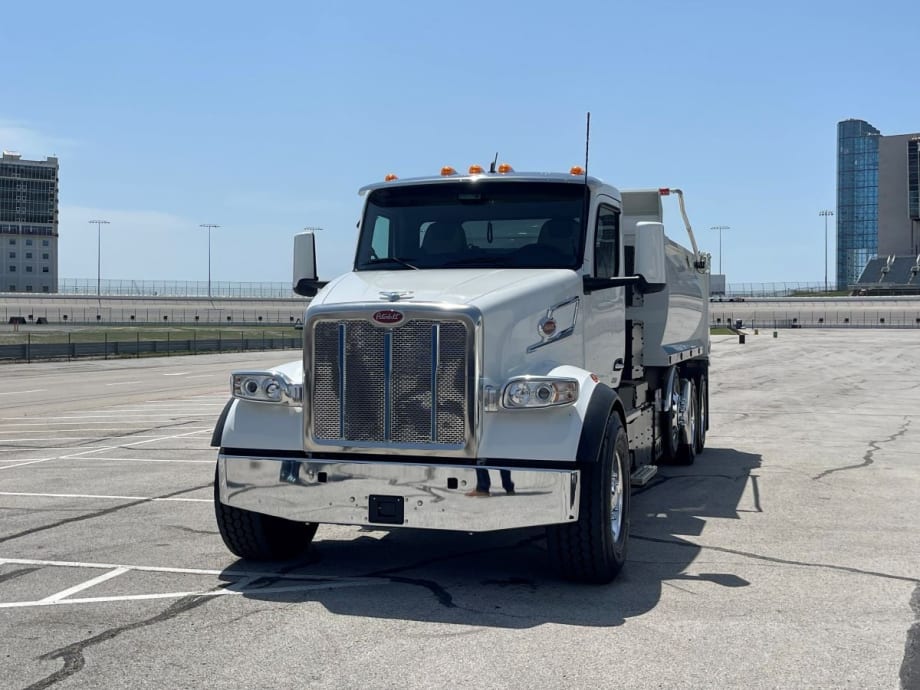
The Peterbilt Model 567EV is designed for vocational applications including dump trucks, utility trucks and equipment haulers.
Photo: Jack Roberts
Peterbilt has introduced two new heavy-duty battery-electric vehicles. The new models are the OEM’s next-generation Model 579EV and the all-new Model 567EV.
Peterbilt said the Model 567EV is the North American trucking industry’s first electric heavy duty conventional vocational truck.
At a meeting with journalists in Denton, Texas, in April, Erik Johnson, assistant general manager, sales and marketing, at Peterbilt, said the new trucks are optimized for drayage and regional-haul operations.
“Designed for performance and efficiency, the next evolution of Peterbilt battery-electric vehicles offer industry-leading versatility, fast-charging capabilities and advanced safety features to meet the needs of today’s fleet and vocational operations,” Johnson added.
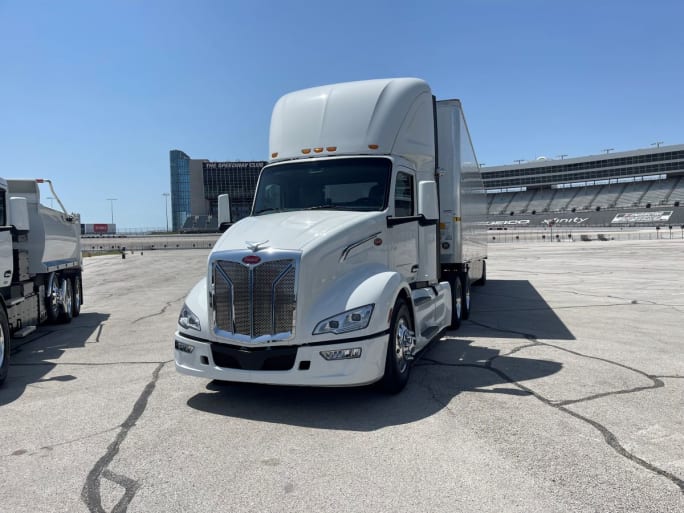
The Model 579EV features three distinct battery capacity options with a maximum range of 200 miles.
Photo: Jack Roberts
The Next-Generation Model 579EV
The new Model 579EV builds on the diesel-powered Model 579 platform, Johnson said.
He noted the truck is features numerous enhanced performance features including:
Three distinct battery capacity options with a maximum range of 200 miles
Up to 350kW DC charging enables 80% charge in just over 90 minutes
Safety enhancements, including a new electronic parking brake (EPB) and standard Bendix Fusion Stop & Auto-Go Advanced
Best in class ergonomics, LED lighting and driver comfort.
The exterior design of the 579EV features an exclusive grille with a distinctive pattern and splayed grille bars with blue accents. The hood features stylish side panels with bright bezels and blue accents.
The interior design features laser-etched trim panels and gray stitching on the EV-exclusive Platinum Ionic Gray interior.
All-New Model 567EV for Vocational Applications
The all-new Model 567EV is designed for vocational applications including dump trucks, utility trucks and equipment haulers, according to Johnson.
The 567EV features a distinctive exterior look with a blue accented crown and grille, as well as EV-exclusive panels on the side of the hood.
Johnson said these added elements deliver contemporary styling while maintaining its rugged presence.
The 567EV also features the same Platinum Ionic Gray interior.
Other highlights on this new truck include:
Four distinct battery capacity options with a maximum range of 250 miles in full truck and tractor configurations
Furnished-by-owner ePTO options rated at 25kW or 150kW
Configurable PTO controls and switches
Industry standard body lighting connections
Customizable frame layout options
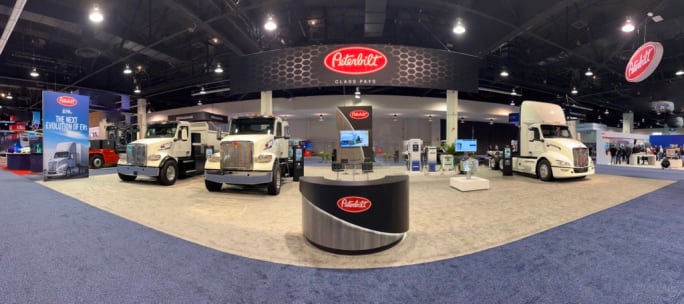
Peterbilt's next generation electric trucks were featured in its booth at ACT Expo. The new Model 567EV was shown in two configurations: With a Rogue 15-yard dump body, and in a max range tractor configuration with 625 kW-hr of battery capacity for vocational tractor and extended regional haul applications.
Photo: Peterbilt
Johnson said Peterbilt’s common design philosophy emphasizes “purposeful innovation.” To that end, both the next-generation Model 579EV and the all-new 567EV include:
Paccar ePowertrain
EV-specific Digital Driver Display with key performance and charging data
SmartLinq integration indicating energy usage, location and range
Configurable powertrain and cabin preconditioning
Configurable charge start times to take advantage of lower electricity rates
Electronic Park Brake system electronically controlled brakes with full software integration
Peterbilt SmartDisplay
Johnson said both vehicles will be available with SmartDisplay, an innovative 13-inch touch-enabled infotainment interface. The responsive touch screen and control dial allow for quick access to essential functions such as HVAC controls and AM/FM/Satellite radio.
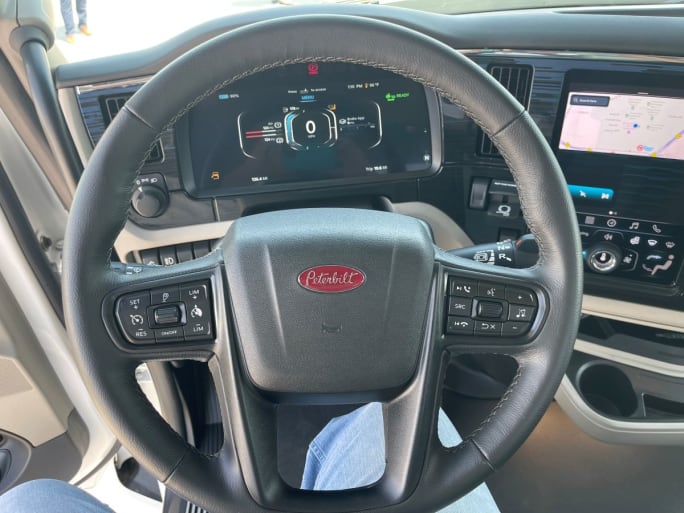
Both new Peterbilt electric trucks both vehicles will be available with SmartDisplay, an innovative 13-inch touch-enabled infotainment interface.
Photo: Jack Roberts
SmartDisplay also features advanced productivity applications including vehicle health monitoring, navigation, dealer locator and, in early 2026, Virtual Vehicle, an online app marketplace.
New Paccar ePowertrain
At the core of Peterbilt’s new electric vehicle lineup is the PACCAR ePowertrain. Johnson said this all-new electric vehicle architecture can be adapted to a variety of models and applications.
Key features include:
Midship-mounted emotor with dual electric motors and integrated 3-speed transmission to deliver seamless shifting with no torque interruption
Multiple power options to optimize for different applications and performance needs up to 605 horsepower and 1,850 lb.-ft. of torque
Proven and reliable lithium iron phosphate battery (LFP) chemistry
Selectable three-stage regenerative braking
Flexible architecture allowing for integration with existing suspensions
Supports any wheelbase of 190 inches or longer and applications up to 82,000 lbs. gross combined weight
Charging Infrastructure & Battery-Electric Vehicle Deployment
Johnson noted that Peterbilt is an EV deployment partner and, in addition to its full lineup of trucks, has partnerships in place with industry-leading providers of charging infrastructure services.
Key offerings include:
A complete lineup of chargers available at Peterbilt dealers through Paccar Parts; options include both AC and DC chargers with up to 350kW capacity
Charging infrastructure planning and installation services through QMerit and Schneider Electric
“Peterbilt leads the industry with high-performance, zero emissions, heavy duty battery-electric vehicles,” Johnson added.
“The next-generation Model 579EV and the all-new Model 567EV support the sustainability goals, operational efficiencies and enhanced driver experiences our customers demand for long term success in an evolving industry.”
More Fuel Smarts

Why Small Fuel Savings Matter in Trucking
Can better fuel economy help pay for driver raises? In this podcast, GP Transco explains how small efficiency gains create room to reinvest in its people.
Read More →
How GP Transco Cuts Trucking Fuel Costs, a Tenth of a Gallon at a Time
What’s another tenth of a mile per gallon worth? GP Transco shares how equipment upgrades and driver coaching turn small gains into meaningful fuel savings.
Read More →
Electric Yard Tractors Move Beyond Pilots
Operating-cost savings have overtaken sustainability goals as the leading reason surveyed fleets are adopting battery-electric terminal tractors, according to new NACFE research.
Read More →
Geotab Links Fleet Card to Vehicle Data
The new card combines fuel discounts with telematics-based purchase controls. Geotab’s analysis also points to potential savings from choosing lower-priced fuel stops.
Read More →
Fleet Economics Shape Electric Truck Outlook
ACT Research expects costs, charging infrastructure, and technology improvements to drive zero-emission commercial vehicle adoption as federal regulations and incentives retreat.
Read More →
Wex Adds Cardless Fuel Payments for Over-the-Road Customers
A new fuel card feature for Wex customers offers convenience and security.
Read More →
New California Law Could Shed Light on Electric Truck Prices
Why do battery-electric Class 8 trucks remain so expensive? A California bill signed by Gov. Gavin Newsom would give fleets and state agencies more visibility into what manufacturers charge.
Read More →
How Volvo Updated Its D13 for EPA 2027 [Watch]
Volvo’s updated D13 promises lower emissions without sacrificing performance or fuel economy. Take a closer look at what changed inside the engine in this HDT Spotlight video.
Read More →
Diesel Price Spike Shortens Payback for Natural Gas Trucks, Report Says
Energy Vision estimates fleets could recover the higher purchase price of an RNG-fueled Class 8 tractor in 1.3 to 2.8 years under current fuel-price scenarios.
Read More →
Calstart Becomes Catalyst Mobility, Reflecting Broader Focus
Calstart is now Catalyst Mobility, reflecting the nonprofit’s growing national role in clean transportation, including zero-emission trucks, infrastructure and incentive programs.
Read More →