





Run on Less Tackles Trucking's 'Messy Middle' of Alternative Fuels and Zero-Emission Vehicles
Prologis Modular Charging Platform for Faster EV Fleet Deployments
Prologis Mobility is rolling out a modular EV charging platform that tackles one of the biggest bottlenecks in electrification: grid delays.
April 24, 2025
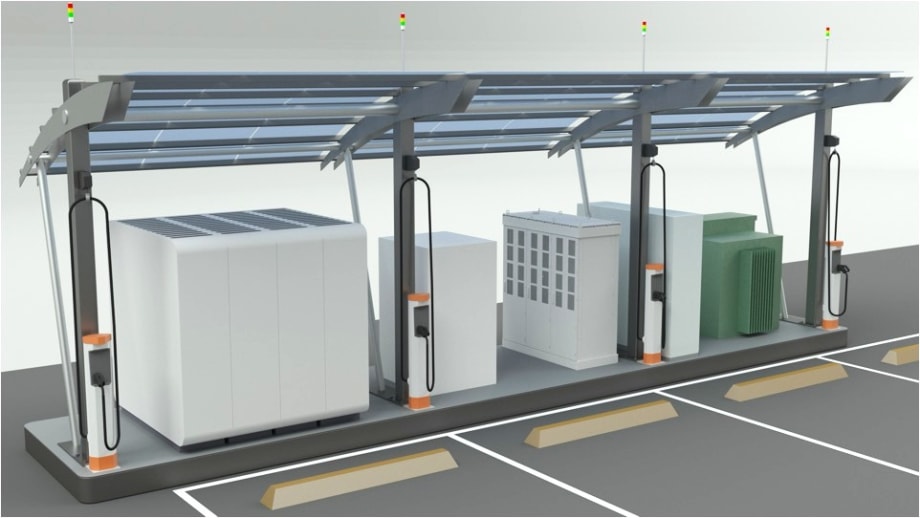
The new modular platform from Prologis integrates dispensers, power cabinets and smart technology into a single skid-based unit,
Rendering: Prologis
2 min to read
Prologis Mobility is rolling out a modular EV charging platform that tackles one of the biggest bottlenecks in fleet vehicle electrification: grid delays.
A global electric vehicle charging infrastructure provider, Prologis has created a prefabricated platform that dramatically shortens installation timelines and supports both temporary and permanent deployment — even ahead of grid interconnection.
It integrates dispensers, power cabinets and smart technology into a single skid-based unit, offering flexibility, speed and scalability for fleet electrification. A turnkey solution, it’s designed to accelerate the deployment of high-capacity charging in markets where infrastructure often lags vehicle availability.
Designed for enterprise-scale fleet deployment, the prefabricated system offers up to 1.2 MW of dynamic charging, is megawatt charging system (MCS) ready, and can be installed and operational before utility interconnect is complete.
One of the first deployments will be at Prologis' Vernon, California, public charging hub, and is scheduled to open this summer. This builds on Prologis Mobility’s previous work, including the Denker project in Torrance, California, one of the nation’s largest heavy-duty charging installations, powered by a microgrid in Southern California.
This high-throughput logistics corridor in Los Angeles County provides public access for major fleet operators and independent drivers and is part of Prologis Mobility’s growing national heavy-duty EV charging network.
For instance, Prologis said the Denker project in Torrance, California, is one of the nation’s largest heavy-duty charging installations, powered by a microgrid in Southern California.
More About the Prologis Modular Electric Vehicle Charging Solution
As utilities face challenges meeting increasing electricity demands, the new Prologis platform provides a stopgap solution for companies and municipalities looking to accelerate installation when local power connection is delayed.
Scalable and redeployable. Prefabricated and pre-commissioned off site, Prologis Mobility’s modular charging units simplify permitting, minimize operations impacts and enable standardized installations across the network.
No-regret electrification. Fleets can test new routes, adapt to seasonal needs or rebalance infrastructure across regions — minimizing the cost of permanent, fixed charging systems.
Bridges the grid gap. With add-on options such as linear generators and batteries, charging can begin well ahead of traditional utility interconnection timelines.
Optimized for fleet operations. Up to 1200 kW of dynamic charging across eight ports and megawatt charging system (MCS) ready, plus advanced safety features such as accelerometer-triggered safety shutoffs and driver conveniences like onboard Wi-Fi.
“Our customers need EV infrastructure that’s as dynamic as their operations,” said Henrik Holland, Global Head of Prologis Mobility. “With this platform, they can deploy quickly, adjust for seasonal demand and scale without being tied to grid or construction constraints.”
Prologis said future use cases potentially span logistics, last-mile delivery, and even data-intensive industries like data centers.
More Fuel Smarts

East Coast Port Launches $45M Electric Truck Push
The Port Authority of New York and New Jersey announced millions in incentives for zero-emission drayage trucks, yard tractors, and new charging hubs near the port.
Read More →
California Bill Could Shed Light on Electric Truck Prices
Why do battery-electric Class 8 trucks remain so expensive? A California bill headed to Gov. Gavin Newsom would give fleets and state agencies more visibility into what manufacturers charge.
Read More →
Detroit Opens Orders for EPA 2027 Engines
Detroit isn’t starting from scratch to meet EPA 2027 diesel emissions standards. Its Gen 6 DD13 and DD15 engines keep much of today’s platform while updating the fuel and aftertreatment systems.
Read More →
Zero-Emission Truck Corridor Planned for West Coast
California, Oregon, Washington, British Columbia and Baja California are coordinating plans for truck charging and hydrogen fueling from Canada to Mexico.
Read More →
A Closer Look at Kenworth’s Electric T880E Vocational Truck [Video]
Learn more about Kenworth's T880E battery-electric vocational truck at the Paccar Technical Center, including its range, applications, upfitting considerations, and PTO options, in this HDT Spotlight video.
Read More →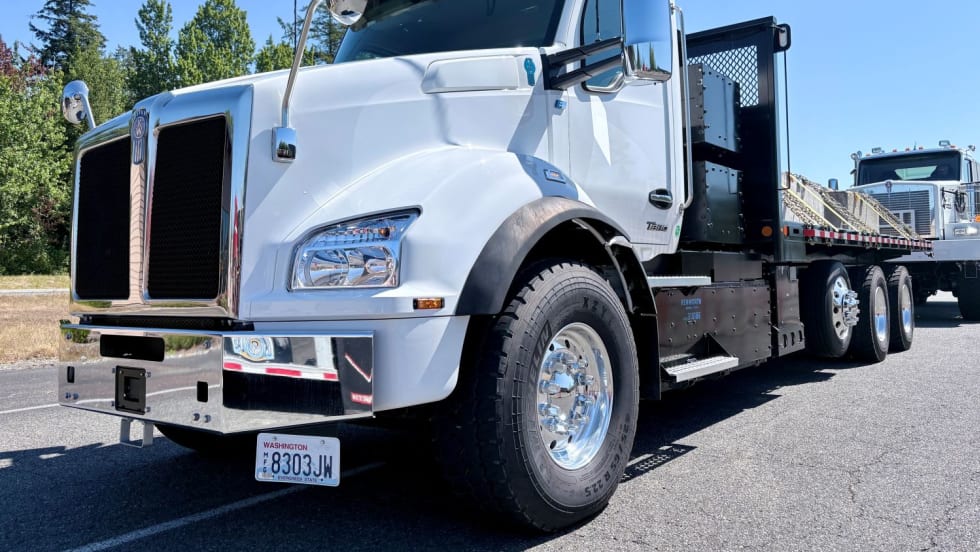
Kenworth T880E Brings EV Power to Vocational Trucks
A closer look at the Kenworth T880E’s range, charging, powertrain and upfit options — and where fleets are showing the most interest.
Read More →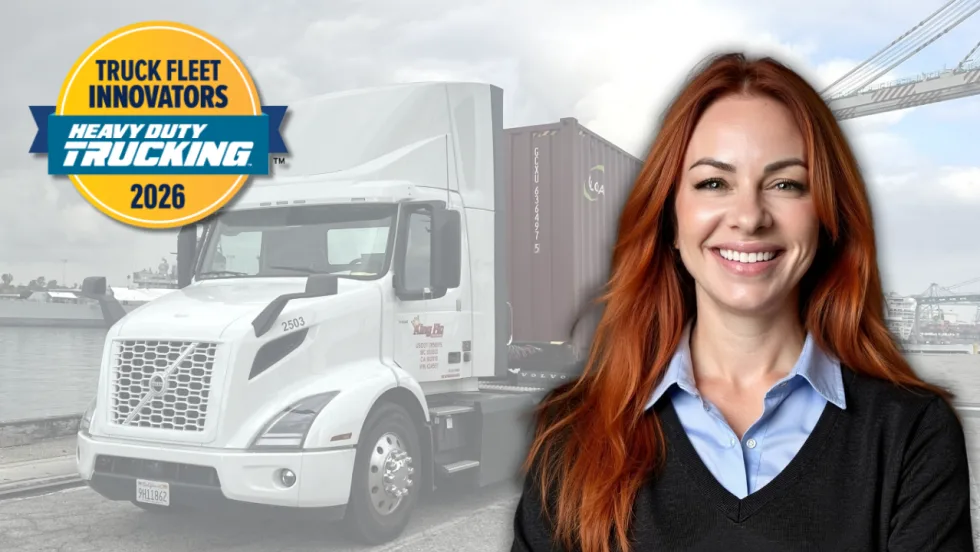
Jennie Abarca Is Proving Electric Trucks Can Do the Job
HDT Truck Fleet Innovator Jennie Abarca is building confidence in fleet electrification one load at a time while openly sharing the challenges she encounters along the way as a small-fleet owner.
Read More →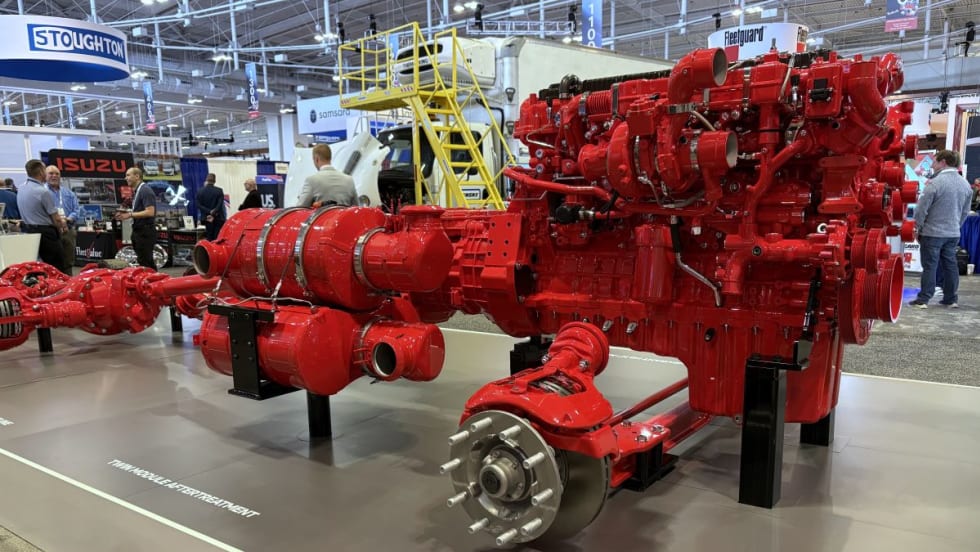
Cummins Adjusts 2027 Engine Rollout After EPA Proposal
The engine maker will gradually introduce its new Model Year 2027 diesel engines while continuing to offer current models during the transition, citing the EPA's proposed emissions rule changes.
Read More →
EPA Proposal Could Ease 2027 Truck Costs and Buying Uncertainty
The proposal doesn't change the tougher NOx standard, but it would revise key implementation requirements that manufacturers say have driven up costs and complicated fleet purchasing decisions.
Read More →
Cummins, Paccar Ease DEF Derates After EPA Guidance
Updated diesel engine software gives truck operators more time to address emissions-system issues while staying compliant with EPA emissions standards.
Read More →