




Bill Calls for Electric Vehicles to Pay Into Highway Trust Fund
Trucking organizations are praising legislation introduced in both the House and the Senate that would add a tax for light-duty electric vehicles to support the Highway Trust Fund.


Legislation in the House and Senate would make electric vehicles pay into the Highway Trust Fund.
Image: HDT Graphic
One of the big questions about electric vehicles has been, how are we going to pay for highway infrastructure when they don’t pay any fuel tax?
Trucking organizations are praising legislation introduced in both the House and the Senate to address that concern where light-duty EVs are concerned.
Senator Deb Fischer (R-Nebraska) and Congressman Dusty Johnson (R-South Dakota) introduced the ‘‘Fair Sharing of Highways and Roads for Electric Vehicles Act of 2025,” or the Fair Share Act of 2025 for short.
The bill would amend the Internal Revenue Code of 1986 to establish a tax on the sale of electric vehicles and batteries.
The legislation would charge a one-time fee for light-duty electric vehicles to ensure that they are contributing to road maintenance.
The Highway Trust Fund makes up over 90% of federal funds used for transportation projects and primarily receives its funding through the federal fuel tax: 18.3 cents per gallon of gas and 24.3 cents per gallon of diesel.
The fuel tax hasn’t been raised since 1993, yet vehicle fuel efficiency has improved and the costs for building and maintaining highway infrastructure has soared.
Since 2008, over $275 billion has been shifted from the general fund to sustain the HTF.
How Would the Fair SHARE Act Work?
The Fair SHARE Act would require EVs to contribute to the HTF through a two-tier fee structure similar to and modeled after the current federal gas tax and the heavy vehicle use tax.
The bill would:
Impose a one-time fee of $1,000 on all-electric vehicles at the manufacturer level
Impose a one-time fee of $550 on each battery module with a weight greater than 1,000 pounds at the manufacturer level.
“EVs can weigh up to three times as much as gas-powered cars, creating more wear and tear on our roads and bridges,” said Senator Fischer. “It’s only fair that they pay into the Highway Trust Fund just like other cars do.”
The legislation was cosponsored by Senators Cynthia Lummis (R-Wyoming) and Pete Ricketts (R-Nebraska).
'No One Should Get a Free Ride' on Highway Funding
“When it comes to paying for the maintenance and expansion of our road network, no one should get a free ride,” said Henry Hanscom, American Trucking Associations’ senior vice president of legislative affairs.
“As fuel efficiency rises and adoption rates for alternative fuels accelerate, we must find long-term, sustainable, and equitable sources of revenue for the HTF," Hanscom said.
ATA said the trucking industry is the leading payer into the Highway Trust Fund, contributing almost half of all revenues while representing just 4% of road users.
Heavy-duty electric trucks also contribute to the HTF through the Heavy Vehicle Use Tax, the tire tax, and the federal excise tax.
The Owner-Operator Independent Drivers Association also praised the bill.
Gasoline-powered cars pay into the HTF through the gas tax, but currently, EVs do not contribute to the HTF at all, OOIDA pointed out in a news release.
However, the average EV is significantly heavier than its gas-powered counterpart due to the weight of large EV batteries. The Fair SHARE Act would require additional investment in the HTF for EVs with heavier batteries to account for the road damage and increased maintenance costs they cause.
“Truckers are understandably frustrated that EVs currently pay nothing to the HTF despite having equal access to the roads and highways maintained by taxpayers,” said OOIDA President Todd Spencer.
More Fuel Smarts

Record Diesel Prices Squeeze Trucking Fleets
Average U.S. diesel prices have climbed to nearly $6 a gallon, surpassing the 2022 record as tight refinery capacity and Middle East disruptions keep fuel costs elevated.
Read More →
How Fuel Delivery Shapes Engine Performance
Fuel delivery depends on more than what happens at the injector. For fleet, maintenance and technical professionals, looking at the full path from pump to injector can provide useful context for understanding engine performance.
Read More →
East Coast Port Launches $45M Electric Truck Push
The Port Authority of New York and New Jersey announced millions in incentives for zero-emission drayage trucks, yard tractors, and new charging hubs near the port.
Read More →

California Bill Could Shed Light on Electric Truck Prices
Why do battery-electric Class 8 trucks remain so expensive? A California bill headed to Gov. Gavin Newsom would give fleets and state agencies more visibility into what manufacturers charge.
Read More →
Detroit Opens Orders for EPA 2027 Engines
Detroit isn’t starting from scratch to meet EPA 2027 diesel emissions standards. Its Gen 6 DD13 and DD15 engines keep much of today’s platform while updating the fuel and aftertreatment systems.
Read More →
Zero-Emission Truck Corridor Planned for West Coast
California, Oregon, Washington, British Columbia and Baja California are coordinating plans for truck charging and hydrogen fueling from Canada to Mexico.
Read More →
A Closer Look at Kenworth’s Electric T880E Vocational Truck [Video]
Learn more about Kenworth's T880E battery-electric vocational truck at the Paccar Technical Center, including its range, applications, upfitting considerations, and PTO options, in this HDT Spotlight video.
Read More →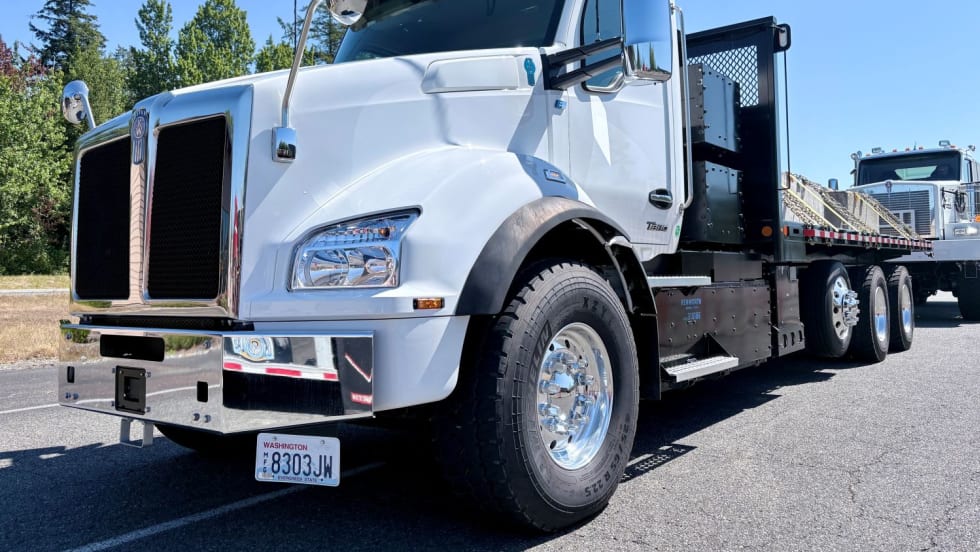
Kenworth T880E Brings EV Power to Vocational Trucks
A closer look at the Kenworth T880E’s range, charging, powertrain and upfit options — and where fleets are showing the most interest.
Read More →
Jennie Abarca Is Proving Electric Trucks Can Do the Job
HDT Truck Fleet Innovator Jennie Abarca is building confidence in fleet electrification one load at a time while openly sharing the challenges she encounters along the way as a small-fleet owner.
Read More →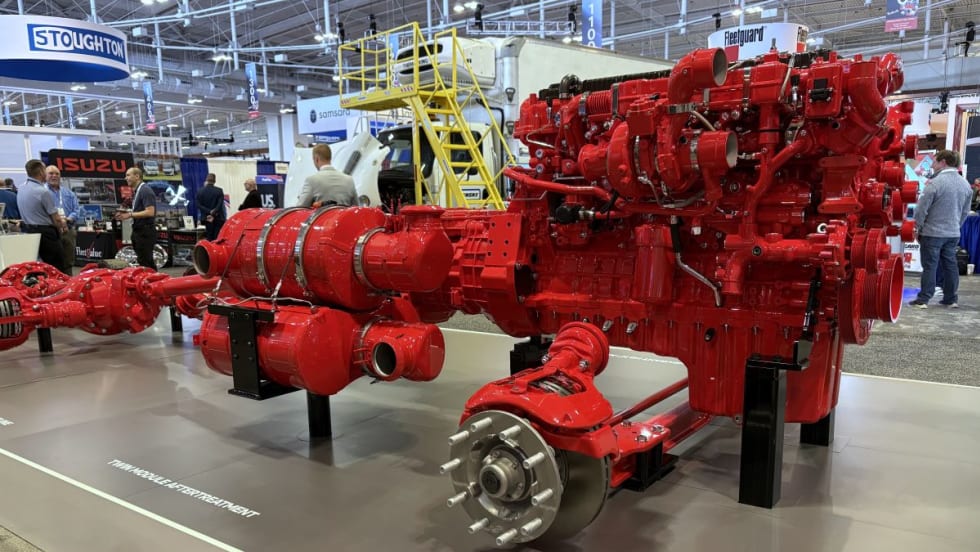
Cummins Adjusts 2027 Engine Rollout After EPA Proposal
The engine maker will gradually introduce its new Model Year 2027 diesel engines while continuing to offer current models during the transition, citing the EPA's proposed emissions rule changes.
Read More →