




Maine’ First Electric Refuse Truck is a Mack LR Electric
Portland, Maine’s new Mack LR Electric refuse truck is equipped with a Heil 25 cubic-yard rear loader body, and it will be serviced and supported by O’Connor Motor Company.

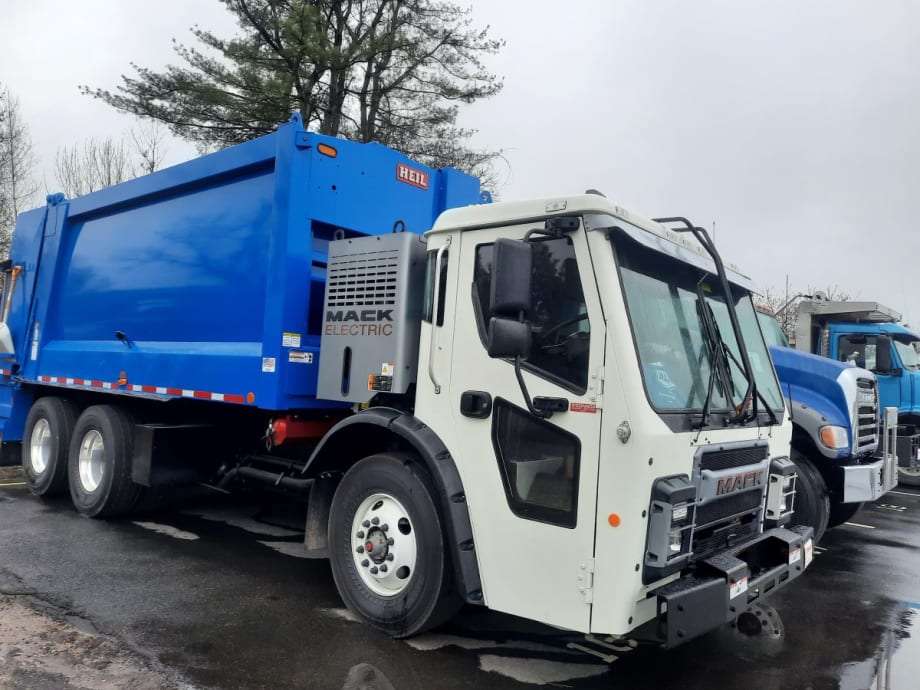
The Mack LR Electric features a two-stage regenerative braking system that recaptures energy from the hundreds of stops the vehicle makes each day with an increasing load.
Photo: Mack Trucks
Portland, Maine, officials today took delivery of a Class 8 Mack LR Electric model during an event on June 17. The Mack electric refuse truck is the Pine Tree State’s first refuse battery-electric vehicle (BEV).
“The City of Portland’s choice to purchase the Mack LR Electric refuse truck to help meet its sustainability goals speaks to the partnership approach that allowed Mack and the city to implement the needed ecosystem of service and support for electric vehicles,” said Jonathan Randall, president of Mack Trucks North America. “Mack is excited to deliver the first electrified refuse vehicle to Maine.”
“This is a significant step forward in electrifying the City’s vehicle fleet,” said City Manager Danielle West. “It represents a bold leap forward in sustainable transportation, offering an electric solution that significantly reduces carbon emissions and environmental impact.”
Federal and State Grants
A combined grant from the Environmental Protection Agency’s (EPA) Diesel Emissions Reduction Act and the Maine Department of EPA helped fund the purchase of the LR Electric vehicle.
Portland has a goal to run on 100% clean energy by 2040, and vehicle electrification will play a big part in achieving that goal. The city is also interested in improving air quality and transitioning from diesel to electric vehicles to reduce emissions.
Portland’s Mack LR Electric is equipped with a Heil 25 cubic-yard rear loader body, and it will be serviced and supported at O’Connor Motor Company based in Portland.
“Our familiarity with Mack through our previous vehicle purchases, along with our relationship with O’Connor makes this a great fit for the city of Portland,” said Mike Murray, director of Public Works for the City of Portland. “This is the first electric Class 8 vehicle in Portland’s fleet.”
Local Dealer Support is Key
The next generation Mack LR Electric offers a standard 376 kWh total battery capacity for 42 percent more energy and increased range between vehicle charges. Twin electric motors produce 448 continuous horsepower and 4,051 lb.-ft. of peak torque output from zero RPM.
Four NMC (Nickel Manganese Cobalt Oxide) lithium-ion batteries, charged through a 150 kW, SAE J1772-compliant charging system, power the vehicle and all onboard accessories through 12V, 24V and 600V circuits.
The truck’s two-stage regenerative braking system helps recapture energy from the hundreds of stops the vehicle makes each day with an increasing load.
Portland executives said they chose the Mack LR Electric model for multiple reasons. These include the availability of local dealer support and the Mack Ultra Service Maintenance Agreement offering.
The Mack Ultra Service Agreement gives LR Electric customers an uptime package tailored specifically for the technical needs of BEVs.
It includes scheduled maintenance, preventative maintenance, towing and repair, a battery monitoring service and Mack’s connected uptime services in one package that can be included with monthly truck payments.
The LR Electric and its batteries will be supported by Mack GuardDog Connect. This is Mack’s integrated telematics solution that helps customers achieve peak operating conditions and maximize uptime.
The connected service monitors battery health and performance and checks for fault codes and defects reported by the battery and electric components of the energy storage system.
More Fuel Smarts

Why Diesel Price Relief Efforts May Fall Short
Diesel prices have eased from September’s record high, but doubts about additional Russian supply and limits on dyed-diesel tax relief mean trucking fleets still face expensive fuel. And prices could go higher.
Read More →
Why Small Fuel Savings Matter in Trucking
Can better fuel economy help pay for driver raises? In this podcast, GP Transco explains how small efficiency gains create room to reinvest in its people.
Read More →
How GP Transco Cuts Trucking Fuel Costs, a Tenth of a Gallon at a Time
What’s another tenth of a mile per gallon worth? GP Transco shares how equipment upgrades and driver coaching turn small gains into meaningful fuel savings.
Read More →
Electric Yard Tractors Move Beyond Pilots
Operating-cost savings have overtaken sustainability goals as the leading reason surveyed fleets are adopting battery-electric terminal tractors, according to new NACFE research.
Read More →
Geotab Links Fleet Card to Vehicle Data
The new card combines fuel discounts with telematics-based purchase controls. Geotab’s analysis also points to potential savings from choosing lower-priced fuel stops.
Read More →
Fleet Economics Shape Electric Truck Outlook
ACT Research expects costs, charging infrastructure, and technology improvements to drive zero-emission commercial vehicle adoption as federal regulations and incentives retreat.
Read More →
Wex Adds Cardless Fuel Payments for Over-the-Road Customers
A new fuel card feature for Wex customers offers convenience and security.
Read More →
New California Law Could Shed Light on Electric Truck Prices
Why do battery-electric Class 8 trucks remain so expensive? A California bill signed by Gov. Gavin Newsom would give fleets and state agencies more visibility into what manufacturers charge.
Read More →
How Volvo Updated Its D13 for EPA 2027 [Watch]
Volvo’s updated D13 promises lower emissions without sacrificing performance or fuel economy. Take a closer look at what changed inside the engine in this HDT Spotlight video.
Read More →
Diesel Price Spike Shortens Payback for Natural Gas Trucks, Report Says
Energy Vision estimates fleets could recover the higher purchase price of an RNG-fueled Class 8 tractor in 1.3 to 2.8 years under current fuel-price scenarios.
Read More →