




Freightliner Delivers First eM2 Electric Trucks to Fleet Customers
Pitt Ohio is the first U.S. fleet to deploy the Freightliner eM2 in operations out of its Cleveland, Ohio, terminal.

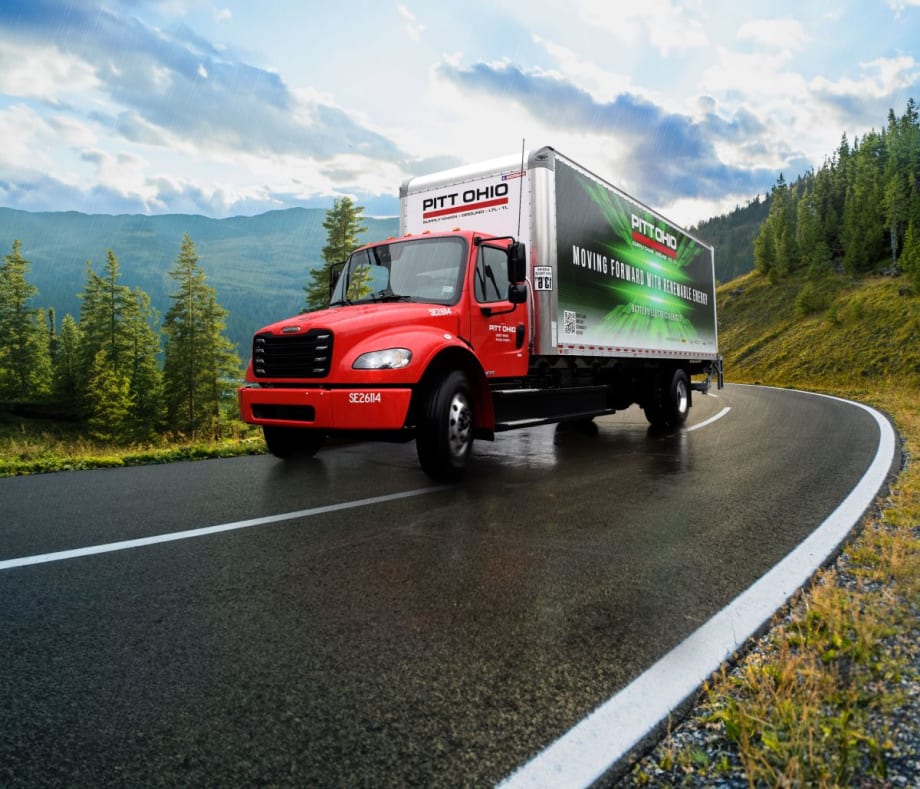
Pitt Ohio will deploy its first Freightliner eM2 electric trucks in LTL operations.
Photo: Freightliner
Daimler Truck North America has announced the delivery of its first battery-electric Freightliner eM2 trucks. The OEM said series production of the medium-duty electric vehicles began at the end of 2023. Since then, the Freightliner eM2, manufactured at DTNA’s plant in Portland, Oregon, has been distributed to fleet customers across the country.
Electric LTL Operations
Pitt Ohio, a transportation, warehouse, and logistics services company, is the first U.S. fleet to deploy the eM2. The fleet is integrating two Freightliner eM2 Class 7 trucks into operations out of its Cleveland, Ohio, terminal. The two battery-electric trucks will complement its existing conventional Freightliner M2s and underscore the company’s commitment to sustainability, Pitt Ohio said. This addition marks an important step in reducing the fleet's carbon footprint, the fleet added, and represents a milestone in the adoption of electric medium-duty vehicles for commercial use.
The battery-electric eM2 trucks with 26-foot-long box bodies will operating out of the Cleveland terminal will support the company's Less-Than-Truckload (LTL) freight shipping business.
In a press release, DTNA said it is committed to its long-term vision to offer only CO2-neutral vehicles in key markets by 2039. However, Daimler added, these goals can only be met if the necessary infrastructure is in place and a favorable total cost of ownership can be achieved for customers.
“At DTNA, we're dedicated to providing innovative, safe, and reliable solutions that adapt to the changing needs of our customers,” said David Carson, senior vice president sales and marketing at Daimler Truck North America. “The delivery of the eM2 is a testament to our ongoing commitment to our growing portfolio of zero-emissions vehicles. The eM2 builds on the success of our conventional M2 and extends its efficiency and versatility into the zero-emission vehicle space. We're pleased to support Pitt Ohio's sustainability efforts with our trucks and work together to create a more environmentally conscious logistics industry.”
“The technology is rapidly evolving. It’s exciting to see how fast this change is occurring, resulting in significant improvements both in range and payload that are nearer to our conventional units (than earlier battery electric vehicles),” said Taki Darakos, Pitt Ohio’s vice president of vehicle maintenance and fleet services. “We appreciate the support of all our partners involved and look forward to their performance in our operation.”
Electric School Buses Up to Class 8 Trucks
DTNA has been involved in commercial electric vehicle development since 2018. Their electric lineup includes the Jouley, an all-electric bus from Thomas Built Bus, available since 2020, the FCCC MT50e walk-in van chassis for final mile delivery, available since 2021, and the Class 8 Freightliner eCascadia, available since 2022.
In 2023, the company added the eM2, with a 180-mile typical range for Class 6 and 250 miles for Class 7, for pick-up and delivery customers who require an adaptable electric solution. Vocational innovation vehicles were introduced last year and are in use with customers.
The eM2 sales process and delivery have been supported by Fyda Freightliner, a DTNA Elite Support certified dealership with seven locations, serving the Midwest which has supported PITT OHIO for the past 20 years.
More Fuel Smarts

How Volvo Updated Its D13 for EPA 2027 [Watch]
Volvo’s updated D13 promises lower emissions without sacrificing performance or fuel economy. Take a closer look at what changed inside the engine in this HDT Spotlight video.
Read More →
Diesel Price Spike Shortens Payback for Natural Gas Trucks, Report Says
Energy Vision estimates fleets could recover the higher purchase price of an RNG-fueled Class 8 tractor in 1.3 to 2.8 years under current fuel-price scenarios.
Read More →
Calstart Becomes Catalyst Mobility, Reflecting Broader Focus
Calstart is now Catalyst Mobility, reflecting the nonprofit’s growing national role in clean transportation, including zero-emission trucks, infrastructure and incentive programs.
Read More →

Record Diesel Prices Squeeze Trucking Fleets
Average U.S. diesel prices have climbed to nearly $6 a gallon, surpassing the 2022 record as tight refinery capacity and Middle East disruptions keep fuel costs elevated.
Read More →
How Fuel Delivery Shapes Engine Performance
Fuel delivery depends on more than what happens at the injector. For fleet, maintenance and technical professionals, looking at the full path from pump to injector can provide useful context for understanding engine performance.
Read More →
East Coast Port Launches $45M Electric Truck Push
The Port Authority of New York and New Jersey announced millions in incentives for zero-emission drayage trucks, yard tractors, and new charging hubs near the port.
Read More →
California Bill Could Shed Light on Electric Truck Prices
Why do battery-electric Class 8 trucks remain so expensive? A California bill headed to Gov. Gavin Newsom would give fleets and state agencies more visibility into what manufacturers charge.
Read More →
Detroit Opens Orders for EPA 2027 Engines
Detroit isn’t starting from scratch to meet EPA 2027 diesel emissions standards. Its Gen 6 DD13 and DD15 engines keep much of today’s platform while updating the fuel and aftertreatment systems.
Read More →
Zero-Emission Truck Corridor Planned for West Coast
California, Oregon, Washington, British Columbia and Baja California are coordinating plans for truck charging and hydrogen fueling from Canada to Mexico.
Read More →
A Closer Look at Kenworth’s Electric T880E Vocational Truck [Video]
Learn more about Kenworth's T880E battery-electric vocational truck at the Paccar Technical Center, including its range, applications, upfitting considerations, and PTO options, in this HDT Spotlight video.
Read More →