




DTNA's SuperTruck II in Photos
Daimler Truck North America’s SuperTruck II project, which doubled the freight efficiency of the baseline 2009 Freightliner Cascadia, was revealed during Manifest 2023 in Las Vegas on Jan. 31.
DTNA’s SuperTruck II efforts focused on components and systems with real-world applicability; technology that could be more easily integrated into near-future generations of an over-the-road truck. Engineers and designers achieved a 12% improvement in aerodynamic efficiency, a 5.7% reduction in fuel consumption, and a 12% reduction in tractor rolling resistance. Here’s how they did it.
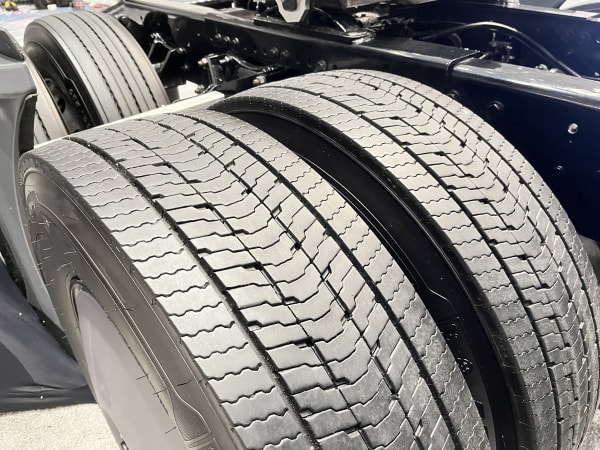
Michelin contributed a set of newly designed ultralow rolling resistance tires, including these unusual looking drive tires. There was no word on when the model XM 586 tires would be coming to market.
Photo: Jim Park
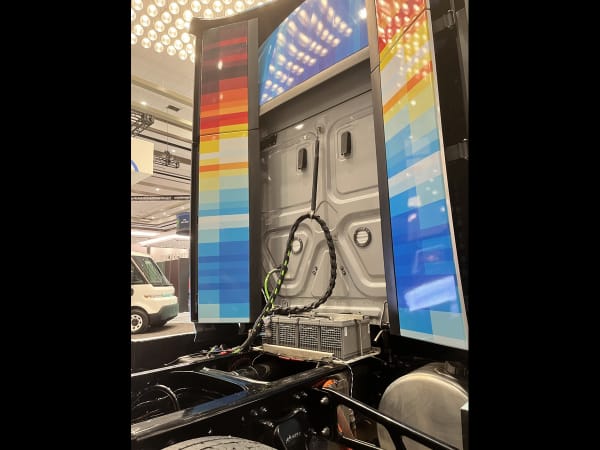
Engineers added active cab side extenders and a roof spoiler system that deploys at highway speeds. These close the gap between the cab and trailer to just four inches.
Photo: Jim Park
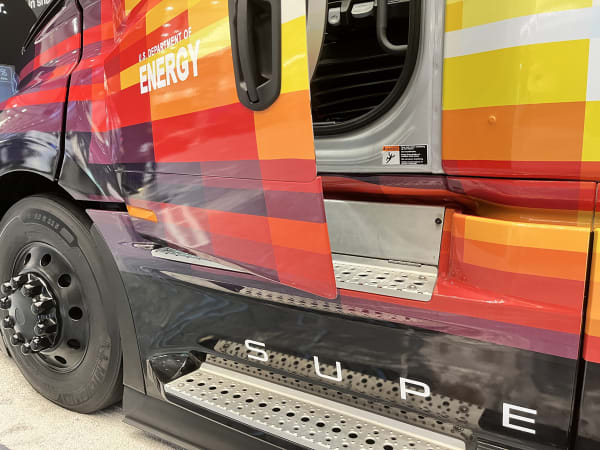
A skirt was added to the bottom of the doors to close the gap between the door sill and the top step. This reduced the air turbulence in that area resulting in a significant noise reduction inside the cab.
Photo: Jim Park
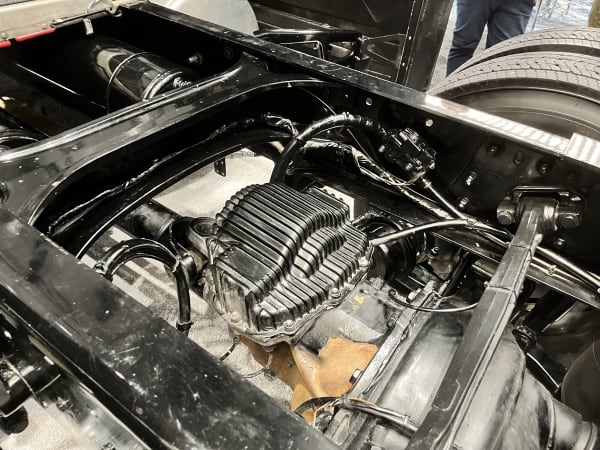
DTNA used “adaptive tandem axles” that, with a clutch package located on the forward differential housing, automatically shifts from 6x4 to 6x2 at highway speeds. It has a downsped driveline with 1.75:1 ratio for an engine speed of 950 rpm at 65mph.
Photo: Jim Park
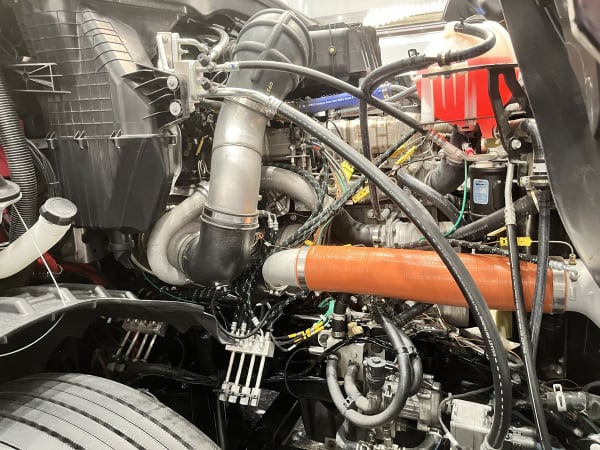
The uncertified prototype 13-liter engine features two series turbochargers with an intercooler between them to cool the air exiting the first turbo in the interests of increasing volumetric density of the air entering the second turbocharger.
Photo: Jim Park
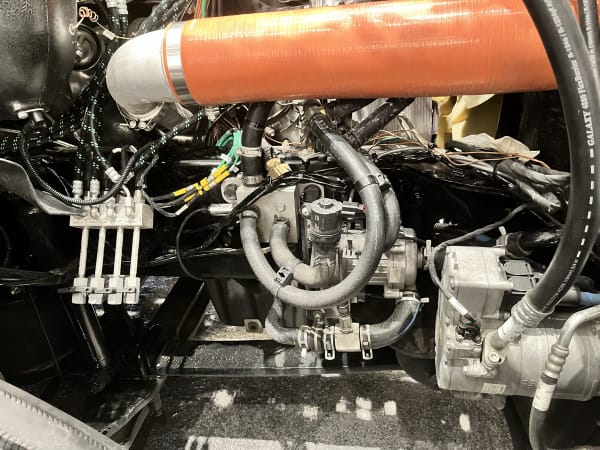
The engine saw a lot of design changes, including the use of 48-volt oil and steering pumps, thermal barrier coatings within the combustion system, and increased fuel injection pressure (36,000 psi or 2500 BAR).
Photo: Jim Park
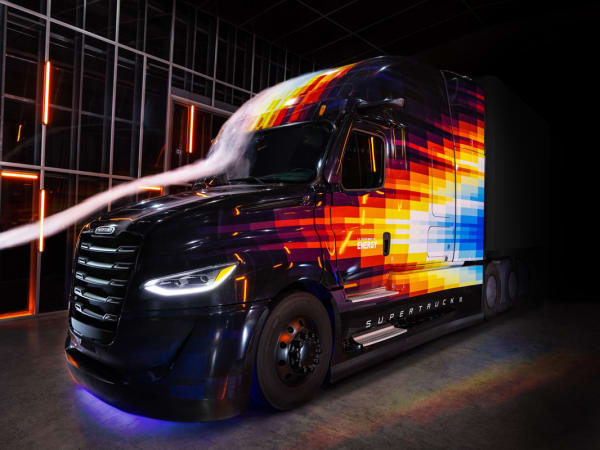
DTNA’s SuperTruck II efforts focused on components and systems with real-world applicability; technology that could be more easily integrated into near-future generations of an over-the-road truck.
Photo: DTNA
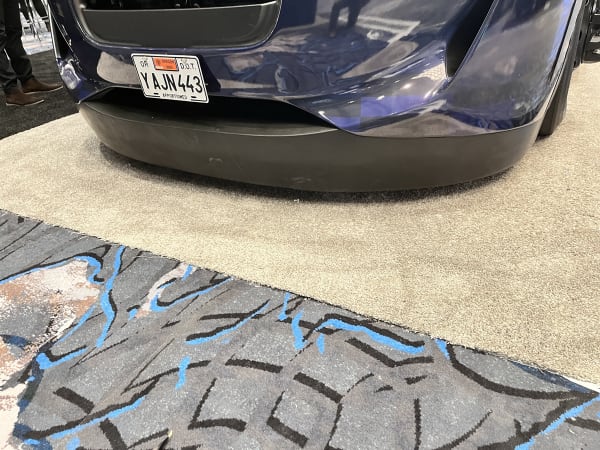
An active ride-height control system lowers the ride height to within a couple of inches of the ground to close the gap with the road surface and to lower the overall frontal profile of the truck.
Photo: Jim Park
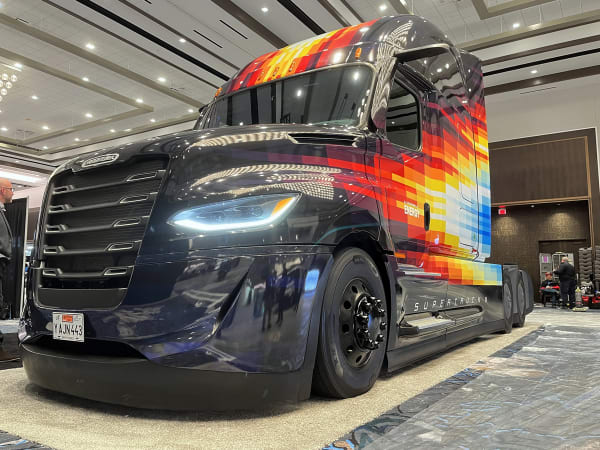
The redesigned hood, bumper and chassis fairing all work with the existing cab structure to allow the air to flow undisturbed around the truck.
Photo: Jim Park
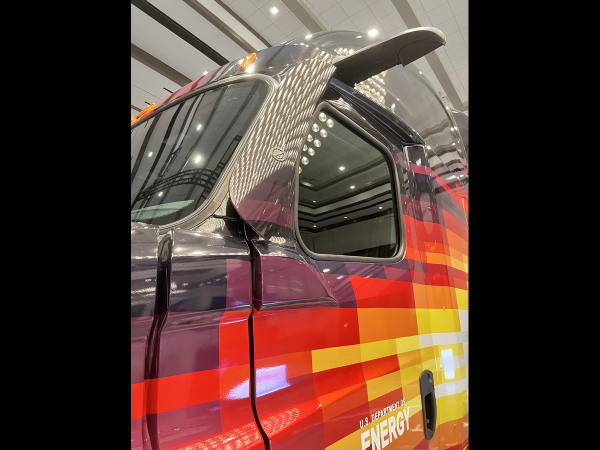
Engineers paid particular attention to the doors and the mirror camera mounting arm, ensuring the produced the least possible aerodynamic drag.
Photo: Jim Park
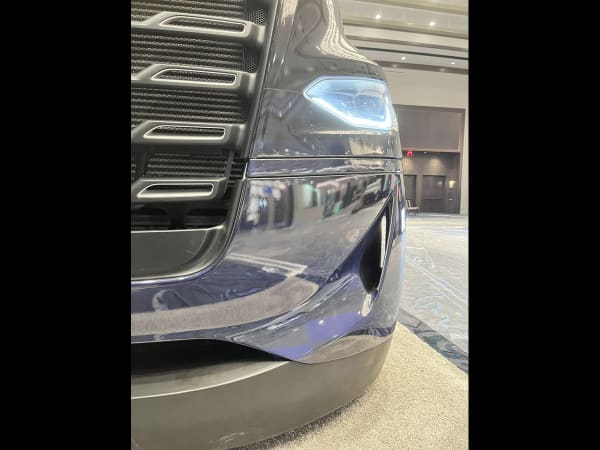
Instead of radically changing the structure of the truck, the design goal for SuperTruck II was to redefine the existing shape of the Cascadia to maximize aerodynamic efficiency.
Photo: Jim Park