




Florida Law to Crack Down on Predatory Towing
The Florida Legislature passed legislation to reform predatory towing and recovery, which is expected to be signed into law by Gov. Ron DeSantis.

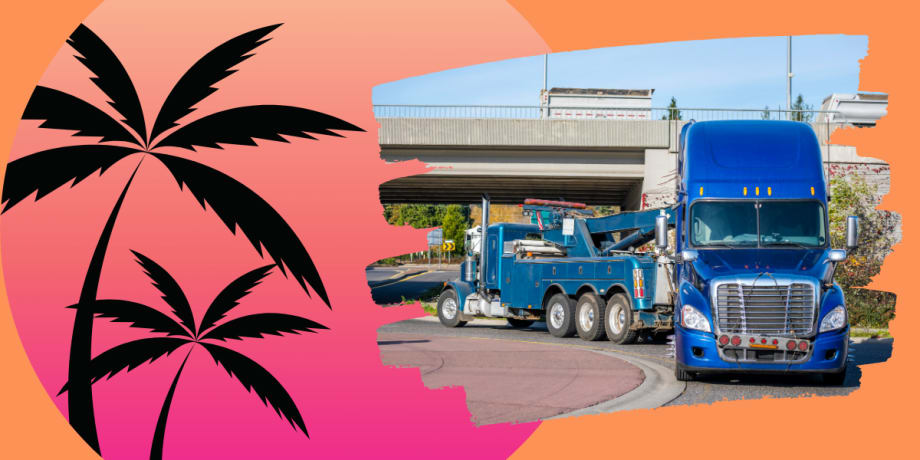
Among other things, HB 179 will require towing and storage operators to maintain a rate sheet listing all fees related to vehicle or vessel recovery, removal, or storage.
HDT Graphic
The Florida Legislature unanimously passed legislation to reform predatory towing and recovery, which is expected to be signed into law by Gov. Ron DeSantis.
House Bill 179, led by State Representative Melony Bell and State Senator Keith Perry, was a multi-year effort, addressing an issue that has been a top priority of the Florida Trucking Association.
“This is a huge victory for trucking in Florida [and] the trucking industry nationally, who have seen invoices as high as $200,000, and the motoring public, who fall victim to predatory towing companies,” said Florida Trucking Association President and CEO Alix Miller.
According to Miller, the final bill includes:
Significant new requirements for the establishment and publication of rates
Requirements for detailed and itemized invoices
A requirement for towers to accept multiple payment options
A new dispute resolution process for consumers and carriers to challenge excessive fees.
“FTA fought for these and other priority provisions,” added Miller.
More Details About Florida's Predatory Towing Law
HB 179 will require towing and storage operators to maintain a rate sheet listing all fees related to vehicle or vessel recovery, removal, or storage. They must post this rate sheet at their place of business and provide it upon request to vehicle or vessel owners, lienholders, insurance companies, or their agents.
Before attaching a vehicle or vessel to a wrecker, the operator must furnish the rate sheet to the owner or operator if present. Any fee charged beyond those listed on the rate sheet is considered unreasonable.
A number of motor carriers have issues recovering personal property and undamaged trailers that have been towed and stored. In these instances, the inspection and release of the vehicle, vessel, trailer or personal property must be permitted within one hour and during normal business hours at the site where the vehicle, trailer or vessel is stored. The operator must accept government-issued photo identification and cannot require additional forms of identification to access and/or release the vehicle.
If signed by the governor, HB 179 will become effective on July 1, 2024.
The Predatory Towing Problem
According to a recent American Transportation Research Institute study, predatory billing was identified as the most common, with over 80% of respondents experiencing excessive rates and extra charges for towing and recovery services.
Other state legislatures are contemplating similar bills, including Kentucky, Mississippi, Missouri, and Virginia, according to the Owner-Operator Independent Drivers Association.
"Once a vehicle is towed, the financial burden on the owner can be substantial," said Eric De Campos, director of strategy, policy and government affairs for the National Insurance Crime Bureau when the bill was introduced late last year.
"Towing fees, storage fees, and administrative charges quickly accumulate, creating a financial strain on individuals who have had their vehicle towed without their consent. These fees are often disproportionately high and may not accurately reflect the cost of the towing service.
"Fee transparency is a critical way to address this issue. Without a fee schedule in place and accessible to consumers, unscrupulous towers can charge tens of thousands of dollars for routine tows or simply for sweeping glass and vehicle fluid from the ground and billing for a hazmat cleanup."
More Fleet Management

Color Match Smarter: Tools That Restore & Perform
For fleet managers and collision repair professionals keeping heavy-duty trucks on the road, getting the color right the first time isn't just about appearance — it's about efficiency, turnaround time, and bottom-line results. Discover how today's digital color tools are transforming the repair process from guesswork to precision.
Read More →
FMCSA Pauses Biennial-Update Enforcement Amid Motus Transition
Carriers whose updates were due on or after June 1 have more time, while FMCSA works to stabilize its new registration system and warns of phishing sites impersonating its new carrier registration system, Motus.
Read More →
2026 Blueprint for Countering Smarter Supply Chain Theft
Cargo theft is no longer just the cost of doing business. It's a multi-billion-dollar criminal enterprise exploiting vulnerabilities across your fleet, drivers, and supply chain.
Read More →


How Telematics Improves Visibility, Control, and Performance in Refrigerated Fleets
Explore how telematics help refrigerated fleets improve visibility, uptime, efficiency, compliance, and cargo protection across connected cold chain operations.
Read More →
What the U.S.-Canada Trade War Means for Trucking
Escalating U.S.-Canada tariffs could disrupt cross-border freight, reduce truck volumes, raise costs, and create new uncertainty for carriers on both sides of the border.
Read More →
What Are Trucking’s Top Concerns for 2026?
The American Transportation Research Institute wants to know what's worrying trucking fleet managers, drivers, and other stakeholders in its annual Industry Issues survey.
Read More →
American Trucking Associations Looks for a New Leader
ATA President and CEO Chris Spear abruptly left his job at the association on August 21, at a pivotal time for the trucking industry.
Read More →
Public Wi-Fi Cybersecurity Risks: How Truck Drivers and Fleets Can Protect Their Data
Public Wi-Fi can expose truck drivers and fleets to credential theft, malware, and other cyber threats. Here’s how to reduce the risk on the road.
Read More →
For Nicky Cupp, Fleet Innovation Starts With Frustration
HDT Truck Fleet Innovator Nicky Cupp turns everyday pain points at Fraley & Schilling into opportunities for better technology and smarter processes.
Read More →
Adam Buttgenbach’s Approach to Electric Trucks: Start With Where They Fit
HDT Truck Fleet Innovator Adam Buttgenbach helped PepsiCo build one of North America’s largest EV fleets by focusing on where electric trucks make operational sense.
Read More →