Heavy Duty Trucking Logo
MenuMENU
SearchSEARCH

How to Inspect Trailer Suspensions

Most modern trailer suspensions are basically maintenance free, but that doesn't mean they are impervious to damage or normal wear and tear. Regular inspections will keep your rolling stock rolling.

Jim Park
Jim ParkFormer HDT Equipment Editor
Read Jim's Posts
March 5, 2024
How to Inspect Trailer Suspensions

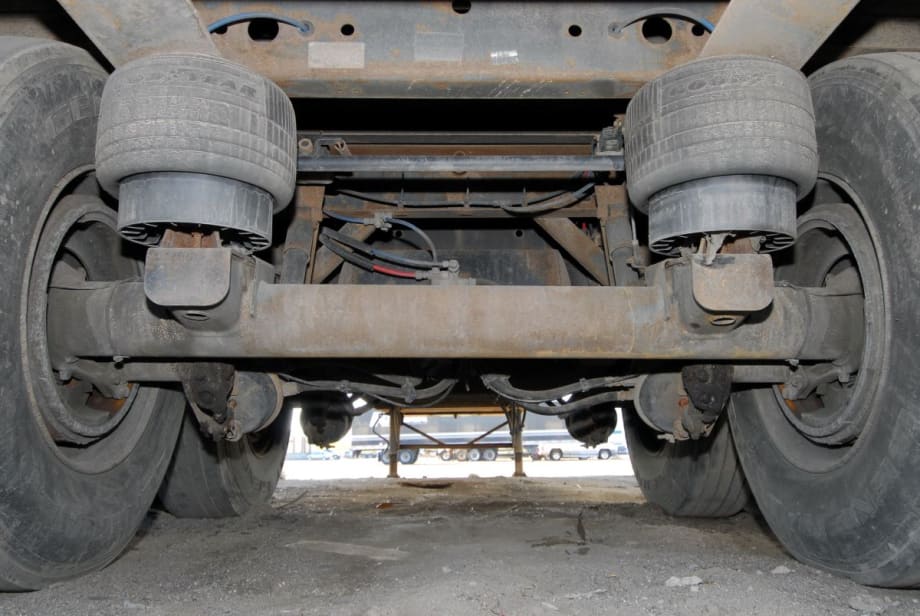
Suspension inspections take only a small amount of time, but  can reveal potential costly problems before they sideline a trailer.

Photo: Jim Park

5 min to read


Trailers suffer from a chronic lack of attention. They may not see a technician for months on end if they run from drop yard to drop yard. When one of these lost souls appears in the yard, it probably needs a little attention.

Ad Loading...

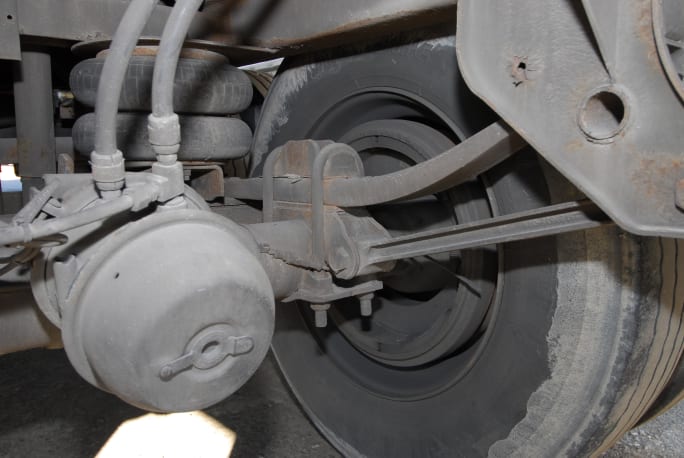
Check that all fasteners a tight, and retorque is necessary. Check for wear inareas where moving parts can come into contact.

Photo: Jim Park

How to Check Suspension Ride Height Adjustment

Suspension right height is critical part of suspension maintenance. Drivers have been known to tamper with the adjustment arm, believing that lowering the suspension ride height produced a smoother ride. This applies to both tractor and trailer suspensions.

"The designed ride height helps optimize suspension performance and helps maintain load equalization among the axles," explains Howard Adkins, manager of trailer technical services at Hendrickson. "Operating an air suspension outside its specified ride height range can reduce ride quality, damage cargo and increase suspension wear."

Hendrickson recommends verifying the ride-height setting during the predelivery inspection and then quarterly thereafter.

Refer to the product specifications for the correct setting and adjustment procedure. SAF-Holland says the suspension ride height should be maintained within  +/- 1/4 inch of the suspension manufacturer’s recommended height.

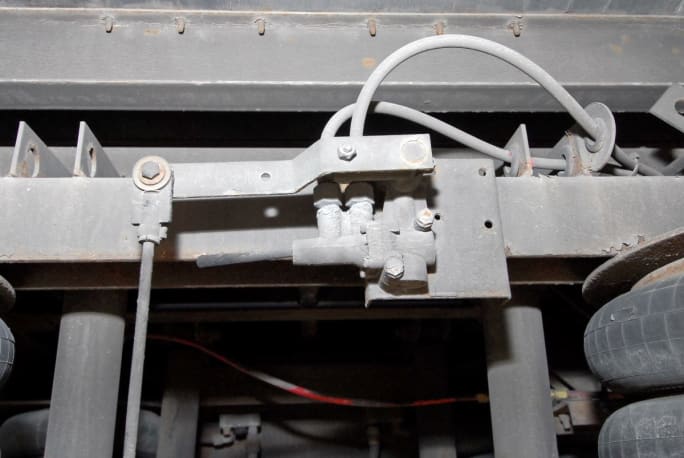
Damage to the air springs or air control components may initially appear as a problem with maintaining the correct suspension ride height. For air springs, look for damage to the bellows or piston, or misalignment of the mountings. For air control components, look for broken, bent, or missing parts on the valve and the adjustment lever.

Pneumatic valves, especially those with small channels such as ride-height control valves, are subject to freezing during cold winters. Condensation build-up in the air system could lead to clogged airlines or air valves due to frozen water, cautions Tony Ryan, national fleet service manager at SAF Holland Americas. "Check the air dryer to make sure that the air is clean and dry."
The first step in keeping the equipment rolling is to check the driver vehicle inspection reports for write-ups. Then do a thorough visual inspection to make sure it is fully operational and free of any obvious signs of failure in any major component.

The visual inspection should include:

Ad Loading...
  • Inspecting the air springs for damage or wear
  • Inspecting pivot bushings for signs of excessive wear
  • Looking for movement around bolted connections that can suggest loosening
  • Checking control valves for damage or abnormal leakage
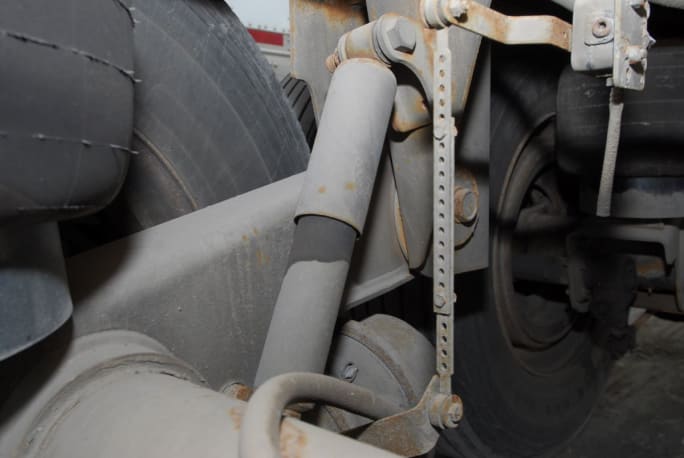
  • Checking shock absorbers for leaking or mounting issues

That's stuff every driver should be doing every day, but it never hurts to look a trailer over before getting into a serious inspection.

Chances are if nothing untoward is seen with a thorough visual inspection, you might let it go until next time -- unless you have technicians standing around with nothing to do.

Mechanical Suspensions

Simpler in design and easier to inspect, mechanical suspensions don't hide their secrets well. When something is loose or broken, it's easy to spot when you know what to look for:

  • The U-bolts holding the springs to the axles can work loose, so carefully inspect them, looking for signs of movement or loose nuts. Retorque as required to manufacturer's specifications. Check the center equalizer bolts, the torque arms (both fixed and adjustable), and the spring retainer hold-down bolts.
  • Check the spring hangers and hanger pins, looking for cracks, excess movement, or wear. "This would indicate insufficient U-bolt torque," notes Howard Adkins, manager of trailer technical services at Hendrickson.
  • Check the spring packs for loose or cracked springs and be sure no damaged or broken section of a spring leaf is loose or has separated from the pack. Movement of the spring leaves is also a symptom of loose U-bolts.
  • On suspensions with control rods, inspect the bushings for wear and damage, bearing in mind they may be out of view. "Use a flashlight to closely inspect bushings and rubber parts looking for chaffing, wear, and permanent core displacement," says Tony Ryan, national fleet service manager at SAF-Holland Americas. Bushings typically are concealed within brackets or other mounting structures, making them difficult to see. In addition to visual inspection, bushing wear can be determined by driver feedback, such as comments about chucking, pulling, or ride harshness.
Ad Loading...

Air Suspensions

Air suspensions are more complex than mechanical suspensions, with more wear parts like bushings, air springs, shock absorbers, and air controls that require inspection and periodic servicing.

"No system is maintenance-free, and in terms of air suspensions, it is important to pay attention to a few critical areas like correct ride height settings and the condition of the air springs, pivot arm bushings and height control valves." cautions Adkins. He advises the following checks:

  • Since the air spring is pressurized, visually inspect to ensure nothing rubs against the air cell, which could lead to damage. Periodically check for road gravel or other abrasive debris between the cell and the piston and the bead plates. Removing the debris will help to prevent air cell abrasion and premature failure. Also, look for damage to the bellows or piston or misalignment of the mountings.
  • Visually inspect the shock absorbers at least weekly. The visual inspection allows you to easily see when a shock is leaking. You can also check the shock by touching the lower shock body after the trailer has been operating. Use caution as the shock body could be hot. If it is warm, the shock should be functioning properly. A leaking shock is not an out-of-service issue, but it can lead to reduced service life and/or increased tire wear and ride quality issues.

Bushing maintenance requirements may vary depending upon the manufacturer and application, so always default to the maker's recommendations.

For SAF Holland suspensions, for instance, the front pivot connection bushings are critical to the life of the suspension, Ryan says.

Ad Loading...

"The pivot fastener must provide sufficient clamp load through the bushing to prevent premature bushing and/or bushing core failure.

"SAF trailer air ride suspensions utilize a shear bolt front pivot connection design. This connection doesn’t require a torque check. Simply visually inspect the bolt for any signs of movement at every routine maintenance check," Ryan adds.

"DO NOT apply anti-seize compound or additional lubricant to pivot connection hardware. This can lead to unpredictable clamp loads and unreliable axle alignment."

According to Hendrickson's Adkins, "Hendrickson air suspensions do not require periodic maintenance, but regular inspections are recommended to ensure that the ride height setting is correct, the air springs are not damaged or worn, and the pivot bushings do not show signs of excessive wear."

Ride height control valves may require periodic resetting, especially if drivershave tampered with them. Check the suspension specifications for the proper settings.

Photo: Jim Park

Related Inspection Items

While you're at it, you might as well check a few other components to make sure they're OK, too.

Ad Loading...

The trailer bogey alignment is a good place to start. That's because it's easy to do a quick down-and-dirty alignment check on trailer bogeys while you have the trailer in the shop.

Ensure the front trailer axle is perpendicular to the body of the trailer by drawing a cord, secured around the trailer kingpin, to an identical point on each side of the front axle. The measurement should be exactly the same.

Check axle parallelism by measuring the distance from the center of one axle hub to the other. The measurement should be exactly the same on both sides. If a discrepancy exists, the trailer bogies may be out of alignment.

This can cause handling issues and will lead to premature tire wear on both the tractor and the trailer. It's a five-minute check that could save thousands of dollars.

Misting on a shock body as shown here is not necessarily a problem, but leaking oil indicates a damaged or non-working shock absorber.

Photo: Jim Park

Next, take a minute and look over the trailer bogey slider mechanism. It's a good idea to to do this because drivers find it very frustrating if they are unable to release or relock the trailer bogey slider mechanism.

Ad Loading...

These sometimes seize up through lack of use or can be damaged by overly aggressive drivers. Check they are functioning properly and the locking mechanism is in good working order.

"The successful maintenance program will often identify defects, which are prevented from surfacing in the first place, before a catastrophic incident, accident or violation can occur," Adkins says.

In other words, look after your equipment, and it will look after you.

Subscribe to Our Newsletter

More Maintenance

Graphic showing Rush and MCT logos with blue tractor pulling white refrigerated trailer in the background
Maintenanceby News/Media ReleaseJuly 24, 2026

Rush, MCT Team Up to Grow Refrigeration Service Network

The joint venture will operate MCT's network of Carrier Transicold dealerships and mobile service locations, with the companies promising greater service capacity and uptime for refrigerated fleets.

Read More →
Heavy duty truck technician crouched down replacing brake drum
Maintenanceby News/Media ReleaseJuly 22, 2026

ConMet Expands Aftermarket Brake Drum Lineup With TruCast

A new heavy-duty truck brake drum option in the aftermarket gives customers more flexibility within the ConMet product family.

Read More →
Photos of Mack MD medum-duty truck and Mack technician on a computer in the shop, on a blue background
Maintenanceby News/Media ReleaseJuly 21, 2026

Mack Expands Premium Service Contract Coverage to Medium-Duty MD

With a service contract, inspections, preventive maintenance and repairs can be handled in a single visit instead of multiple ones.

Read More →
Ad Loading...
NACFE Messy Middle Maintenance Report: Battery-Electric Trucks.
Maintenanceby Jack RobertsJuly 16, 2026

Maintenance in the Messy Middle Part 5: Battery-Electric Trucks

No oil changes. No diesel exhaust fluid. No exhaust aftertreatment. But NACFE battery-electric trucks still require specialized maintenance procedures.

Read More →
Cover of ATRI operational costs study with graph clip art and photo of trucks on highway in the background
Fleet Managementby Deborah LockridgeJuly 15, 2026

Trucking Fleets Faced Record Operating Costs During Third Year of Freight Recession

ATRI's annual operational cost report shows carriers trimmed fleets, delayed equipment purchases, and ran older trucks as expenses continued to outpace freight rates.

Read More →
Noregon CAN Mentor software.
Maintenanceby News/Media ReleaseJuly 10, 2026

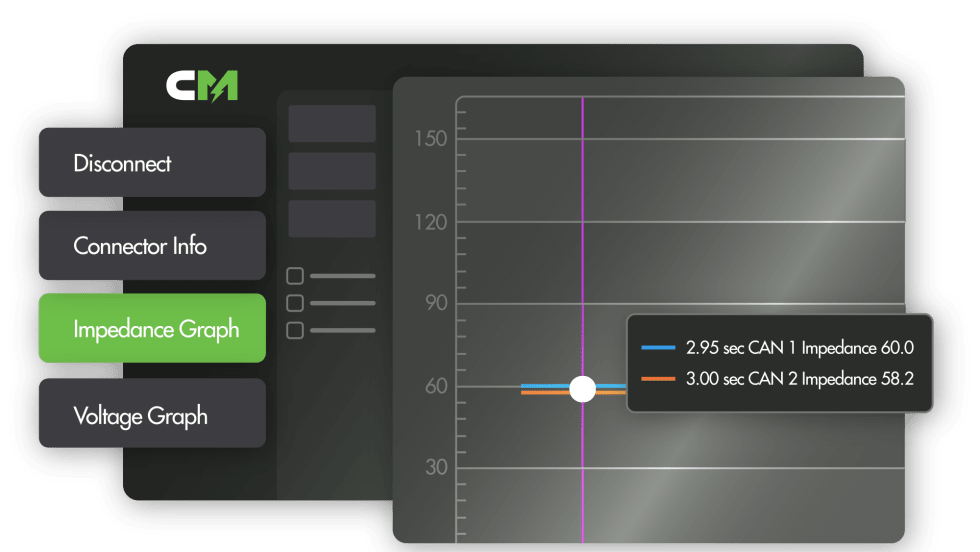
Noregon Launches CAN Mentor to Simplify Vehicle Network Diagnostics

New Noregon software helps technicians identify CAN network issues without requiring advanced diagnostic equipment or specialized training.

Read More →
Ad Loading...
NACFE Messy Middle Maintenance Report RNG
Maintenanceby Jack RobertsJuly 8, 2026

Maintenance in the Messy Middle Part 4: Renewable Natural Gas

The keys to running renewable natural gas as a fleet fuel depend on specialized technician training, rigorous inspection schedules and an understanding of high-pressure fuel systems.

Read More →
Mack Lock & Leave software updates.
Maintenanceby News/Media ReleaseJuly 7, 2026

Mack Adds 'Lock & Leave' Feature to Simplify Over-the-Air Software Updates

Mack’s new OTA enhancement allows drivers to start eligible software updates, lock the truck and walk away.

Read More →
Illustration with wrenches in background with "Maintenance in the Messy Middle: Biodiesel" text and NACFE Run on Less logo
Maintenanceby Jack RobertsJuly 2, 2026

Maintenance in the Messy Middle Part 3: Biodiesel

Biodiesel can reduce emissions, improve fuel-system lubricity and use existing diesel infrastructure. But NACFE’s Messy Middle maintenance report says fleets must actively manage storage, cold-weather operation, filters and oil drain intervals to avoid problems.

Read More →
Ad Loading...
Photo of truck dealership with pond in foreground
Equipmentby News/Media ReleaseJune 30, 2026

Rush Expands Gulf Coast Peterbilt Network With Louisiana Acquisition

The expanded Rush network gives fleets additional sales, service, leasing and collision repair support across Louisiana's major trucking markets.

Read More →