




WIT: Women Make up 12% of Truck Driver Workforce
According to new data from the 2023 WIT Index just released by the Women In Trucking Association, 12% of professional drivers who hold commercial driver’s licenses and drive heavy-duty trucks are female.
July 11, 2023

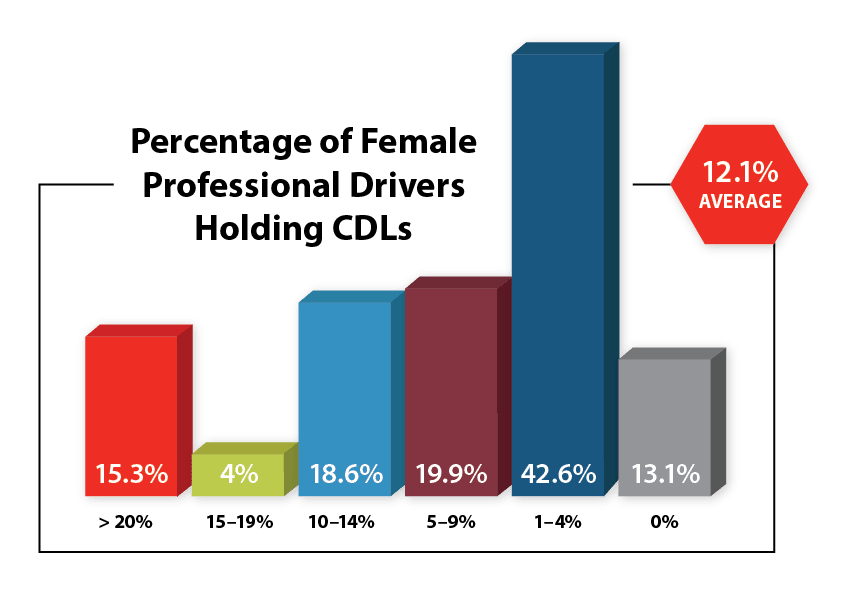
The 2023 WIT Index found women hold 12.1% of CDL driver positions in companies surveyed.
Source: WIT Index
4 min to read
According to the 2023 WIT Index just released by the Women In Trucking Association, 12.1% of professional drivers who hold commercial driver’s licenses and drive heavy-duty trucks are female.
That was a slight decline of 1.6 percentage points from the 13.7% reported in last year’s WIT Index, an annual benchmark report that measures the percentage of women who make up various roles in companies involved in transportation.
However, that's still up from the 2019 report, where it was about 10%.
“This small decrease in female drivers has been explained by some industry observers to be due to a variety of factors, including a lack of quality childcare, an increased interest in homeschooling children, safety concerns for female drivers, misperceptions of career opportunities for female drivers, and an aging driver population that now is retiring,” the report stated.
Women generally possess strong multi-tasking and organizational skills and typically are safe drivers, WIT said in a press release. For these reasons, along with the need for more professional truck drivers, there has been a significant increase in the number of female drivers for the past five years.
Measuring the Industry
“As with most anything in business, if you don’t measure it, you cannot improve it,” said Jennifer Hedrick, president and CEO of WIT. “This is why the WIT Index is so important to the industry.
"Given the mission of the Women In Trucking Association in part is to encourage the employment of women in the trucking industry, we need to keep monitoring the progress made in bringing more women to all roles in transportation and continuously look for ways to help our member companies and the industry at-large to recruit and retain talented women in critical roles.”
The WIT Index was developed to regularly benchmark and measure the percentage of women who are in leadership roles and functional roles such as professional drivers of heavy-duty trucks, dispatchers, technicians, safety, and HR/talent management.
More than half of those responding to the survey reported that the company has a DEI (Diversity, Equity and Inclusion) policy in place. Another 19% said it's something in progress, 19% said they did not have such a policy, and 5% didn't know.
This was an increase from 2022, the first tme this question was asked, when close to 46% confirmed they had a formal policy and 31% said they did not have a policy.
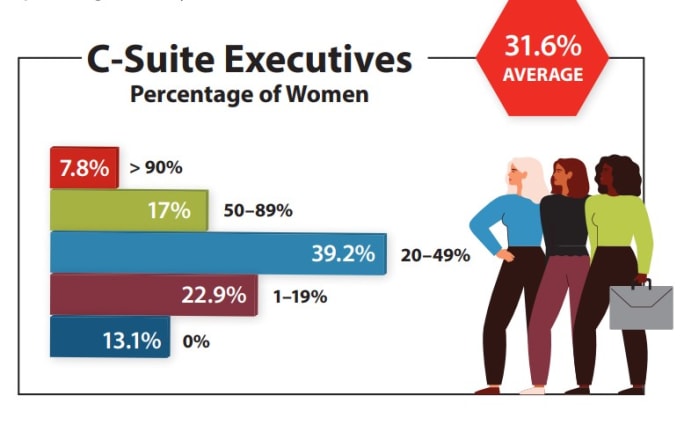
The 2023 WIT Index found women hold a large percentage of C-suite and company leader positions.
Source: WIT Index
Trucking Leadership
According to participating companies, an average of 31.6% of executives in the C-suite are women. A significant percentage of those companies (39.2%) report 20% to 49% of executives in their C-Suite are women. In some companies, women fill the majority of the leadership roles. The index noted that 7.8% of the companies reported more than 90% of their C-suite executives are women.
The report also looks at “company leaders,” which it defines as someone with supervisory responsibilities. This contains both managers and C-suite positions.
Approximately 45.6% of respondents reported between 20% and 49% of company leaders are women. Another 25.1% said women held between 50% and 89% of the company leader roles. On average, 36.9% of company leaders are women, according to the index.
Dispatchers
In addition, the 2023 WIT Index found an average of 43.5% of dispatchers are women. According to WIT, this is an important related statistic, since dispatchers are managers of professional truck drivers’ schedules and ensure timely pick-ups and deliveries.
Last year was the first year WIT gathered input about dispatchers; last year's number was 44.7%.
Technicians
Women, according to the index, are not as prevalent as technicians. On average, according to the companies participating in the WIT Index, only 7.5% of technicians are women. Nearly half the companies, 49%, reported they have no women working as technicians.
Although the 7.5% may seem small, it is a marked increase from the 2022 WIT Index in which women only held approximately 3.7% of the technician roles among participating companies.
Background
Initiated in 2016, the index is based on reported statistics by companies in transportation, including for-hire trucking companies, private fleets, transportation intermediaries, railroads, ocean carriers, equipment manufacturers, and technology companies. WIT told HDT that the study takes companies without fleet assets out of the equation when determining the numbers for positions such as professional drivers and technicians.
The data involving the 2023 WIT Index was confidentially gathered from January through April of 2023 from 350 participating companies of various sizes, according to the association. Percentages are reported only as aggregate totals of respondents.
The association is already gathering data for the 2024 WIT Index.
More Fleet Management
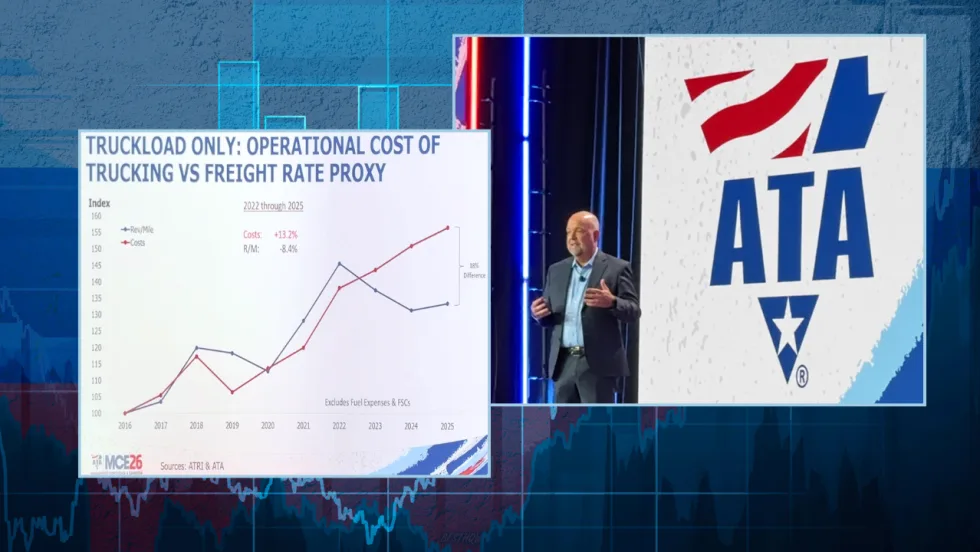
Why This Trucking Recovery Is Different
Freight demand remains sluggish, but rising costs and tougher enforcement have taken enough capacity out of the market to change the outlook for motor carriers.
Read More →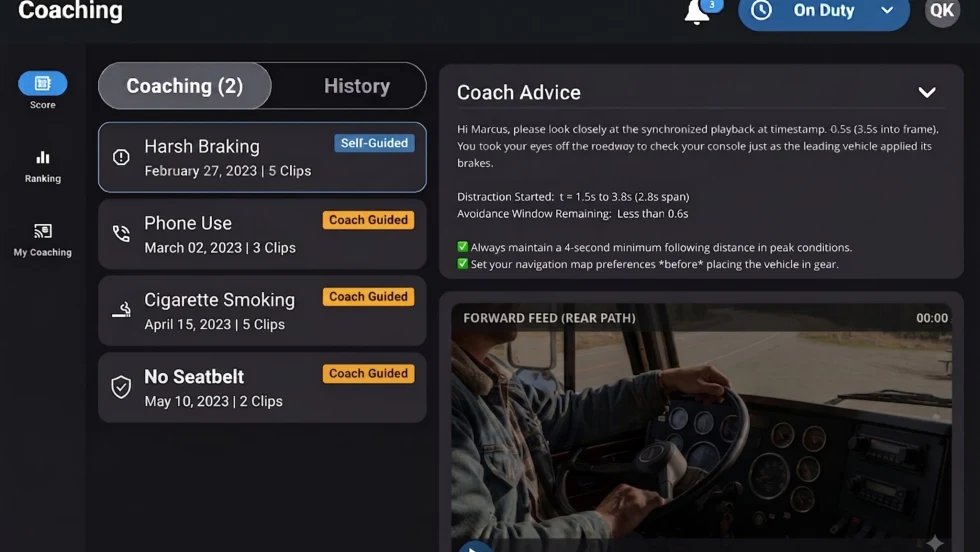
Platform Science Adds Dispatch and Safety Tools
Four additions to PS Fleet help fleets monitor loads, manage driver coaching, share truck locations and adjust video system settings.
Read More →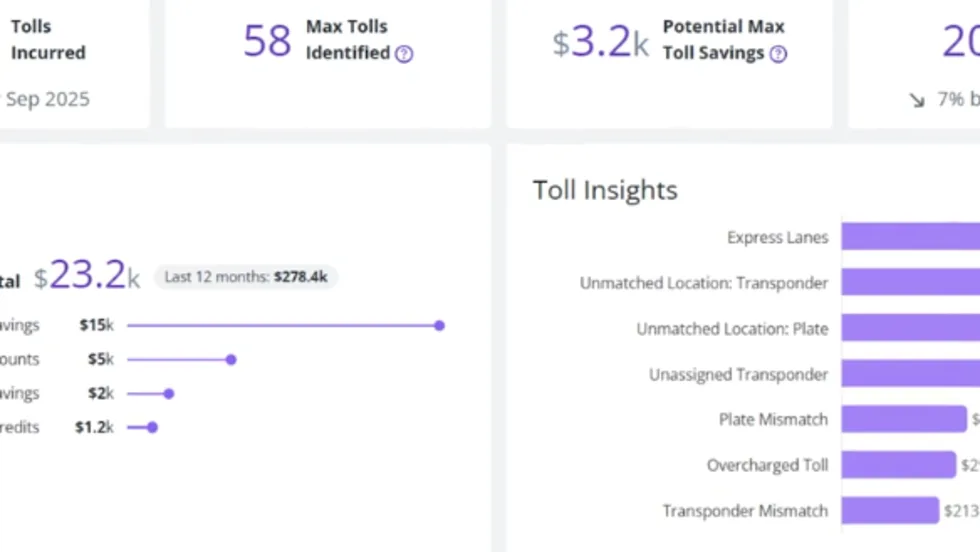
PrePass Intelligence Mines Fleet Bypass, Toll and Safety Data
PrePass Intelligence helps fleets measure bypass savings, flag potential toll overcharges, and spot suspicious transactions by combining data from separate systems.
Read More →
Motive Adds AI Agents for Fleet Operations
New tools automate follow-up on fleet data, from maintenance work orders to driver alerts, with two-way voice conversations planned for later this year.
Read More →
Can You Beat Our Trucking Trivia Challenge?
Test your truck knowledge with 19 trivia questions from Heavy Duty Trucking Exchange. Can you keep up with the fleet pros?
Read More →
BeyondTrucks Adds Rules Checks to Dispatch
New Compatibility Engine checks driver qualifications, equipment requirements and fleet policies before loads are dispatched.
Read More →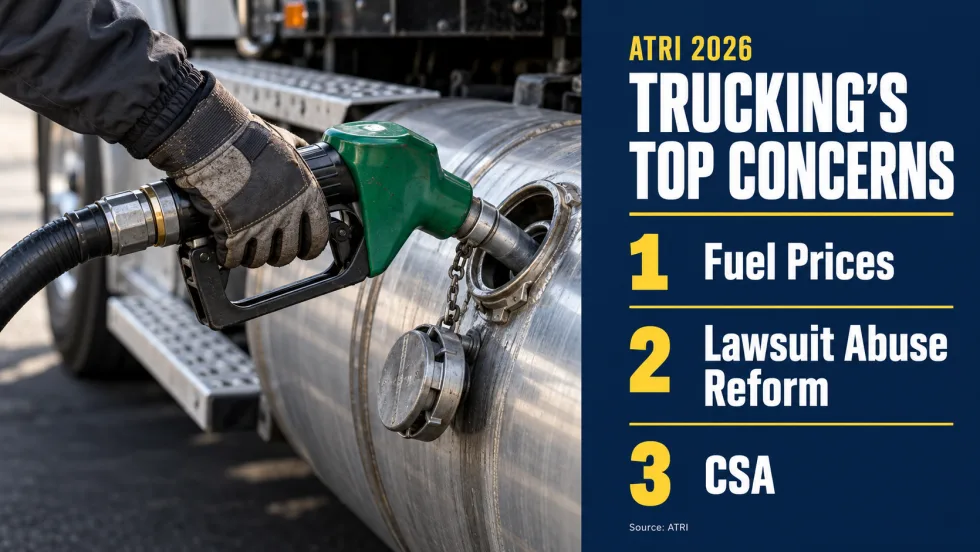
Diesel Prices Hijack Trucking’s Worry List
ATRI’s annual survey finds cautious optimism about freight, but diesel costs, litigation, and insurance continue to squeeze fleets. Drivers have different priorities on several issues.
Read More →
Nomination Deadline Extended for HDT Emerging Leaders
Just a few more days to nominate accomplished trucking fleet professionals under 40 who are making an impact and helping lead the industry forward for the HDT Emerging Leaders award. Deadline extended to October 20!
Read More →
What Will ATA’s New Leader Bring to Trucking's Table?
Incoming President and CEO Mark Colson’s record in Alabama offers clues about his priorities and approach following Chris Spear’s abrupt departure as the head of the American Trucking Associations.
Read More →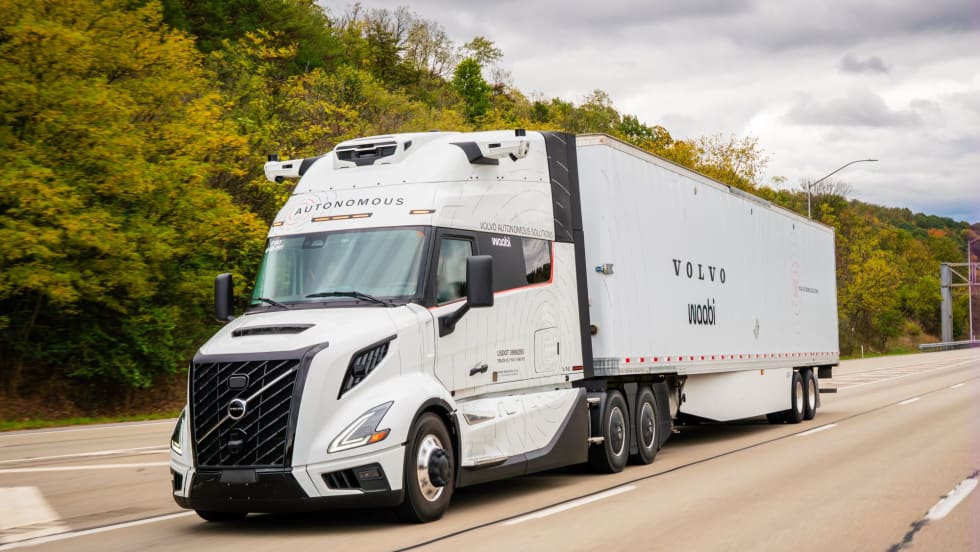
Volvo, Waabi Start Commercial Autonomous Operations in Texas
Volvo VNL Autonomous trucks, powered by the Waabi Driver, are hauling freight directly to third-party facilities for a customer in Texas.
Read More →