





Editor's Note: This article originally appeared in 2022 but has been updated. In mid-2026, Mack Command Steer is available and provides the same benefits on the Mack Pioneer, the new regional Anthem, the Keystone, and the new Granite trucks.
Putting Mack’s Command Steer to the Test
A test drive of Mack’s Command Steer active steering system evaluates how it can make truck driving easier and less tiring.
July 30, 2026

Mack’s Command Steer active steering system is built to take the bumps and jolts out of even the nastiest terrain.
Photo: Mack
6 min to read
At a quarry in Easton, Pennsylvania, I got a chance to see just how well-suited Command Steer, Mack's active steering system, is at managing 20,000-pound steer axles over rough jobsite terrain.
Command Steer combines an electric motor with the truck’s existing hydraulic steering. The motor is upstream of the hydraulic steering gear, so the steering gear recognizes only the torque from the steering column input shaft. The steering gear doesn’t "know" there’s a motor helping the driver turn that shaft. It responds as it normally would, turning the output shaft X degrees for every Y degree of input.
The driver is certainly aware of the motor’s presence. It applies up to 11 newton-meters (about 8 lb-ft) of torque to the steering shaft — which means the driver doesn’t have to.
“With a Mack steering wheel, the force is equivalent to 10.67 pounds of assist,” said Mack Construction Product Manager Tim Wrinkle. “If you can picture it in your mind, it’s like having a bowling ball on the edge of that steering wheel to help you turn that truck.”

The quarry test drive course featured a series of offset trenches that tested the system’s ability to maintain a straight path without driver steering input.
Photo: Jim Park
There’s no difference in the steering performance or road feel. Turning the steering wheel is just much easier and less tiring for the driver.
It works in the opposite direction, too. Command Steer suppresses the input often felt at the steering wheel due to uneven terrain, large rocks, fallen logs, and the like. The motor reacts to those irregular forces hitting the wheels by countering with an applied force of its own, thus reducing steering wheel “kicks.”
In situations that would sometimes see the steering wheel nearly jerked out of the driver’s hand, the driver feels almost nothing as the system steers the truck in the intended direction.
An array of sensors collects data on what the truck is doing and what the driver wants it to do by comparing the rotational angle of the steering shaft with the position of, and inputs to, the output of the steering gear.
If the position of the wheels does not agree with the driver’s input to the steering shaft (for example, when hitting a large rock or a pothole), the system determines that the driver doesn’t want to turn, and therefore keeps the truck on the driver’s intended track.
Command Steer collects data over 2,000 times each second, Mack says, monitoring road conditions, driver inputs and environmental inputs.

Command Steer consists of dozens of sensors providing input to a control module that manages an electric motor mounted on the input side of the hydraulic steering gear.
Photo: Mack
“If the driver isn’t changing the steering wheel position, the system will compensate by applying a counterforce to the steering gear to keep the truck going straight,” Wrinkle says.
“Command Steer has been shown to reduce driver effort by 85%, which all goes toward improving jobsite safety and driver productivity.”
Where the Rubber Meets the Potholes
Mack Trucks launched Command Steer for Anthem highway trucks in 2020. The Granite line of vocational trucks got Command Steer about a year later.
At a quarry owned by long-time Mack customer H&K Group, Mack crews laid out a short serpentine course on the floor of a gravel pit about 200 feet below ground level. In another section of the quarry, they had dug shallow trenches, 4 to 8 inches deep and offset by several feet in some cases.

Command Steer on the Mack Anthem highway truck promises to make tight maneuvering and backing much less tiring for the driver. It also provides invisible counter-steering to help tame crosswinds.
Photo: Jim Park
Testing the Mack Granite with Command Steer
I first ran the course in a Granite not equipped with Command Steer Granite with the system.
The difference was like night and day.
Without Command Steer, a good driver could manage all the turns while going quite slowly. It took some pretty aggressive tugs on the wheel, and you had to be quick about it. The Granite has a nice firm steering feel, but it’s almost impossible to “whip” the wheel around.
With Command Steer, on the other hand, I could literally one-finger steer the truck through the serpentine, and I could make the turns fast enough to traverse the course at a decent speed.
There was a backing maneuver, too, where I was able to one-palm the wheel to swing the heavily laden truck (about 74,000 pounds, Mack told us), into position.

Very little effort is needed to turn even big, fully loaded 425 tires on 20,000-pound steer axles.
Photo: Mack
But the clincher was the trenches. Without Command Steer, it was difficult enough just staying in the seat while dropping the big front wheels into the offset trenches. The push-back on the steering wheel required more than a little effort to counteract. The tires were pushed and pulled as they dropped into the gouges in the ground, and all that externally induced torque (bump steering), of course, came right back up the steering column.
Command Steer tamed that completely. Where I had worked to keep the non-equipped truck in a straight line, I was able to lift my hands off the wheel of the Command Steer truck while it steered straight through the trenches, unperturbed by the external forces acting on the big tires.
In the days before power steering, many drivers suffered broken wrists and fingers while wrestling steering wheels under such conditions.
I can say the difference between Command Steer and not is about as dramatic as the difference between power steering and "arm-strong" steering.
Testing the Mack Anthem with Command Steer
Mack brought a couple of Mack Anthems to the quarry as well, with and without Command Steer.
Bobtailing around a gravel pit hardly does the system justice, but I did get a sense of the system’s capabilities. The Anthem course was somewhat less aggressive, and included a couple of right and left turns, a backing maneuver, and shallower trenches.
It was a good demonstration of the system's centering capabilities. The steering wheel always swings back to center automatically after a turn. While backing, in particular, a savvy driver would let the system self-center while straightening out rather than risk over-steering and blowing the backup maneuver.
And like the Granite, driving through the trenches, the truck motored straight through the ruts as if guided by some higher power. It never wavered.
Pretty cool.
I have neglected to mention up to this point that Command Steer is sensitive to road speed. As speed increases, its influence on the steering wheel diminishes.
At highway speed, the steering feels exactly as you’d expect a non-Command Steer truck to feel. It’s invisible until it’s needed, and even then, you might not notice it.
In a stiff crosswind, for example, the system counters the forces trying to push the truck right or left by applying a small amount of torque in the opposite direction. The driver will feel almost nothing but a little less tired from counter-steering into the wind.
It will also respond in the case of a steer tire blow-out or if a steer tire slips off the edge of the pavement. The driver will not have to fight to bring the truck back. Command Steer does it for you.
ROI on Command Steer
Command Steer won’t reduce your fuel consumption or help keep air in your tires, but it will be a hit with drivers, especially those that work in challenging environments. Driver recruiting and retention is no less of a challenge for fleets than compliance and cost reduction, so this little tool will pay dividends of its own, though they may be less tangible.

Command Steer’s real value will be most noticeably felt in the driver recruiting department.
Photo: Jim Park
I thought it did a remarkable job with the heavy Granite trucks and their 20K steer axles. Steering through the serpentine was a cinch and maintaining a straight vector through the offset trenches was ridiculously easy. In fact, Command Steer did all the work.
It feels odd at first to swing the wheel of a big truck with so little effort. We’re accustomed to the stiff feeling of traditional hydraulic power steering systems, so being able to turn that wheel with less effort than I need to steer my car was strange, at first. But I got used to it pretty quickly.
Watch Mack's Command Steer in Action
A version of this article appeared in the November/December 2022 issue of Heavy Duty Trucking.
Subscribe to Our Newsletter
More Equipment

Kodiak Lines Up Fleets for Driverless Trucking
An agreement for 75 trucks, a new Texas freight lane, and progress on safety validation move Kodiak closer to its planned driverless highway launch.
Read More →
How GP Transco Builds Fuel Savings a Fraction at a Time
Aerodynamic specs, solar panels, and driver incentives help GP Transco turn small efficiency gains into savings it can reinvest in its people.
Read More →
More Trailer Data Through the Same Seven-Way [Video]
Can trucking’s standard seven-way connector handle more cameras and trailer data? Grote’s Adam Slade shows HDT how the company is using new technology with its 4See trailer system, not only to add a new backup camera but also to expand other capabilities — without adding another connection.
Read More →
Grote: More Cameras, Same Seven-Way Connector
The next-generation 4See rear-view backup camera from Grote uses the standard seven-way connector and supports additional cameras and other trailer data.
Read More →
Trucks at ATA's 2026 MC&E in Charlotte, North Carolina [Photos]
From rigs decked out in patriotic America's 250 paint schemes to autonomous trucks and more, check out these photos from ATA's 2026 Management Conference & Exhibition.
Read More →
Help HDT Find Trucking’s Top Products
Have you come across a new product that could make a difference for trucking fleets? Nominate it for HDT’s 2027 Top 20 Products Awards by November 9.
Read More →
Volvo Unveils New VNX Heavy-Haul and Vocational Truck
Volvo Trucks has launched the VNX, a new vocational truck also available as a tractor in day cab and two sleeper configurations, with one heavy-haul model. The Volvo VNX is powered by Volvo's D13 platform, which delivers up to 540 horsepower and 1,950 pound-feet of torque and is EPA 2027-compliant.
Read More →
How GP Transco Cuts Trucking Fuel Costs, a Tenth of a Gallon at a Time
What’s another tenth of a mile per gallon worth? GP Transco shares how equipment upgrades and driver coaching turn small gains into meaningful fuel savings.
Read More →
Electric Yard Tractors Move Beyond Pilots
Operating-cost savings have overtaken sustainability goals as the leading reason surveyed fleets are adopting battery-electric terminal tractors, according to new NACFE research.
Read More →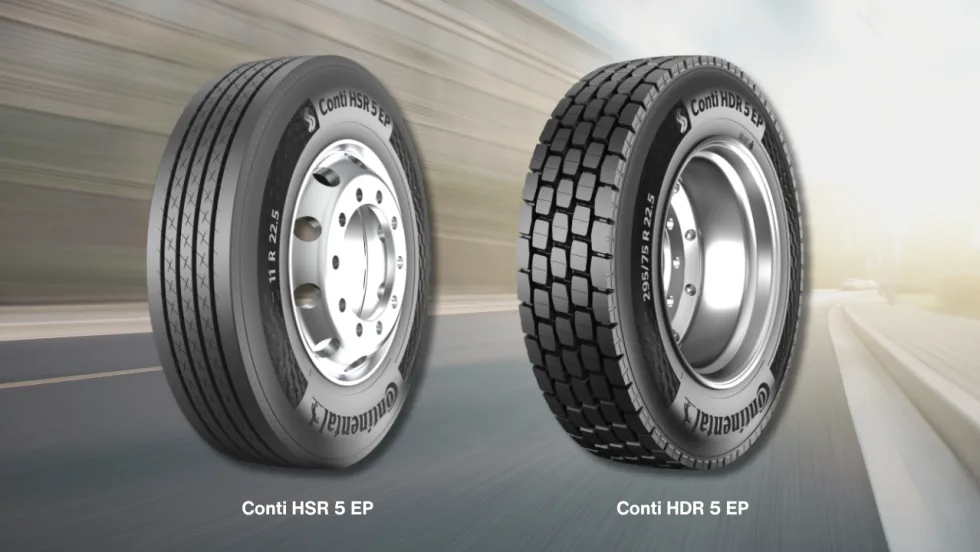
Continental Introduces New Regional Truck Tires
Continental says its new Generation 5 steer and drive tires for regional operations offer longer tread life, with estimated mileage gains of 22% and 19%, respectively.
Read More →