




Volvo: New I-Torque Improves Fuel Efficiency
Volvo Trucks says the new I-Torque powertrain solution offers up to a 31% increase in fuel-efficient speed range.

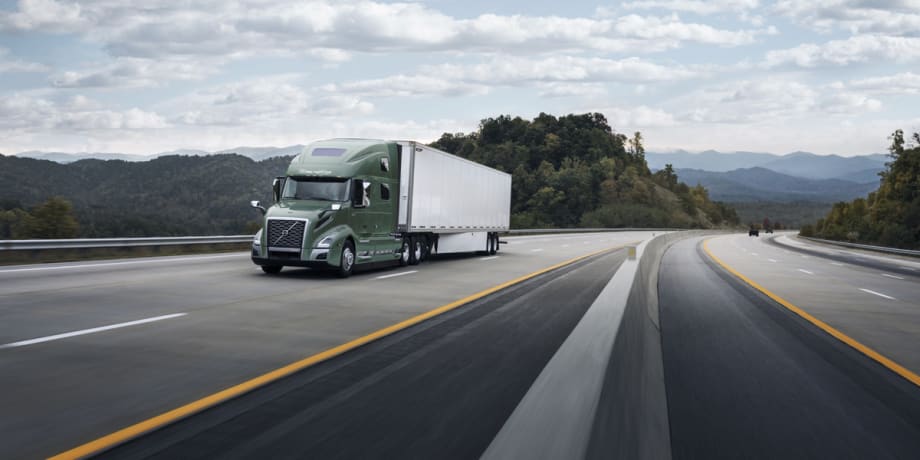
I-Torque uses Volvo Trucks’ 13-speed I-Shift feature with crawler gear, and combines the fuel efficiency advantages of direct drive with the performance and flexibility of overdrive.
Photo: Volvo
Volvo Trucks North America said its new Volvo I-Torque option for the latest D13 Turbo Compound engine enables the truck to operate optimally with up to a 31% increase in fuel efficient speed range, achieving up to an 8.5 mpg at 85 mph.
I-Torque is made up of the D13 Turbo Compound engine, the I-Shift transmission with overdrive features, adaptive gear shift strategy, a new map-based version of the predictive cruise control Volvo I-See, load-sensing software, and low rear axle ratios as low as 2.15.
The I-Torque configuration uses Volvo Trucks’ 13-speed I-Shift feature with crawler gear and combines the fuel efficiency advantages of direct drive with the performance and flexibility of overdrive. At highway speeds, the system will select either direct drive or overdrive to maximize fuel efficiency without forfeiting performance or productivity, Volvo officials said in a press release.
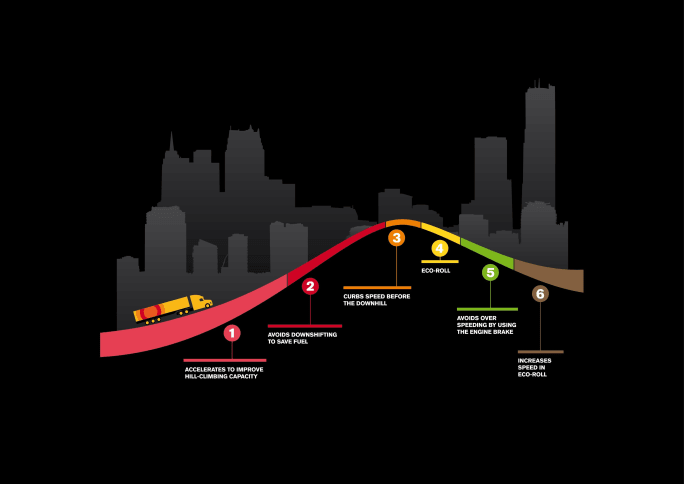
I-Shift together with the new version of the I-See technology, which employs real-time map-based data and GPS positioning, manages speed and gear-shifting in the most fuel-efficient way on any route or terrain.
Photo: Volvo
I-Shift together with the new version of the I-See technology, which uses real-time map-based data and GPS positioning, manages speed and gear-shifting in the most fuel-efficient way on any route or terrain and generates up to an additional 1% in fuel savings.
Further enhancing the VNL driving experience, its lower engine RPMs during operation creates a more pleasurable driving experience with a quieter cab environment and reduced engine vibration, according to the company.
“In today’s demanding and quickly changing transportation business environment, that requires a high degree of flexibility and adaptable truck performance on various terrains and routes, I-Torque is the solution for our customers who need to stay competitive with a truck where fuel economy and optimized performance is taken to the next level without any compromises,” said Johan Agebrand, director of product marketing at Volvo Trucks North America. “The current business environment is a perfect example, where diesel prices are pacing well beyond $4 per gallon and the pressure on transportation is high.”
In a release, Volvo Trucks said it is optimistic that fleet owners and drivers will see the immediate value and competitive advantages that come with adding the I-Torque option to the D13TC engine, which is already standard in all VNL sleeper models.
More Fuel Smarts

How Volvo Updated Its D13 for EPA 2027 [Watch]
Volvo’s updated D13 promises lower emissions without sacrificing performance or fuel economy. Take a closer look at what changed inside the engine in this HDT Spotlight video.
Read More →
Diesel Price Spike Shortens Payback for Natural Gas Trucks, Report Says
Energy Vision estimates fleets could recover the higher purchase price of an RNG-fueled Class 8 tractor in 1.3 to 2.8 years under current fuel-price scenarios.
Read More →
Calstart Becomes Catalyst Mobility, Reflecting Broader Focus
Calstart is now Catalyst Mobility, reflecting the nonprofit’s growing national role in clean transportation, including zero-emission trucks, infrastructure and incentive programs.
Read More →

Record Diesel Prices Squeeze Trucking Fleets
Average U.S. diesel prices have climbed to nearly $6 a gallon, surpassing the 2022 record as tight refinery capacity and Middle East disruptions keep fuel costs elevated.
Read More →
How Fuel Delivery Shapes Engine Performance
Fuel delivery depends on more than what happens at the injector. For fleet, maintenance and technical professionals, looking at the full path from pump to injector can provide useful context for understanding engine performance.
Read More →
East Coast Port Launches $45M Electric Truck Push
The Port Authority of New York and New Jersey announced millions in incentives for zero-emission drayage trucks, yard tractors, and new charging hubs near the port.
Read More →
California Bill Could Shed Light on Electric Truck Prices
Why do battery-electric Class 8 trucks remain so expensive? A California bill headed to Gov. Gavin Newsom would give fleets and state agencies more visibility into what manufacturers charge.
Read More →
Detroit Opens Orders for EPA 2027 Engines
Detroit isn’t starting from scratch to meet EPA 2027 diesel emissions standards. Its Gen 6 DD13 and DD15 engines keep much of today’s platform while updating the fuel and aftertreatment systems.
Read More →
Zero-Emission Truck Corridor Planned for West Coast
California, Oregon, Washington, British Columbia and Baja California are coordinating plans for truck charging and hydrogen fueling from Canada to Mexico.
Read More →
A Closer Look at Kenworth’s Electric T880E Vocational Truck [Video]
Learn more about Kenworth's T880E battery-electric vocational truck at the Paccar Technical Center, including its range, applications, upfitting considerations, and PTO options, in this HDT Spotlight video.
Read More →