





For more clues into the Biden administration's truck safety priorities:
Scoping out the 2022 Regulatory Landscape for Trucking
Is the Biden administration too busy dealing with supply-chain issues and pushing the White House policy agenda on Capitol Hill to spare much attention for trucking regulation?
February 2, 2022

Photo: U.S. DOT
4 min to read
As 2022 unfolds, one thing that’s clear is that the Biden administration is not yet fully engaged on the regulatory front. When it comes to trucking, one might say it is only minimally engaged. But there’s no reason that won’t change.
Right now, President Biden is still working out how to push the rest of his ambitious and far-ranging policy agenda across Capitol Hill. And he’s not going to let up while both chambers are at least nominally held by the Democratic Party. That power dynamic will shift dramatically if the pundits now calling for a bellwether mid-term election turnover this fall turn out to be right.
In the meantime, the Department of Transportation recently announced a National Roadway Safety Strategy to bring together efforts of its various agencies, including the Federal Motor Carrier Safety Administration, to address transportation deaths and strive for zero fatalities.
More immediately, yet another round of musical chairs has placed a new official in charge of the Federal Motor Carrier Safety Administration. FMCSA functions regardless of who is in charge and whether their authority to do so is “acting” vs. confirmed by the Senate, thanks to many long-term staffers who aren’t political employees.
On the other hand, whenever the guard changes at a federal agency, stakeholders don’t know what may change. With a new FMCSA chief, the question always is, how actively will he or she engage with the trucking industry, and what tone will they set? Will they be highly visible at industry events, even inviting questions from the floor? Will they engage with members of the trucking press corps regularly?
Musical Chairs Redux at FMCSA
FMCSA is now headed by Robin Hutcheson. She was named in January as the agency’s deputy administrator and will serve, too, as acting administrator. Hutcheson is the fourth acting chief in a row since President Trump’s confirmed appointee Ray Martinez stepped down as administrator a little over two years ago.
Hutcheson replaces Meera Joshi, who was appointed deputy administrator and was expected to be confirmed as Biden’s choice for administrator by the Senate. She resigned her post in late December to accept a position as a deputy mayor of New York City.
Deputy Administrator Hutcheson may make a distinct mark, given that she brings to the job a solid mix of public and private experience managing municipal fleet operations, lobbying for transport interests, and engaging in policy-making.
She spent the last year serving as DOT’s deputy assistant secretary for safety policy. Prior to that, she held posts that included director of public works for the City of Minneapolis, transportation director for Salt Lake City, and president of the National Association of City Transportation Officials.
In short, Hutcheson already knows where the furniture is when it comes to getting things done in a government setting. So she may get up to speed sooner and fully leverage her background to move FMCSA rulemakings along.
Rules to Watch
The regulatory activity most likely to impact trucking involves some key rules on track to be finalized and implemented this year. Whether these rulemakings become law before year’s end will depend on how smoothly the rest of the process goes for each, as well as how hard the Biden White Houses pushes for their completion.
Arguably the most critical of these is pushing along the launch of the FMCSA pilot program that aims to forge a path to certifying CDL holders under age 21 to operate on interstate roads and highways.
Then there are three existing proposed rules to keep a close watch on, as they may gain some speed on the track to approval. One would mandate automatic emergency braking (AEB) (Rule 2127-AM36) on commercial vehicles. The other two would further regulate GHG emissions (Rule 2060-AU41 and Rule 2125-AF99) emitted by heavy-duty vehicles.
These three proposed rules get their due in the latest edition of the Unified Agenda of Federal Regulatory Actions, published just days ago, which identifies the actions federal agencies plan to take during the next year.
“Agencies prepared entries for this publication to give the public notice of their plans to review, propose, and issue regulations. They have tried to predict their activities over the next 12 months as accurately as possible, but dates and schedules are subject to change,” noted the Biden administration.
These include EPA’s plans to strengthen GHG emission standards for light and heavy-duty vehicles while “encouraging” OEMs to transition to zero-emission technologies. Also, each agency will be developing plans for implementing measures contained within Biden’s gigantic infrastructure bill, which became law just months ago. That alone is a massive amount of rulemaking to unpack, organize and prioritize.
Stay tuned.
Subscribe to Our Newsletter
More Safety & Compliance
Sponsored•October 6, 2026
A Camera Isn't a Safety Program. Here's What Brokers Are Screening for Now
Footage alone may not be enough to pass broker vetting processes. Here's what counts as a defensible safety program now.
Read More →
Marijuana and Trucking’s Drug-Testing Dilemma
Marijuana is getting stronger, laws are changing, and drug tests still can’t reliably establish impairment. What does that mean for truck drivers and the fleets that employ them?
Read More →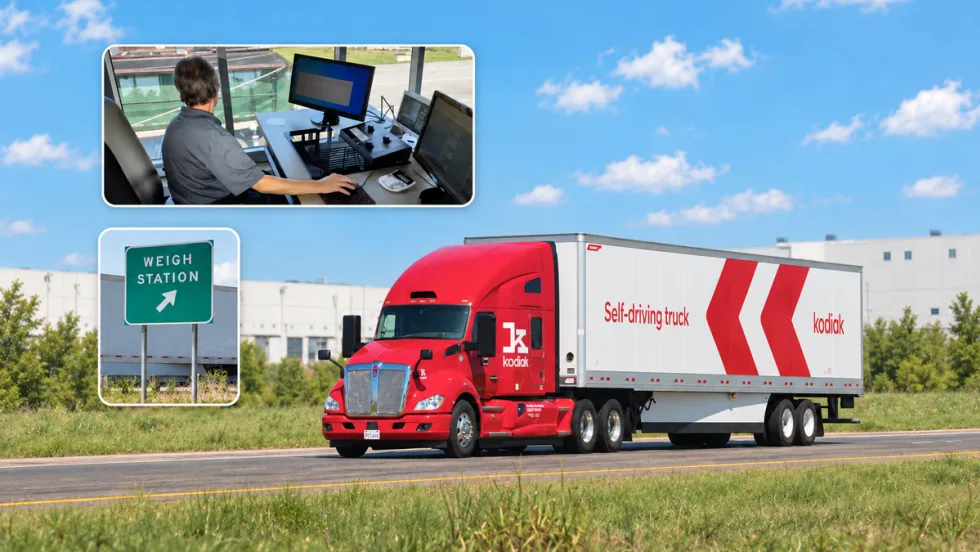
PrePass, Kodiak Connect Driverless Trucks to Roadside Enforcement
The system will allow enforcement agencies to verify Enhanced Inspection information and decide whether Kodiak’s autonomous trucks can bypass roadside screening sites.
Read More →

From One Generation to the Next: How Mentorship Builds Safer Truck Drivers
After three decades in trucking, Harold Perry shares what he's learned about driver safety, mentorship, and helping the next generation build confidence behind the wheel.
Read More →
FMCSA Pauses Biennial-Update Enforcement Amid Motus Transition
Carriers whose updates were due on or after June 1 have more time, while FMCSA works to stabilize its new registration system and warns of phishing sites impersonating its new carrier registration system, Motus.
Read More →
ZF Expands Commercial Vehicle Push in North America
ZF is expanding its North American commercial-vehicle presence with new transmission applications, electrification, trailer technology and autonomous-driving systems.
Read More →
Truck Drivers Need More Than Another Alert
Fleets have more visibility into truck health, safety events, and driver activity than ever. The next challenge is turning all that information into useful guidance for the person who has to decide what to do next.
Read More →
Tesla Wants a Self-Driving Semi. Are Cameras Enough?
Could Tesla’s camera-only autonomous driving technology work on an 80,000-pound Semi? In this commentary, HDT's Deborah Lockridge takes a look at Tesla, Cybercab, and how autonomous trucks see the road.
Read More →
What DOT’s Automated Vehicle Strategy Means for Trucking
The U.S. Department of Transportation issued a new automated-vehicle strategy that outlines plans for driverless-truck regulations, cross-state freight corridors, and federal safety standards.
Read More →
NYC Expands Speed, Pedestrian Safety Tech Across Fleet
New York City is expanding intelligent speed assistance and pedestrian-alert systems across its municipal fleet, moving the technologies from pilot programs into vehicle procurement and retrofit requirements.
Read More →