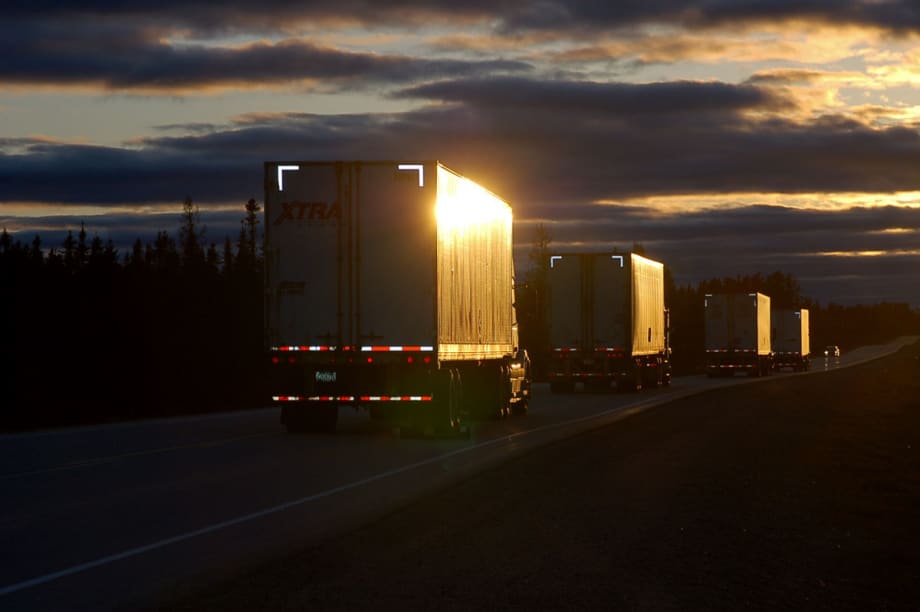
An appeals court has ruled in favor of trailer makers, removing trailers from the 2016 greenhouse gas regulations published by the Environmental Protection Agency and the National Highway Traffic Safety Administration.
An appeals court has ruled in favor of trailer makers, removing trailers from the 2016 greenhouse gas phase 2 regulations published by the Environmental Protection Agency and the National Highway Traffic Safety Administration.
The U.S. Court of Appeals for the D.C. Circuit vacated all the portions of the GHG2 rule concerning trailers, saying the agencies did not have the legal status to regulate trailers in that way.
The EPA rule was based on a statute enabling the agency to regulate “motor vehicles.” In that same rule, NHTSA issued fuel efficiency standards for trailers based on a statute enabling NHTSA to regulate “commercial medium-duty or heavy-duty on-highway vehicles.”
However, because trailers do not have a motor, they are not “motor vehicles,” ruled the court. “Nor are they ‘vehicles’ when that term is used in the context of a vehicle’s fuel economy, since motorless vehicles use no fuel,” wrote D.C. Circuit Judge Justin Walker in the decision, noting that an agency’s rule may not exceed the agency’s statutory authority.
How We Got Here
In 2016, the EPA and NHTSA jointly created a rule called “Greenhouse Gas Emissions and Fuel Efficiency Standards for Medium- and Heavy-Duty Engines and Vehicles — Phase 2,” for the first time setting greenhouse gas emissions and fuel efficiency standards for heavy-duty trailers. The rule requires trailer manufacturers to adopt some combination of fuel-saving technologies, such as side skirts and automatic tire pressure systems.
The Truck Trailer Manufacturers Association challenged the rule and in 2017, the court granted the association’s motion to stay the EPA’s portion of the rule to the extent it applies to trailers. In 2020, the court stayed the compliance dates in NHTSA’s portion.
In a statement, TTMA said it was pleased with the decision.
“This puts the decision-making in the hands of the people that understand their operations best, the motor carriers,” said TTMA President Jeff Sims in an email to HDT. “Each motor carrier can now choose ultimately what equipment will or will not benefit from fuel-saving devices in the context of their specific operations.”
For instance, TTMA said, you could have two trailers fully outfitted with aerodynamic devices as called for in the GHG rules. One that is used in highway over-the-road service will gain fuel efficiency from the devices — but an identical trailer being used in city pick-up and delivery would not, TTMA argues — and with the added weight, could even use more fuel.
“TTMA members have always shared the same goals as the motor carrier industry and federal and state regulators to reduce GHG emissions and save fuel, but there is a better way to accomplish this than what EPA and NHTSA had mandated,” Sims said. “We remain open to sensible rulemaking mirrored after the very successful voluntary EPA Smartway Program that has in effect for over a decade now.”
Dissent: NHTSA Rule Should Stand
One judge dissented in part. Patricia Millett agreed with the majority opinion’s judgment that the Clean Air Act’s text precludes the particular EPA regulations at issue here. She also agreed that the EPA could instead regulate the tractors, including the types of trailers they are allowed to pull. For instance, EPA probably would be within its authority to pass a regulation that says tractors are banned from traveling on roads and highways if they’re pulling loads that cause the tractor's emissions to increase by XX amount, she said, citing part of the oral arguments in the case.
However, Millett disagreed with the majority on NHTSA’s authority to issue fuel economy regulations affecting trailers.
“NHTSA acted under a provision of the Energy Independence and Security Act of 2007 that directed NHTSA to establish fuel efficiency standards for commercial medium- and heavy-duty ‘on-highway vehicles.’ Unlike the Clean Air Act, the Energy Independence Act contains no definition of the term “vehicle” other than regulating it in its on-highway operation and status. Given that focal point, NHTSA quite reasonably applied a long-established definition of vehicles that includes commercial trailers.”
She noted that defining a trailer as part of a commercial vehicle traces back to well before Congress founded NHTSA. In 1941, Webster’s defined a semitrailer as “[a] highway
vehicle which when running is supported at its forward end by a fifth wheel mounted on a motor truck or tractor.”
“Indeed, since the invention of the semitrailer by a Detroit blacksmith in 1914, tractors and trailers have functioned together as work vehicles to drive trillions of miles — and
consume hundreds of billions of gallons of fuel — across the United States. In fact, it is largely in semitruck form that tractor-trailers fulfill their commercial raison d’être — their vital transportation function of moving supplies and goods across the nation.”
As for the majority’s contention that trailers do not use fuel, she said, “On the highway, trailers unite with tractors into a single vehicle — a tractor-trailer or, colloquially, a semitruck. And it is an undisputed fact on the record before us that the trailer part of the semitruck barreling down a highway ‘contribute[s] substantially’ to the fuel consumption and sharply diminished fuel economy of the tractor-trailer.”