





Dig deeper into autonomous-truck technology: Building an Autonomous Truck Driver
Volvo Reveals Prototype Autonomous Truck for North America
Volvo says it’s a step closer to production of autonomous trucks in North America with the unveiling of a prototype Volvo VNL long-haul model integrated with Aurora Driver technology.
September 28, 2021
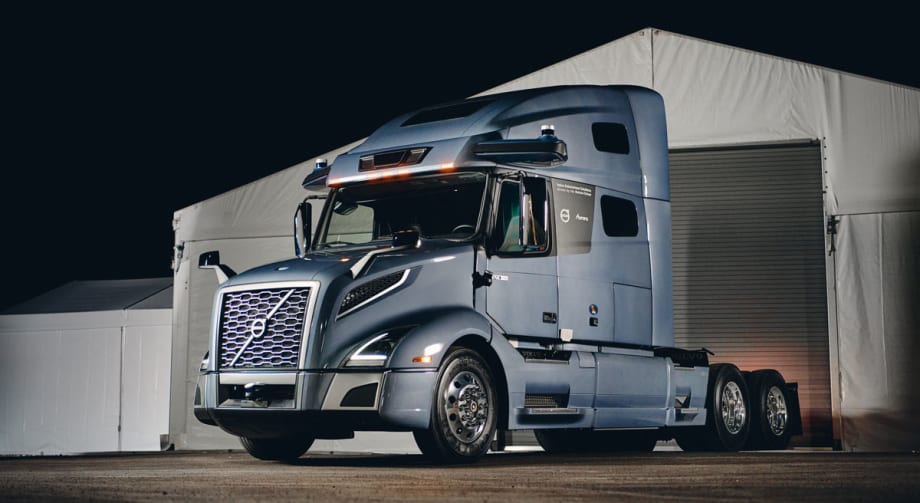
Volvo’s autonomous prototype builds on proven safety technologies already on the Volvo VNL, including Volvo Dynamic Steering and its I-Shift automated transmission.
Photo: Volvo
2 min to read
Volvo said it’s a step closer to production of autonomous trucks in North America with the unveiling of a prototype Volvo VNL long-haul model integrated with Aurora Driver technology. According to the reveal video, this prototype is the first to be designed and manufactured to operate with the Aurora Driver.
Volvo Autonomous Solutions announced back in March that it had entered a long-term partnership with autonomous technology development company Aurora to jointly develop on-highway autonomous trucks, with an initial focus to develop and deploy autonomous hub-to-hub applications for North America.
While research and development are supported by global team efforts, on-highway autonomous truck applications are also being designed and engineered in the U.S., in preparation for future production at Volvo Trucks’ New River Valley Assembly Operations in Dublin, Virginia.
Volvo’s transformation to autonomous builds on proven safety technologies already in place on the Volvo VNL, according to the company, including Volvo Dynamic Steering (VDS) and its I-Shift automated transmission. These existing technologies, along with a number of other advanced vehicle features, create a redundant safety-based solution in the autonomous truck’s core systems to ensure safe operations.
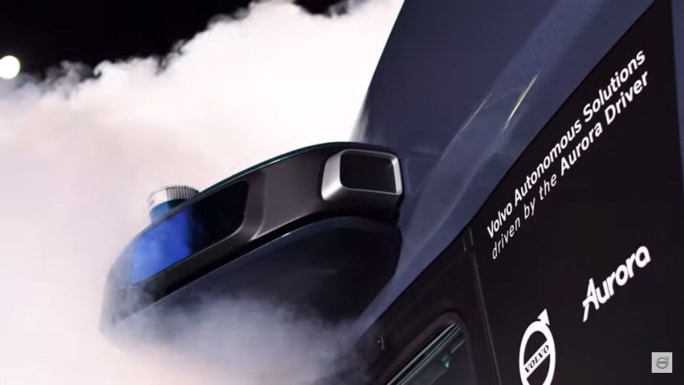
Volvo said this prototype is first to be designed and manufactured to operate with the Aurora Driver.
Photo: Screen capture of Volvo unveil video
Volvo's Autonomous Strategy
In a short video about the unveiling, Volvo said it sees autonomous solutions as a complement to today’s transport systems, to meet increased demand for goods transport.
Volvo Autonomous Solutions said it is paving the way toward not only offering Volvo autonomous trucks to customers, but also to delivering comprehensive and seamless Transport as a Service (TaaS) solutions for autonomous commercial trucks, tailored to specific customer needs.
The partners are working toward the next step in implementing their hub-to-hub transport vision in North America. This includes identifying specific regions and routes to serve as the initial hubs for on-road highway testing.
In addition, Volvo Autonomous Solutions is working closely with customers to understand current and future needs, priorities and demands, in preparation for piloting the autonomous Volvo VNL in on-road, hub-to-hub transport scenarios, as well as the eventual adoption of autonomous technology commercially.
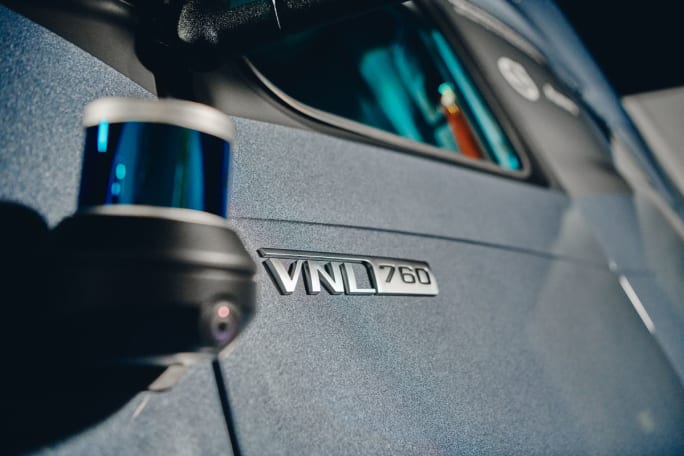
Volvo and Aurora see autonomous technology being used in hub-to-hub transport.
Photo: Volvo
“Volvo Autonomous Solutions is proud to take our first, major steps toward the autonomous Volvo VNL in North America,” said Nils Jaeger, president of Volvo Autonomous Solutions. “We strongly believe in a future in which safe, sustainable, efficient transport solutions are essential for any society to prosper, and autonomous commercial trucking is an important piece of that transformation.”
Volvo isn’t the only company Aurora is working with in North America. In January, Paccar announced a strategic alliance with Aurora to develop, test and commercialize autonomous Peterbilt and Kenworth trucks. Paccar is working with Aurora and FedEx to launch a commercial pilot of autonomous trucks in Texas.
Aurora bought Uber’s self-driving truck business late last year.
More Equipment

Kodiak Targets Dallas–Houston for Driverless Trucks
The company says its autonomous trucks are completing the I-45 run without a safety observer taking control. It plans to remove the observer by the end of 2026.
Read More →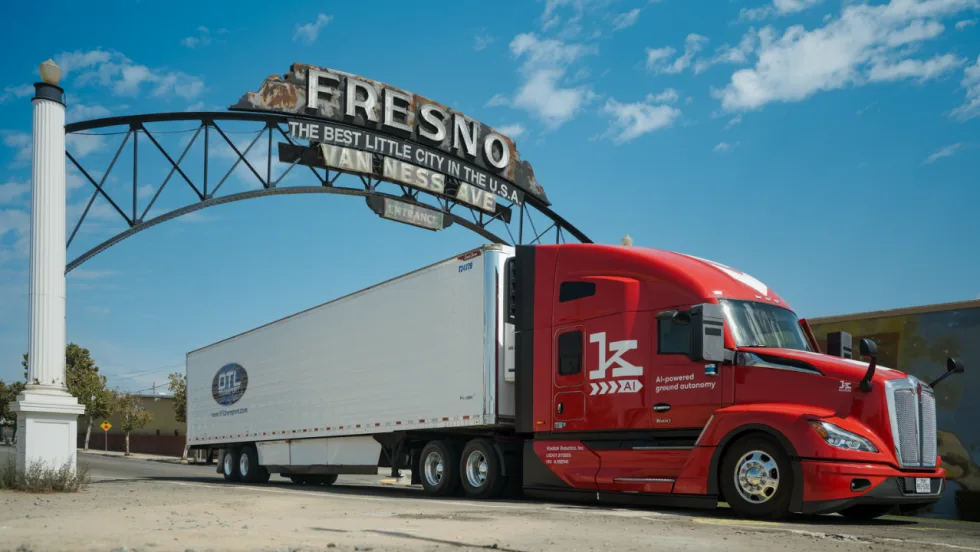
Kodiak Hauls Produce in California Autonomous Truck Pilot
Kodiak AI and DTL Transport have begun hauling produce between Fresno and Los Angeles under California’s new rules for testing heavy-duty autonomous trucks. A safety driver remains behind the wheel.
Read More →
Used-Truck Remarketing Math Is Changing
Used-truck value is no longer just a concern at trade-in. Decisions made throughout a truck’s first life can influence what it’s worth years later.
Read More →
How Volvo Updated Its D13 for EPA 2027 [Watch]
Volvo’s updated D13 promises lower emissions without sacrificing performance or fuel economy. Take a closer look at what changed inside the engine in this HDT Spotlight video.
Read More →
Michelin Tire Improves Efficiency and Durability for Regional Fleets
The Michelin X Multi Energy D2 is a regional haul drive tire engineered to help fleets improve fuel efficiency, durability and traction in demanding stop-and-go operations.
Read More →
ZF Expands Commercial Vehicle Push in North America
ZF is expanding its North American commercial-vehicle presence with new transmission applications, electrification, trailer technology and autonomous-driving systems.
Read More →
Tesla Wants a Self-Driving Semi. Are Cameras Enough?
Could Tesla’s camera-only autonomous driving technology work on an 80,000-pound Semi? In this commentary, HDT's Deborah Lockridge takes a look at Tesla, Cybercab, and how autonomous trucks see the road.
Read More →Kodiak: Driverless Long-Haul Truck Launch on Track for 2026
Kodiak AI says its driverless long-haul safety case is 93% complete and it remains on track to begin commercial operations by year-end 2026.
Read More →
What DOT’s Automated Vehicle Strategy Means for Trucking
The U.S. Department of Transportation issued a new automated-vehicle strategy that outlines plans for driverless-truck regulations, cross-state freight corridors, and federal safety standards.
Read More →
East Coast Port Launches $45M Electric Truck Push
The Port Authority of New York and New Jersey announced millions in incentives for zero-emission drayage trucks, yard tractors, and new charging hubs near the port.
Read More →