




In his address to the 15th World Congress on Intelligent Transport Systems, Gil Carmichael, head of the Intermodal Transportation Institute at the University of Denver, said any realistic discussion on the future of transportation must include the role of railroads
within that system and new technologies to enhance the environment and create economic efficiencies.
Carmichael stressed that, while the global movement of freight is sharply focused on speed, safety, reliable scheduling, and economic efficiency and builds on the strengths of each mode, and it is the freight railroad that offers the high-speed, long distance, lowest cost transportation artery on land. Cargo ships provide ocean transport of containers. Trucks provide local feeder service at origins and destinations. Cargo airplanes deliver high-value, specialized freight. Overall, the operational and economic efficiency of freight's intermodal network dramatically conserves fuel, reduces other environmental impacts, and is significantly safer.
"Railroads are essential to the global business environment we live and work in and are vital to its future growth," said Carmichael. "Today, a doublestack container train can replace 280 trucks, run at speeds up to 90 mph, and afford as much as nine times the fuel efficiency of container transport by highway. In North America alone, a majority of existing railroad rights-of-way have excess capacity that is capable of being expanded to include additional freight lanes as well as inner-and intra-city high-speed mass transit. With advanced technologies and careful planning, it is reasonable to foresee a doubling or even tripling of capacity of the existing route structure without having to acquire additional land."
Carmichael pointed to several options for enhancing this worldwide intermodal infrastructure. "Historically," he said, "petroleum has been available at relatively low cost. Equally important - or perhaps more so - it provides a portable source of motive power. Sometime in this century, however, the fossil fuel supply will start to fall dramatically. Building more highways is definitely not the solution. An Intelligent Transportation System is."
He believes that if fuel-cell technology will eventually deliver a reliable power source at a reasonable cost, it likely is the most desirable outcome and could be adopted by both the railroad and highway modes. But that source also is a finite fuel. A third option, with the most promising future supply, is electricity - and in the foreseeable future, the railroad mode is the only candidate for large-scale benefits from electrification among the commercial transportation modes, he said.
"The major sticking point is the source of fuel for the electricity," he said. "It would be foolish to install an electrified delivery system for power generated from natural gas, for example, because the gas could be delivered directly to the locomotive. But a rail system run on power from nuclear, solar, wind farms, tides, and other fuel sources could, in 20 or 30 years' time, have very strong appeal and possibilities."
Carmichael said, however, that regardless of fluctuations in oil prices, intermodal freight movements make the most sense. It remains the energy-efficient, global, service provider and still represents the lowest-cost option for international container movements.
"The success we have achieved in intermodal transportation points the way to what, I believe, is the most promising strategy for North American transportation improvements, for freightand passenger, in the coming years," Carmichael emphasized. "I call that strategy Interstate II. In the last century in the U.S., we built Interstate I, the 43,000-mile, national highway system. Interstate II is a vision of 30,000 miles of truly high-speed, intercity/port travel that is based upon the steel wheel on a steel rail, not pavement. It would partner the superior safety and efficiency of rail transportation with the strengths of the existing intermodal system, enhanced with new Intelligent Transportation Systems. With GPS and the new PTC technology, we should be able to very safely include passenger trains at speeds up to 125 mph and help alleviate bottlenecks and congestion."
Intermodal Institute Founder Says Transportation System Needs More Rails
In his address to the 15th World Congress on Intelligent Transport Systems, Gil Carmichael, head of the Intermodal Transportation Institute at the University of Denver, said any realistic discussion on the future of transportation must include the role of railroad
More Fleet Management

DTNA Partners with Class8 to Expand Digital Services for Freightliner Owner-Operators
A new partnership brings free wireless ELD service plus load optimization and dispatch planning tools to fourth- and fifth-generation Freightliner Cascadia customers, with broader model availability planned through 2026.
Read More →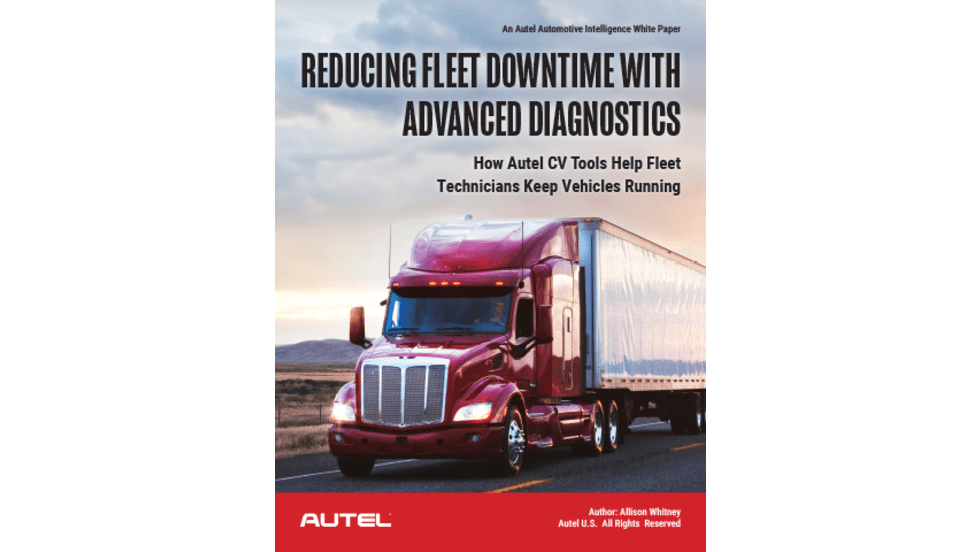
Reducing Fleet Downtime with Advanced Diagnostics
This white paper examines how advanced commercial vehicle diagnostics can significantly reduce fleet downtime as heavy duty vehicles become more complex. It shows how Autel’s CV diagnostic tools enable in-house troubleshooting, preventive maintenance, and faster repairs, helping fleets cut emissions-related downtime, reduce dealer dependence, and improve overall vehicle uptime and operating costs.
Read More →
Stop Watching Footage, Start Driving Results
6 intelligent dashcam tactics to improve safety and boost ROI
Read More →
Werner Expands Dedicated Fleet Nearly 50% With FirstFleet Acquisition
The $283 million acquisition of FirstFleet makes Werner the fifth-largest dedicated carrier and pushes more than half of its revenue into contract freight.
Read More →
Bobit Business Media Launches B2X Rewards Engagement Program
B2X Rewards is a new, gamified rewards program aimed at driving deeper engagement across BBM’s digital platforms, newsletters, events, and TheFleetSource.com.
Read More →
AI is Reshaping Trucking in 2026, from the Back Office to the Shop
Trucking’s biggest technology shifts in 2026 have one thing in common: artificial intelligence.
Read More →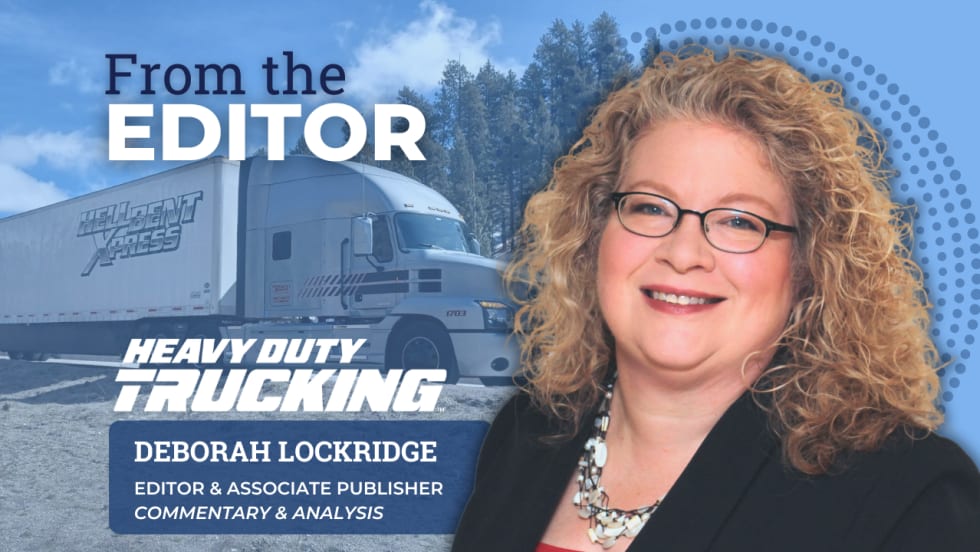
Why Small Trucking Fleets Are Still Standing [Commentary]
Why discipline, relationships, and focus have mattered more than size for smaller trucking fleets during the freight recession.
Read More →
Cargo Theft Is Surging. A Bill in Congress Could Help. [Video]
Cargo theft losses hit $725 million last year. In this HDT Talks Trucking Short Take video, Scott Cornell explains how a bill moving in Congress could bring federal tracking, enforcement, and prosecutions to help address the problem.
Read More →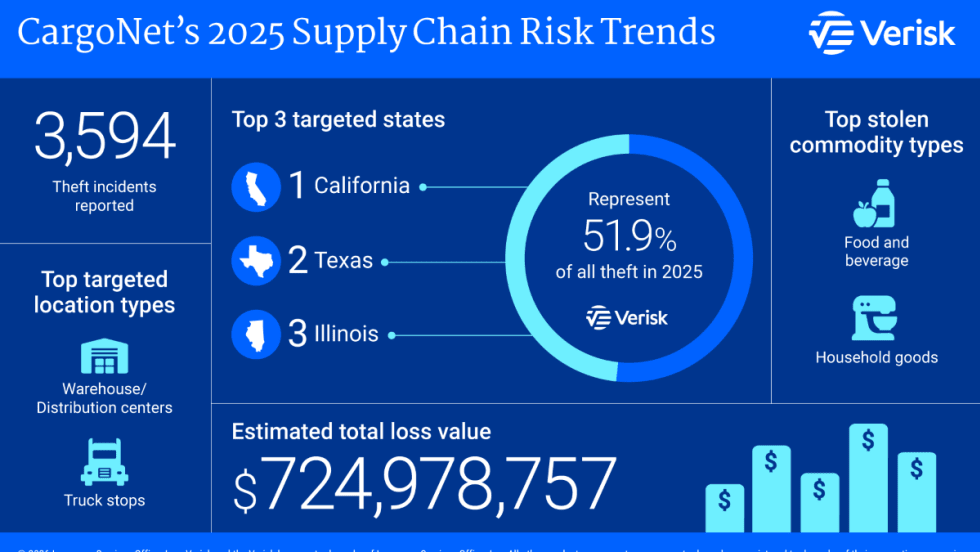
Cargo Theft Losses Jump 60% in 2025 as Criminals Target Higher-Value Freight
Cargo theft activity across North America held relatively steady in 2025 — but the financial damage did not, as ever-more-sophisticated organized criminal groups shifted their cargo theft focus to higher-value shipments.
Read More →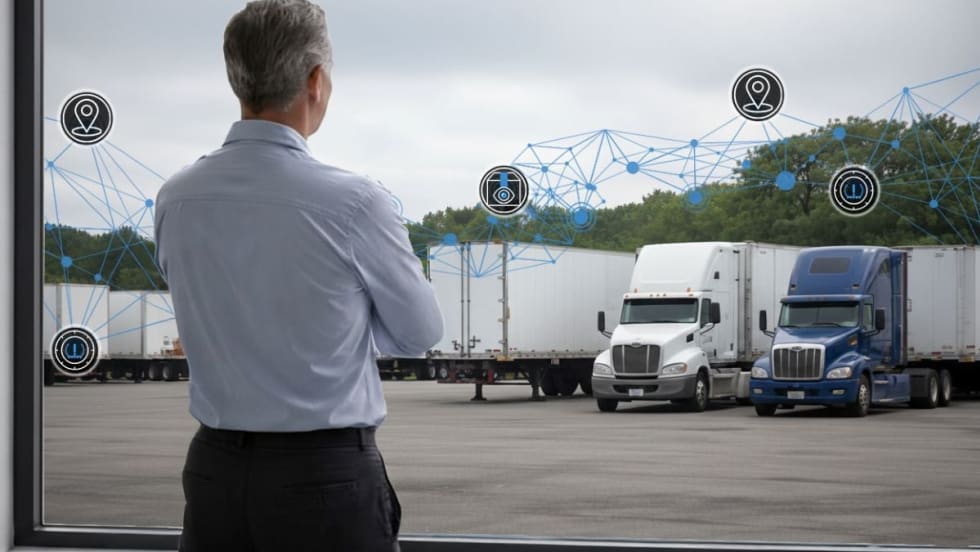
Phillips Connect, McLeod Integrate Smart Trailer Data into TMS Workflows
A new partnership between Phillips Connect and McLeod allows fleets to view trailer health, location, and cargo status inside the same McLeod workflows used for planning, dispatch, and execution.
Read More →