




Elon Musk: Tesla Semi Ready for Production – But There’s a Snag
Elon Musk says the Tesla Semi Class 8 electric tractor is ready to go into production later this year – but getting the needed batteries is a problem.

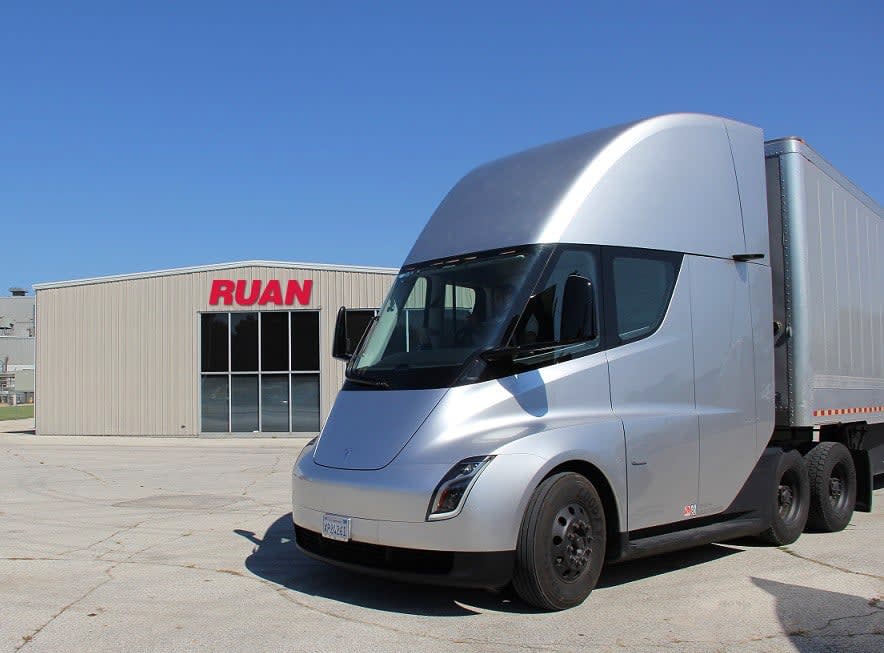
Tesla CEO Elon Musk said the company's Semi truck will enter production later this year, once battery production issues are resolved.
Photo: Ruan
Tesla CEO Elon Musk said the company’s Semi, a Class 8 battery-electric tractor, has finished its pre-production engineering work and is ready to go to market later this year. However, the company’s limited ability to get battery cells is holding it back, he said speaking to investors on the company’s 2020 fourth-quarter earnings call Jan. 27. The company reported its first-ever full-year profit.
The call was reported by TechCrunch, CNBC and other news outlets.
“The main reason we have not accelerated new products – like for example Tesla Semi – is that we simply don’t have enough cells for it,” Musk said on the call. “If we were to make the Semi right now, and we could easily go into production with the Semi right now, but we would not have enough cells for it.”
Musk expects this problem to be temporary, saying that Tesla expects to have sufficient cell volume to meet its needs once it goes into production at its pilot battery factory in Fremont, California, with its 4680 battery pack. The battery cells, which Tesla designed and unveiled to shareholders at a battery day presentation last September, are large, tabless lithium-ion cells with a design that allows for greater energy density and vehicle range.
“A Semi would use typically five times the number of cells that a car would use, but it would not sell for five times what a car would sell for, so it kinda would not make sense for us to do the Semi right now,” Musk added. “But it will absolutely make sense for us to do it as soon as we can address the cell production constraint.”
It's not the first setback for the Semi. Initially, when the electric truck was dramatically introduced to the industry in 2017, Musk announced production for the Semi would begin in 2019. Then it was 2020. Last year, Musk revealed during a first-quarter earnings call that the Semi would be delayed into 2021.
Tesla Electric Van?
The battery constraint points to the same conclusion for the possibility of Tesla developing a van, Musk noted, adding that the lifting of the constraint would open Tesla to possibly pursue the development of that category of vehicle.
Musk also said that Tesla has big plans for “exponentially” ramping up cell production, with a goal of having production capacity infrastructure in place for a total of 200 gigawatt hours per year by 2022. Musk said Tesla would strive to produce around 40% of that by capacity next year, and noted that future process improvements would likely add additional gigawatt hours of cell capacity in a gradual series of improvements as production processes streamlined.
Musk’s comments regarding a Tesla van are timely, as electric vans and other light-duty trucks are expected to be in high demand in the U.S due to President Biden’s Buy America plan, through which he aims to replace the federal government’s fleet of internal combustion engine vehicles with cleaner, quieter electrics. According to the most recently available data from the General Services Agency, the federal fleet includes more than 400,000 trucks, a category that encompasses light duty pickups and vans.
Tesla competitors, including Ford, GM, Daimler, Rivian and others are developing, and in some cases already selling, battery-electric vans, and new players are appearing on the market regularly.
“I think Tesla’s definitely going to make an electric van at some point,” Musk said. “The thing to bear in mind is that there is fundamentally a constraint on battery cell output. If you’re not involved in manufacturing, it’s really hard to appreciate just how hard it is to scale production. It’s the hardest thing in the world!”
More Fuel Smarts

Detroit Opens Orders for EPA 2027 Engines
Detroit isn’t starting from scratch to meet EPA 2027 diesel emissions standards. Its Gen 6 DD13 and DD15 engines keep much of today’s platform while updating the fuel and aftertreatment systems.
Read More →
Zero-Emission Truck Corridor Planned for West Coast
California, Oregon, Washington, British Columbia and Baja California are coordinating plans for truck charging and hydrogen fueling from Canada to Mexico.
Read More →
A Closer Look at Kenworth’s Electric T880E Vocational Truck [Video]
Learn more about Kenworth's T880E battery-electric vocational truck at the Paccar Technical Center, including its range, applications, upfitting considerations, and PTO options, in this HDT Spotlight video.
Read More →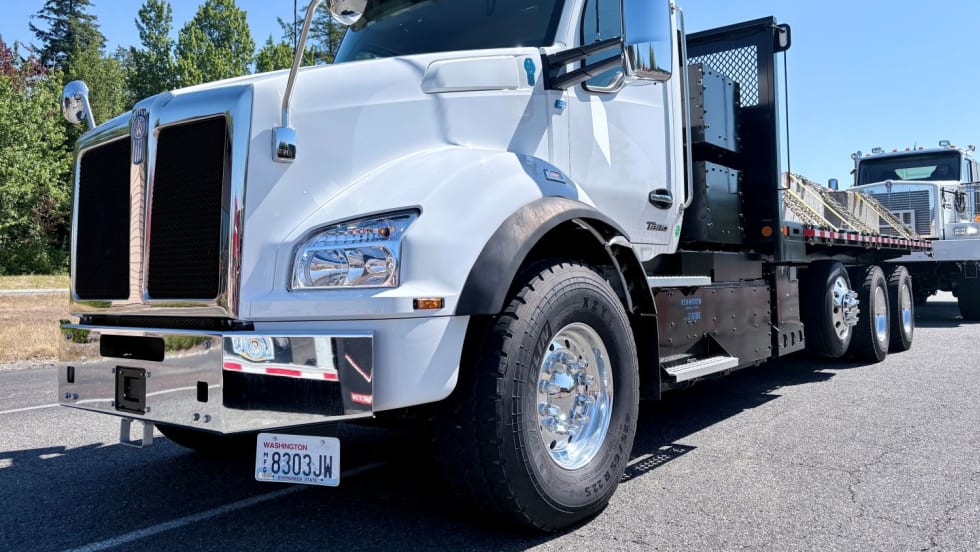
Kenworth T880E Brings EV Power to Vocational Trucks
A closer look at the Kenworth T880E’s range, charging, powertrain and upfit options — and where fleets are showing the most interest.
Read More →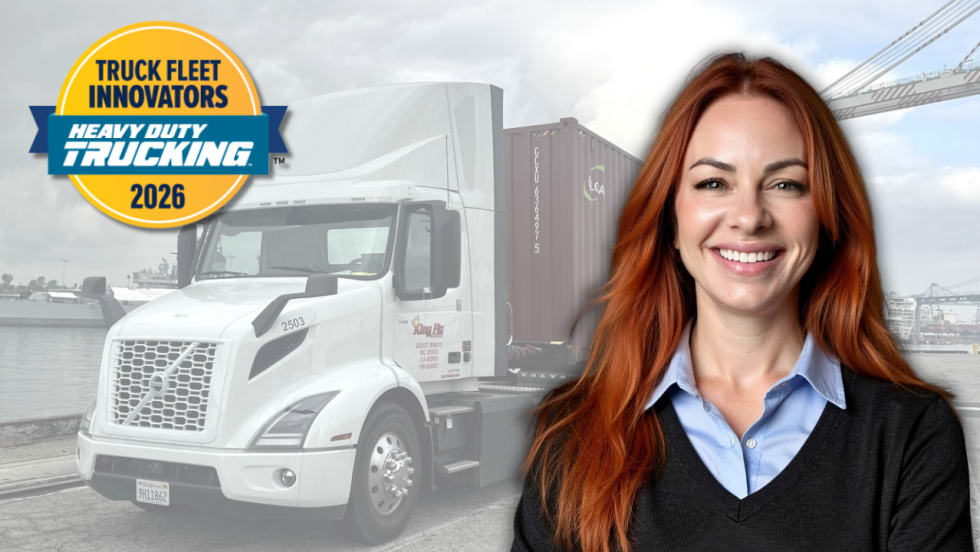
Jennie Abarca Is Proving Electric Trucks Can Do the Job
HDT Truck Fleet Innovator Jennie Abarca is building confidence in fleet electrification one load at a time while openly sharing the challenges she encounters along the way as a small-fleet owner.
Read More →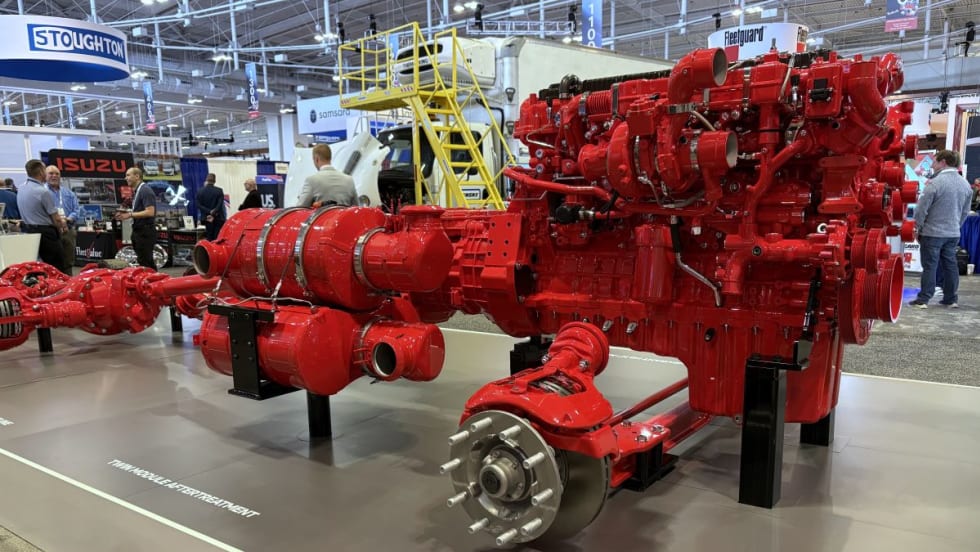
Cummins Adjusts 2027 Engine Rollout After EPA Proposal
The engine maker will gradually introduce its new Model Year 2027 diesel engines while continuing to offer current models during the transition, citing the EPA's proposed emissions rule changes.
Read More →
EPA Proposal Could Ease 2027 Truck Costs and Buying Uncertainty
The proposal doesn't change the tougher NOx standard, but it would revise key implementation requirements that manufacturers say have driven up costs and complicated fleet purchasing decisions.
Read More →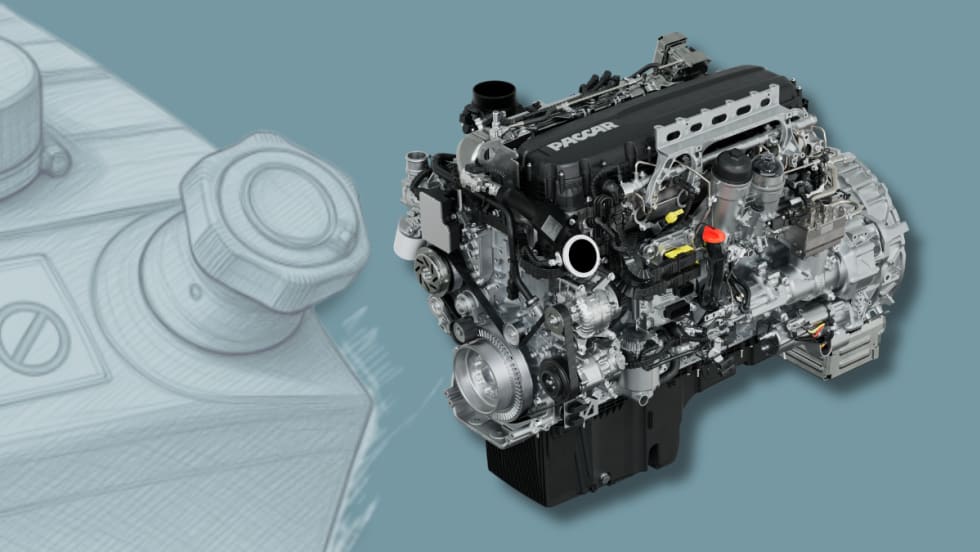
Cummins, Paccar Ease DEF Derates After EPA Guidance
Updated diesel engine software gives truck operators more time to address emissions-system issues while staying compliant with EPA emissions standards.
Read More →
Maintenance in the Messy Middle Part 3: Biodiesel
Biodiesel can reduce emissions, improve fuel-system lubricity and use existing diesel infrastructure. But NACFE’s Messy Middle maintenance report says fleets must actively manage storage, cold-weather operation, filters and oil drain intervals to avoid problems.
Read More →
Enhance Fleet Performance with High-Efficiency Auxiliary Power Units
Drive sustainable cost savings while increasing driver comfort during short- and long-haul logistics operations.
Read More →