




Traton, Hino Team up for Electric-Vehicle Development
Two global commercial vehicle makers, Germany’s Traton SE and Japan’s Hino Motors Ltd., have signed a joint venture agreement to develop electric commercial vehicles, both battery-electric and fuel-cell versions.

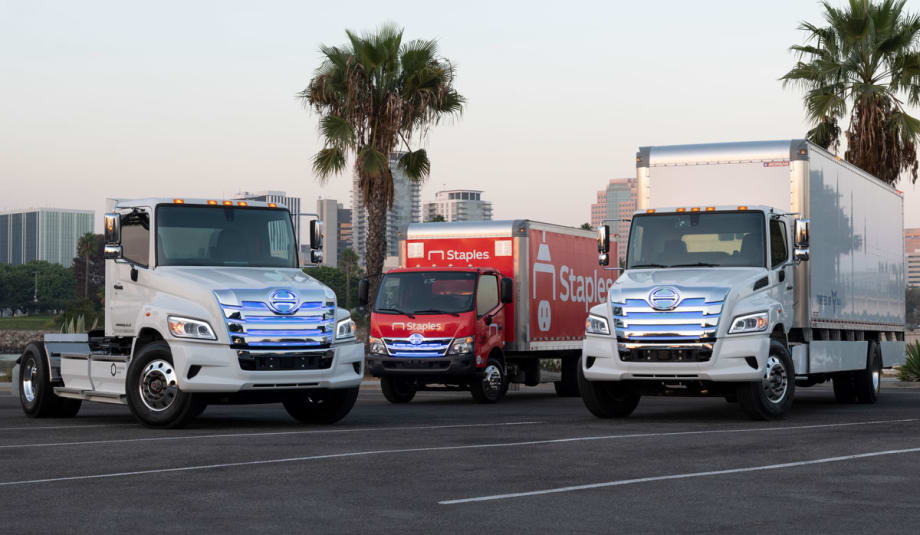
Hino recently showed off a range of electric commercial vehicles for the U.S. one of which is already available for order.
Photo: Hino
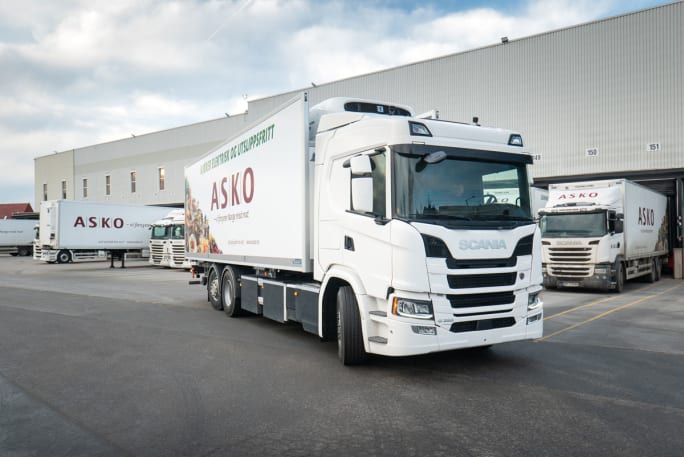
Traton's Scania brand is already testing hydrogen-trucks like the four with ASKO, Norway’s largest grocery wholesaler.
Photo: Scania
Two global commercial vehicle makers, Germany’s Traton SE and Japan’s Hino Motors Ltd., have signed a joint venture agreement to develop electric vehicles, both battery-electric and fuel-cell versions.
Traton and Hino will combine their unique strengths to develop electric vehicles, including battery electric vehicles, fuel cell vehicles, and relevant components, as well as creating common EV platforms including software and interfaces.
They will form a team of advanced specialists from both companies and launch activities in Sweden and a second step in Japan. The two companies say teaming up will allow them to shorten lead times for future e-mobility products with battery and fuel cell technology. The two companies are convinced that both technologies will be needed in the future, according to an announcement.
The strategic partnership will likely affect the North American commercial vehicle market. Traton already has a partnership with Navistar International that included electric-vehicle development, and the two companies recently came to an agreement for Traton to buy Navistar. Hino recently showed off a zero-emissions truck lineup and is working with Toyota to develop a Class 8 fuel-cell truck for North America.
Traton and Hino had previously announced a procurement joint venture.
“I am delighted that we can follow our procurement joint venture and further embodying our synergy with Traton in e-mobility, helping to reduce global CO2 emissions and fighting global warming,” said Yoshio Shimo, Hino president and CEO, in a release. “We will combine our strengths as leading commercial vehicle manufacturers to offer EVs with the highest value for customers, through joint planning of commercial EVs.”
Traton CEO Matthias Gründler, said, “Traton’s mission is to carefully balance the interests of people, planet, and performance. This new joint venture with our strong partner Hino is the next important step in electrification, pushing our mission further ahead.”
Gründler reiterated Traton’s goal to invest 1 billion Euros in electrification by 2025.
Both companies have agreed to explore each other's capabilities and investigate further possibilities to collaborate in other future fields of technology.
More Fuel Smarts

How Volvo Updated Its D13 for EPA 2027 [Watch]
Volvo’s updated D13 promises lower emissions without sacrificing performance or fuel economy. Take a closer look at what changed inside the engine in this HDT Spotlight video.
Read More →
Diesel Price Spike Shortens Payback for Natural Gas Trucks, Report Says
Energy Vision estimates fleets could recover the higher purchase price of an RNG-fueled Class 8 tractor in 1.3 to 2.8 years under current fuel-price scenarios.
Read More →
Calstart Becomes Catalyst Mobility, Reflecting Broader Focus
Calstart is now Catalyst Mobility, reflecting the nonprofit’s growing national role in clean transportation, including zero-emission trucks, infrastructure and incentive programs.
Read More →

Record Diesel Prices Squeeze Trucking Fleets
Average U.S. diesel prices have climbed to nearly $6 a gallon, surpassing the 2022 record as tight refinery capacity and Middle East disruptions keep fuel costs elevated.
Read More →
How Fuel Delivery Shapes Engine Performance
Fuel delivery depends on more than what happens at the injector. For fleet, maintenance and technical professionals, looking at the full path from pump to injector can provide useful context for understanding engine performance.
Read More →
East Coast Port Launches $45M Electric Truck Push
The Port Authority of New York and New Jersey announced millions in incentives for zero-emission drayage trucks, yard tractors, and new charging hubs near the port.
Read More →
California Bill Could Shed Light on Electric Truck Prices
Why do battery-electric Class 8 trucks remain so expensive? A California bill headed to Gov. Gavin Newsom would give fleets and state agencies more visibility into what manufacturers charge.
Read More →
Detroit Opens Orders for EPA 2027 Engines
Detroit isn’t starting from scratch to meet EPA 2027 diesel emissions standards. Its Gen 6 DD13 and DD15 engines keep much of today’s platform while updating the fuel and aftertreatment systems.
Read More →
Zero-Emission Truck Corridor Planned for West Coast
California, Oregon, Washington, British Columbia and Baja California are coordinating plans for truck charging and hydrogen fueling from Canada to Mexico.
Read More →
A Closer Look at Kenworth’s Electric T880E Vocational Truck [Video]
Learn more about Kenworth's T880E battery-electric vocational truck at the Paccar Technical Center, including its range, applications, upfitting considerations, and PTO options, in this HDT Spotlight video.
Read More →