




After the Hours-of-Service Ruling: Research on 34-Hour Restart, Action on Capitol Hill
Even as a federal court was recently upholding most of the hours of service rules, the Federal Motor Carrier Safety Administration has been working on a field study of the 34-hour restart.
Even as a federal court was recently upholding most of the hours of service rules, the Federal Motor Carrier Safety Administration has been working on a field study of the 34-hour restart that could influence that provision in the future, and there's a move on Capitol Hill to force the agency to return to the old rules.
Congress ordered the study in last year’s highway bill, at the insistence of the American Trucking Associations, which said the agency should confirm in the field the finding from a laboratory study that daytime sleep is not as restorative as nighttime sleep.
That finding is the scientific basis for the requirement that a driver take two periods off between 1 a.m. and 5 a.m. during his 34-hour restart, and it figured prominently in the court’s decision to uphold the provision.
It remains to be seen if the data from the field study will be persuasive enough for the agency to reconsider its approach to the restart.
Data collection for the study was finished in July and the final report is expected later this year, said agency spokesperson Marissa Padilla.
Meanwhile, there is a move in the House of Representatives to cut off funding for implementation or enforcement of the new hours and return to the old rule.
An attempt by Rep. Richard Hanna, R-N.Y., and several others to attach the amendment to transportation funding legislation failed when House leaders withdrew the bill.
But Hanna will pursue the amendment, said Renee Gamela, his communications director.
“He’s been discussing the amendment with colleagues and we’re confident it would have strong, bipartisan support when it comes up,” Gamela said.
The amendment is supported by 16 trucking and shipping interests, including ATA, OOIDA and UPS, as well as the Transportation Intermediaries Association, the National Retail Federation and the National Grocers Association.
Hanna, joined by Reps. Tom Rice, R-S.C., Trey Radel, R-Fla., and Todd Rokita, R-Ind., said in a Dear Colleague letter that the new rule decreases driver flexibility and raises costs – complaints that have been aired by all of the industry interests.
More Fleet Management

How Better Freight Data Helps Trucking Teams Get Ahead of Disruption
Trucking and logistics teams have plenty of data. The problem is getting the right information in front of the right people soon enough to act. Better-connected data can help teams spot trouble earlier and make smarter decisions before small problems become big ones.
Read More →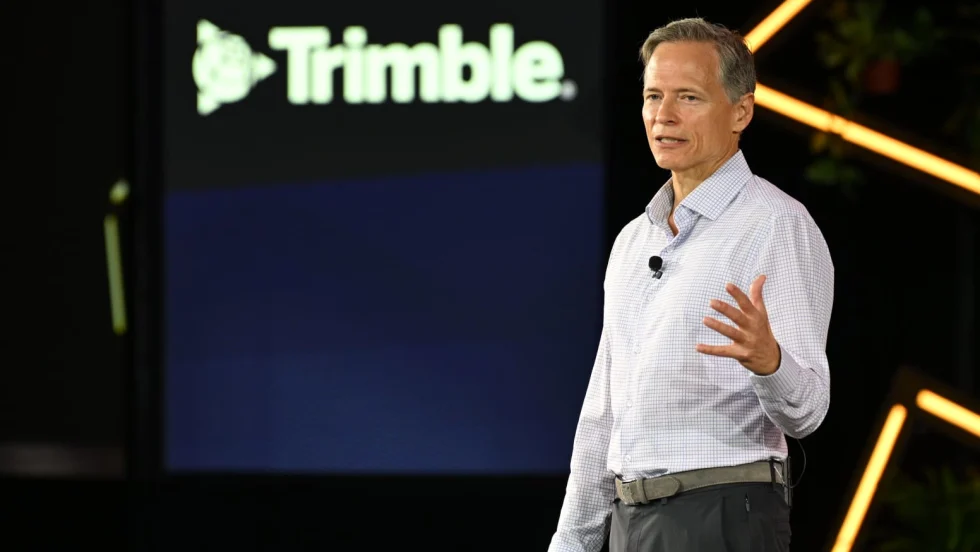
Trimble: Taking Artificial Intelligence in Trucking Beyond Faster Tasks
At Insight 2026, Trimble executives argued that fleets may need to redesign workflows to get more from AI as it introduced new products and enhancements. AI’s value will depend on how fleets combine automation with their people's knowledge.
Read More →
Nominations Open for HDT Emerging Leaders
Heavy Duty Trucking is looking for accomplished trucking fleet professionals under 40 who are making an impact and helping lead the industry forward.
Read More →


Why Private Fleets Are Taking More Freight
Private fleets are putting their own trucks on demanding customers and high-cost lanes as companies seek greater control over service, costs, and capacity.
Read More →
Color Match Smarter: Tools That Restore & Perform
For fleet managers and collision repair professionals keeping heavy-duty trucks on the road, getting the color right the first time isn't just about appearance — it's about efficiency, turnaround time, and bottom-line results. Discover how today's digital color tools are transforming the repair process from guesswork to precision.
Read More →
FMCSA Pauses Biennial-Update Enforcement Amid Motus Transition
Carriers whose updates were due on or after June 1 have more time, while FMCSA works to stabilize its new registration system and warns of phishing sites impersonating its new carrier registration system, Motus.
Read More →
2026 Blueprint for Countering Smarter Supply Chain Theft
Cargo theft is no longer just the cost of doing business. It's a multi-billion-dollar criminal enterprise exploiting vulnerabilities across your fleet, drivers, and supply chain.
Read More →
How Telematics Improves Visibility, Control, and Performance in Refrigerated Fleets
Explore how telematics help refrigerated fleets improve visibility, uptime, efficiency, compliance, and cargo protection across connected cold chain operations.
Read More →
What the U.S.-Canada Trade War Means for Trucking
Escalating U.S.-Canada tariffs could disrupt cross-border freight, reduce truck volumes, raise costs, and create new uncertainty for carriers on both sides of the border.
Read More →
What Are Trucking’s Top Concerns for 2026?
The American Transportation Research Institute wants to know what's worrying trucking fleet managers, drivers, and other stakeholders in its annual Industry Issues survey.
Read More →