




Wholesale Prices Edge Up, Industrial Production Falls Slightly In January
Prices at the wholesale level increased very slightly in January, ending three straight months of declines
Prices at the wholesale level increased very slightly in January, ending three straight months of declines.
The U.S. Labor Department reported inflation remained subdued at the beginning of the new year, with the Producer Price Index increasing 0.1% from December.
Excluding the volatile food and energy sectors, the index fell 0.1%. The price index has declined in six of the last 12 months and now stands 2.6% below a year ago.
The numbers beat those predicted in a poll of analysts by Reuters, who predicted an overall increase of 0.3% in January and a 0.1% jump in prices, when excluding those for food and energy.
“The January data did show significant price gains from December for some of the leading-edge products that typically feel the first impact of a change in economic demand,” says Newport Communications Senior Economist Jim Haughey. The index for crude energy materials rose 5.6%, lumber prices 6.9%, electronic components 1.1% and industrial materials 0.4%.
Haughey says, “Fleet managers should assume that we are likely now at the bottom of the price cycle and plan for costs, excluding labor and fuel, to be as much as 2% higher by the end of the year.”
In a separate report on Friday, U.S. industrial output fell in January. The Federal Reserve reported output of the nation's factories, mines and utilities fell 0.1% in January, its sixth straight drop after a revised 0.3% decline in December. Capacity in use fell to 74.2%, its lowest level since April 1983, but the number was close to many analysts’ expectations.
Activity was unchanged at manufacturing plants, after declining for more than a year, while warm weather and the worldwide decline in manufacturing sharply cut mining and utility activity.
Haughey says, “This means that freight activity into and out of factories has stabilized. Currently the strongest growth markets are computers, electronic components and chemicals, while paper, fuels and construction supplies are the weakest. Sustained growth in manufacturing is not expected for several more months, when most of the remaining surplus inventories will have been absorbed.”
Meantime on Friday, a survey of consumer feelings about the economy was down for the first time in five months. The University of Michigan's preliminary February consumer sentiment index fell to 90.9 from 93.0 in January. The drop was a surprise to some analysts because consumers have remained generally upbeat about the future of the U.S. economy despite the recent slide. It’s believed some of this pessimism is due to concerns over a struggling stock market.
This latest economic news follows other reports released earlier in the week.
The Commerce Department reported business inventories fell for the 11th straight month, which could lead to a demand for new factory orders.
Jobless claims are also down, with the Labor Department reporting its four-week moving average is at its lowest point since August 2000.
More Fleet Management
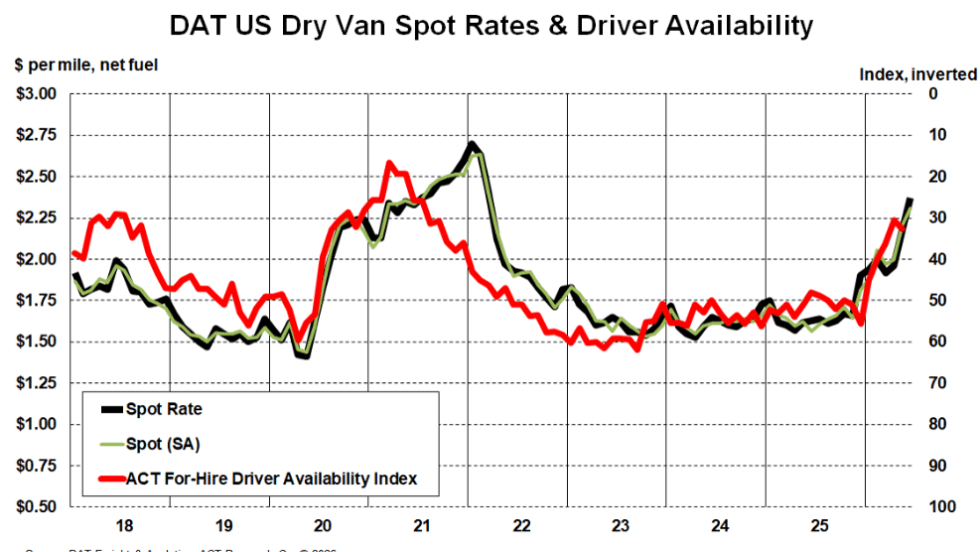
Truckload Rates Keep Rising as Tight Capacity Fuels Freight Market Recovery
Spot and contract rates continued climbing in May and June, not because freight demand is surging, but because fewer trucks and drivers are available.
Read More →
What Geotab's New AI Connector Means for Fleets
Fleets can now ask their usual AI assistants questions about maintenance, safety, fuel use, and vehicle performance, using their live Geotab data, and take action on the answers without leaving their preferred AI tool.
Read More →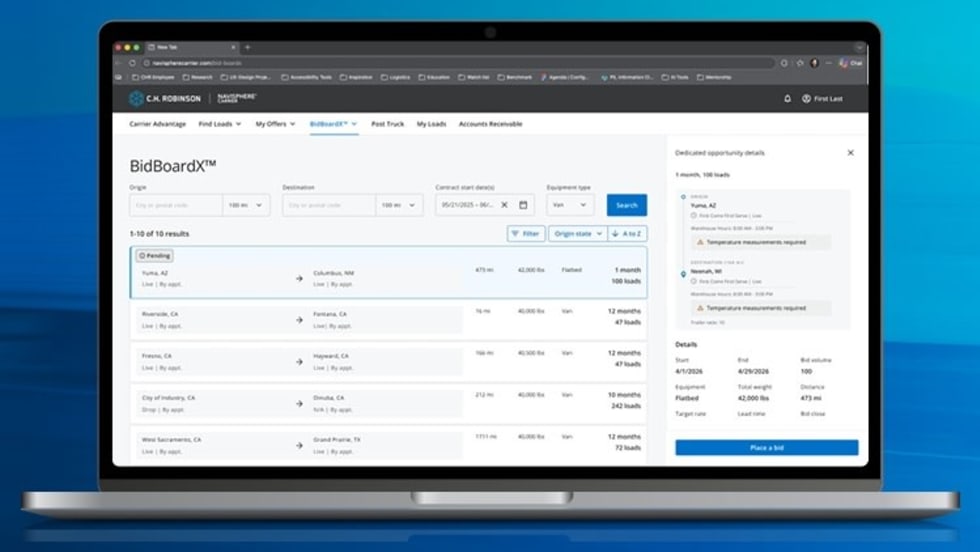
New C.H. Robinson Tool Opens Door to More Predictable Freight
BidBoardX lets carriers search, bid on, and secure committed freight opportunities through a single digital marketplace.
Read More →

New York City's Microhub Project is Delivering Results
Trucking, last-mile delivery companies, and environmental advocates like what they are seeing so far with New York's microhub program.
Read More →
Why Truck Detention Keeps Costing Fleets Time and Money
A 2024 ATRI study found detention affects nearly 40% of truckload stops and costs the industry more than $15 billion annually. Despite the toll on drivers, fleets, and supply chains, the problem remains stubbornly persistent.
Read More →
Time is Running Out to Apply for Exclusive HDT Event
Heavy Duty Trucking Exchange brings fleet managers and suppliers together for the deeper conversations that lead to ideas, partnerships, and solutions. Time is running out to apply for the September event.
Read More →
Amazon Launches Less-Than-Truckload Freight Offering for All Businesses
This launch is the latest addition to Amazon Supply Chain Services, a portfolio of supply chain capabilities from Amazon, including freight, distribution, fulfillment, and parcel shipping.
Read More →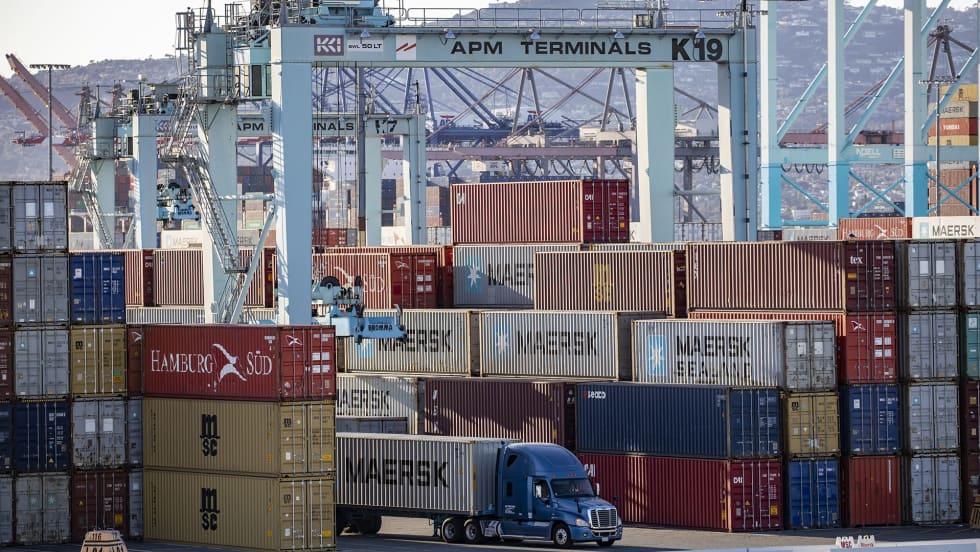
Import Cargo Volume to See Year-Over-Year Gain Again in June, Then Remain Below 2025 Levels Into Fall
After July, the report predicts a weakening in import volume as consumer uncertainty remains high and the impact of increasing inflation takes its toll.
Read More →
AUCTION OF EQUITY INTEREST IN HEAVY HAUL TRUCKING COMPANY!!
Mark your calendar: June 30, 2026 (10:00 a.m. PDT). A 37.5% ownership interest in MagnaTrans, LLC, a California limited liability company doing business as Magna Transportation Group, will be sold in an in-person and online auction to the highest bidder or bidders under Article 9 of the Uniform Commercial Code. The Rancho Cucamonga-based heavy haul and over-dimensional trucking company operates across California, Oregon, and Arizona.
Read More →
Volvo Trucks Adds Unattended Over-the-Air Software Update Capabilities
The latest evolution of Volvo’s over-the-air update technology allows software updates to run while trucks are parked, helping fleets keep vehicles current without disrupting operations.
Read More →