




Volvo: Fossil-Free Future Includes Electric, Hydrogen, Internal Combustion Engines
Volvo Trucks North America announced more new customers for its VNR Electric truck, as it emphasized its commitment to a fossil-free future, at the American Trucking Associations Management Conference and Exhibition.

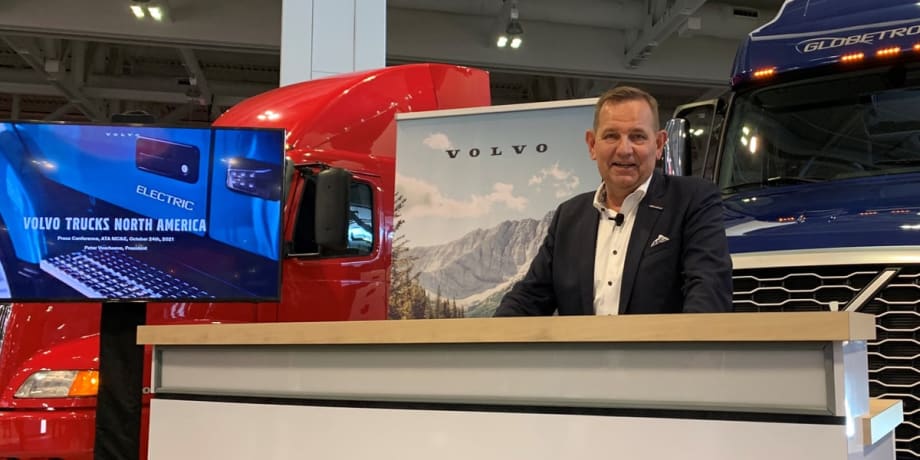
Peter Voorhoeve talks about Volvo’s fossil-free future goals, including the latest adoptions of the Volvo VNR Electric.
Photo: Deborah Lockridge
Volvo Trucks North America announced more new customers for its VNR Electric truck, including one in Texas, as it emphasized its commitment to a fossil-free future, at the American Trucking Associations Management Conference and Exhibition in Nashville Oct. 24.
VTNA President Peter Voorhoeve said that with the addition of a customer in the mid-section of the country, he could truly say the Volvo electric-truck fleet spans from coast to coast.
Since the last ATA in-person MCE in San Diego in 2019, Voorhoeve said, a lot has happened. “We had, and we still have, a health crisis still ongoing, we have seen climate events we maybe have not seen before, heat waves, floodings; you can say something is going on in the climate and something needs to be done.”
At Volvo, he said, “We would like to move the world we want to live in. Moving the world is what we do with the beautiful trucks behind us. We in Volvo Trucks believe we have a choice to impact the world we live in, and the decisions we make today will affect the world that we live in tomorrow. We strongly believe all the decision we make going forward have to contribute to a better environment.
Volvo’s goal is to have a 100% fossil-free global fleet by 2050. That means its goal is to have all its product offerings fossil-free by 2040, and to get there, it’s looking to make 50% of its product offerings green by 2030, less than a decade away.
“I believe we need to hurry up and get more electric trucks on the road,” Voorhoeve said, as part of reaching its fossil-free goals, and going forward that also may include hydrogen-electric.
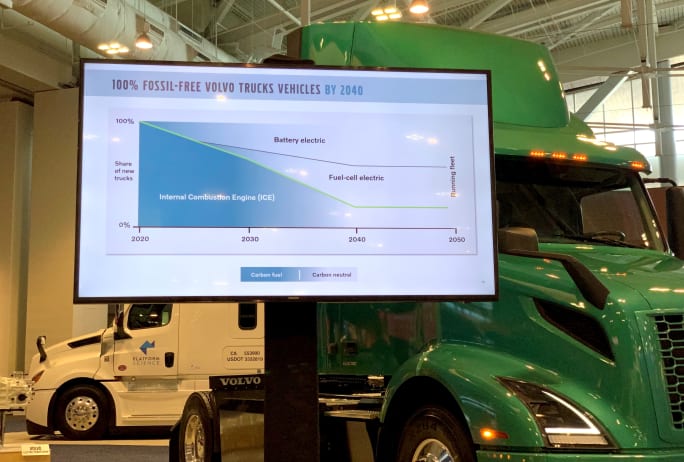
Volvo Trucks believes internal combustion engines still have a role to play in a fossil-free future.
Photo: Deborah Lockridge
But he also said that internal combustion engines still have a role to play.
VTNA recently announced it had made its 13L turbo compound engine standard on all its VNL models, and 2022 models will come standard with aerodynamic features such as chassis fairings and mirror arm shrouds.
And in the future, Voorhoeve said, ICE engines will contribute to Volvo’s vision of a fossil-free future using renewable fuels.
Expanding the Reach of Electric Trucks
California so far has been the epicenter of electric-truck adoption, thanks to the state’s push to move to zero emissions, including financial incentives. Volvo recently moved into the East Coast with Manhattan Beer Distributors in New York, but a new customer planning to operate in Texas brings battery-electric truck technology into the middle of the country.
Fleetmaster Express has ordered 10 Volvo VNR Electric Class 8 trucks as part of the Virginia-based company’s plan to transition from a diesel fleet to an electric one.
The first two trucks of the orders are expected to be delivered between late November and early December. The trucks will be operating out of Fleetmaster Express’s Fort Worth, Texas, terminal.
According to Voorhoeve, the trucks will be transporting aluminum products for Ball Corp.’s plant in the Dallas/Fort Worth area. Fleetmaster Express’s goal is to have a total of 18 units deployed by the end of next year.
Volvo also added another new VNR Electric customer in a new part of California, Producers Dairy, a Central California-based dairy processor and direct-to-store supplier. Producers has placed an order for two Volvo VNR Electric trucks, anticipated to be the first commercial battery-electric Class 8 trucks deployed in California’s Central Valley. By the end of the year the trucks will begin to service Producers Dairy’s fleet routes from its Fresno manufacturing facility to grocery stores in communities along the 40-mile stretch of Highway 99 from Selma to Madera, California.
As additional customers buy VNR Electrics, Volvo has more dealers going through the process to become certified to work on those trucks. By the end of the year, 30 dealers all over the country should be certified.
Greener Truck Production
Volvo also emphasized that its climate commitment isn’t just limited to its trucks.
“We’ve also been looking at our own carbon footprint in our industrial system,” Voorhoeve said. The New River Valley plant in Dublin, Virginia, where all VTNA’s trucks are built is completely carbon neutral, he said, entirely powered by locally produced, renewable electricity, and it is also landfill-free.
Now it’s working on its logistics and transportation. It announced at ACT Expo that it was working with local suppliers and carriers to deploy three zero-tailpipe emission VNR Electric vehicles to transport inbound parts and components daily to the plant.
At ATA, Voorhoeve announced the first two supplier/customers to sign on. Virginia-based fleets Watsontown Trucking Company and Camrett Logistics by the end of 2021 will each use a Volvo VNR Electric to deliver inbound parts and components daily to the NRV plant. They will be the first battery-electric trucks deployed in each company’s fleet. The trucks will complete 10 to 12 roundtrips per day as they travel from their local warehouse facilities to NRV.
Watsontown Trucking Company operates a fleet of 425 trucks that perform over-the-road transport, as well as regional haul and last-mile delivery. Camrett Logistics operates a fleet of 18 Volvo trucks and has a goal to be 100 percent carbon neutral by 2030. Camrett is investing in solar panels to power its facilities and has a goal of electrifying all the Class 8 trucks in its operations.
More Fuel Smarts
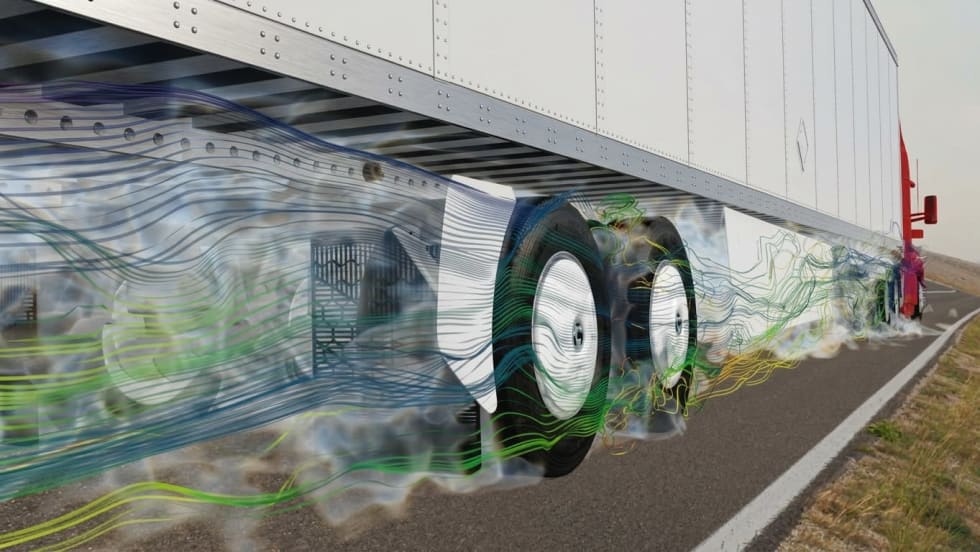
FlowBelow Redesigns Trailer AeroSlider to Cut Fuel Use
The lighter trailer aerodynamic system installs in less than 45 minutes, according to the company, with potential payback in under a year depending on fuel prices and trailer mileage.
Read More →
Why Diesel Price Relief Efforts May Fall Short
Diesel prices have eased from September’s record high, but doubts about additional Russian supply and limits on dyed-diesel tax relief mean trucking fleets still face expensive fuel. And prices could go higher.
Read More →
Why Small Fuel Savings Matter in Trucking
Can better fuel economy help pay for driver raises? In this podcast, GP Transco explains how small efficiency gains create room to reinvest in its people.
Read More →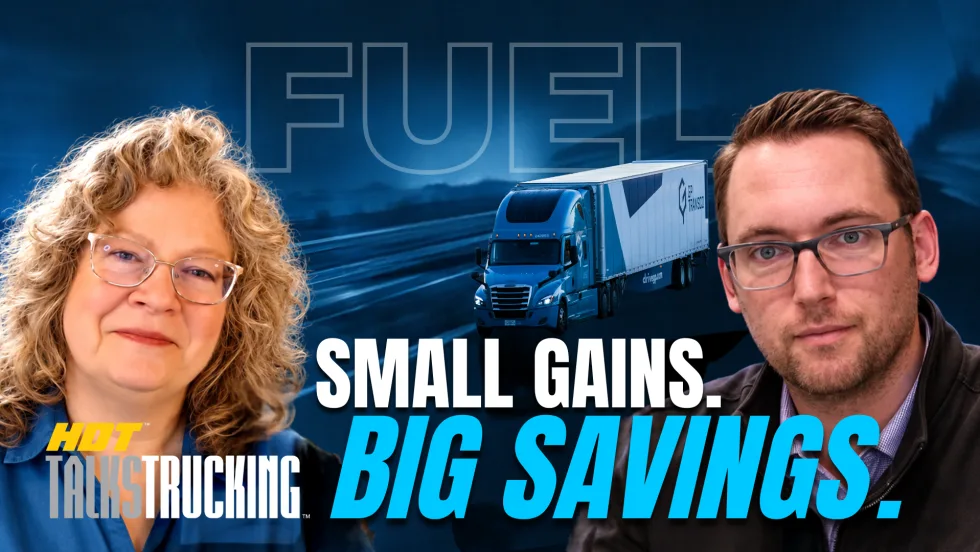
How GP Transco Cuts Trucking Fuel Costs, a Tenth of a Gallon at a Time
What’s another tenth of a mile per gallon worth? GP Transco shares how equipment upgrades and driver coaching turn small gains into meaningful fuel savings.
Read More →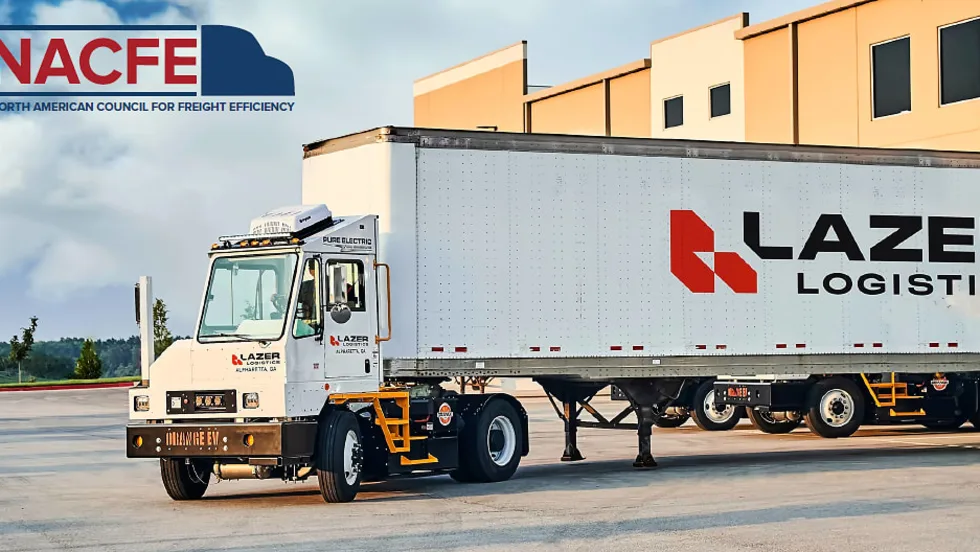
Electric Yard Tractors Move Beyond Pilots
Operating-cost savings have overtaken sustainability goals as the leading reason surveyed fleets are adopting battery-electric terminal tractors, according to new NACFE research.
Read More →
Geotab Links Fleet Card to Vehicle Data
The new card combines fuel discounts with telematics-based purchase controls. Geotab’s analysis also points to potential savings from choosing lower-priced fuel stops.
Read More →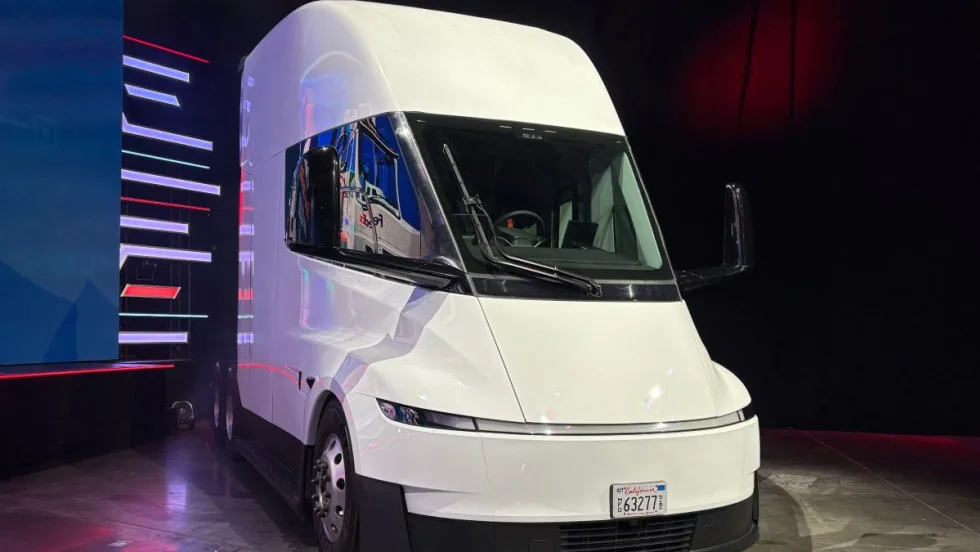
Fleet Economics Shape Electric Truck Outlook
ACT Research expects costs, charging infrastructure, and technology improvements to drive zero-emission commercial vehicle adoption as federal regulations and incentives retreat.
Read More →
Wex Adds Cardless Fuel Payments for Over-the-Road Customers
A new fuel card feature for Wex customers offers convenience and security.
Read More →
New California Law Could Shed Light on Electric Truck Prices
Why do battery-electric Class 8 trucks remain so expensive? A California bill signed by Gov. Gavin Newsom would give fleets and state agencies more visibility into what manufacturers charge.
Read More →
How Volvo Updated Its D13 for EPA 2027 [Watch]
Volvo’s updated D13 promises lower emissions without sacrificing performance or fuel economy. Take a closer look at what changed inside the engine in this HDT Spotlight video.
Read More →