




Could VMT Tax Help Fund the $3 Trillion Infrastructure Plan?
Revenue options are being considered to help fund President Biden's infrastructure plan. One idea that has been floated is a vehicle miles traveled tax to raise revenue for the shrinking Highway Trust Fund.


Many in the trucking industry are against the idea of a mileage tax – especially the notion that has been floated of a truck-only VMT.
Photo: USDOT
[Editor's note: This article was updated on March 30 to include new statements from Buttigieg regarding the VMT tax.]
With President Joe Biden set to present the details of his proposed $3 trillion infrastructure bill on March 31, talk of ways to fund the plan are buzzing.
Revenue options are being considered, and the possibility of a vehicle miles traveled (VMT) tax to raise revenue for the shrinking Highway Trust Fund was expected to be part of the conversation after U.S. Transportation Secretary Pete Buttigieg told CNBC that a VMT tax showed a lot of promise.
However, on March 29, Buttigieg told CNN that the adminstration would not propose a VMT fee, nor increase fuel taxes, to fund the instructure plan. The proposal would not involve a tax increase for those making less than $400,000 a year, he said, citing it as the president's central commitment.
NEW, per spokesman for @SecretaryPete on VMT: "The Secretary was having a broad conversation about a variety of ways to fund transportation. To be clear, he never said that VMT was under consideration by the White House as part of this infrastructure plan—
and it is not."— Adam Wren (@adamwren) March 27, 2021
However, ranking members of the House Committee on Transportation and Infrastructure Reps. Pete DeFazio (D-Oregon) and Sam Graves (R-Missouri) have expressed support for looking into the tax. Public support for mileage fees has grown 20% since 2010, according to a recent survey conducted by the Mineta Transportation Institute.
Meanwhile, many in the trucking industry have been against the idea – especially the notion that has been floated of a truck-only VMT.
The Owner-Operator Independent Drivers Association and American Trucking Associations have long been supporters of the fuel tax as the primary source of revenue for highway and road bridge infrastructure improvements.
“We understand that many elected officials lack the courage to raise fuel taxes,” said OOIDA President Todd Spencer in a press release. “But singling out trucks to carry all the weight is discriminatory."
Earlier this month, the OOIDA sent a letter to the U.S. Senate Committee on Finance saying any proposals that would impose a truck-only, vehicle miles traveled tax are a “no go.”
Still, 53% of Americans support the concept of a mileage fee that would charge higher-polluting vehicles, such as diesel trucks, at a higher rate than less-polluting vehicles, according to the Mineta Transportation Institute, citing a survey based on responses collected nationally from 2,516 adults between Feb. 5 and Feb. 23.

According to a study by Mineta Transportation Institute, 53% of Americans support the concept of a mileage fee that would charge higher-polluting vehicles at a higher rate than less-polluting vehicles.
Graph: Mineta Transportation Institute
Just over half of respondents (52%) thought mileage fee rates should be lower for electric vehicles than for gas and diesel vehicles.
Approximately half of respondents also supported the idea of a “business road-use fee” that would be assessed on the miles that commercial vehicles drive on the job. 52% of people supported such a fee on delivery and freight trucks.
These results are contrary to what the American Transportation Research Institute has published, saying that a federal VMT tax program is “strongly disliked” by the public.
ATRI: Study Finds VMT Tax Costly, Complicated
ATRI, the research arm of the American Trucking Associations, recently released a report outlining the costs of collecting and operating a VMT tax in the U.S. It found that the tax would be a more complicated and costly replacement for the fuel tax.
ATRI found that the most realistic technology approach to collecting the tax would involve an onboard device. The estimated cost to provide onboard devices to 272 million vehicles in U.S. would be about $13.6 billion, not including shipping and collection costs, which would up the costs by several billions more.
The study also pointed out that the majority of the U.S. fleet is made up of private cars and SUVs (187.7 million vehicles, or nearly 68%). This is followed by pickups (17.5%) and other motor vehicles such as straight trucks, buses, vans and motorcycles (12.2%). Approximately 1% or 2.7 million vehicles are truck-tractors that are owned and operated by the trucking industry.
“Thus, efforts to apply the VMT tax to only one vehicle type, such as large trucks, would apply to a small subsection of the overall vehicle population,” ATRI officials wrote in the study results.
While tractor-trailers only comprise 1% of the U.S. fleet, they accrue more than 5% of the miles driven, according to FHWA data from 2019 cited in the study. The vast majority of miles drivers were by light-duty vehicles, such as cars and SUVs (89.%).
Supplementing the Highway Trust Fund
Since 2016, the Federal Highway Administration has been supporting the development of ways to provide long-term support for the Highway Trust Fund, including mileage-based fee programs, through its Surface Transportation System Funding Alternatives grant program.
The FHWA earlier this month awarded $18.7 million in grants to eight projects testing new user-based funding methods for highways and bridges to supplement the Highway Trust Fund.
The grant program funds projects that test the design, implementation and acceptance of user-based systems, such as a mileage-based fee. They also support outreach by transportation officials to help the public understand these new methods.
More Fuel Smarts
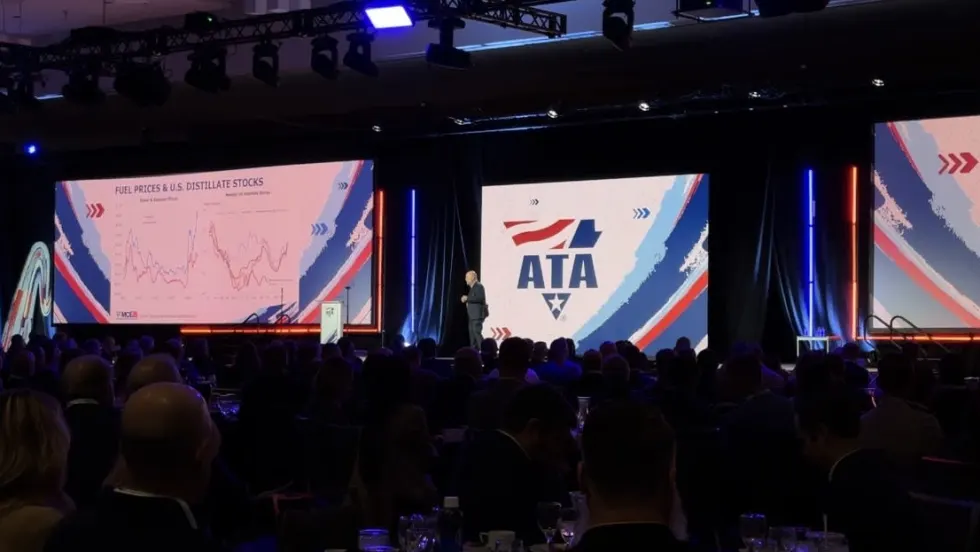
Trucking’s Diesel Squeeze Isn’t Letting Up
With diesel topping $6 a gallon nationally, ATA's Bob Costello explains why fleets should prepare for continued pressure at the pump.
Read More →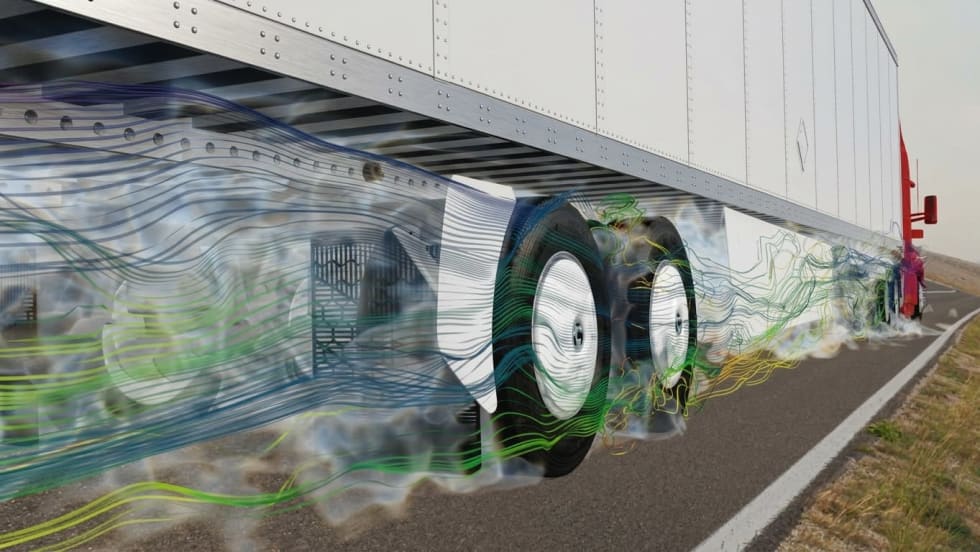
FlowBelow Redesigns Trailer AeroSlider to Cut Fuel Use
The lighter trailer aerodynamic system installs in less than 45 minutes, according to the company, with potential payback in under a year depending on fuel prices and trailer mileage.
Read More →
Why Diesel Price Relief Efforts May Fall Short
Diesel prices have eased from September’s record high, but doubts about additional Russian supply and limits on dyed-diesel tax relief mean trucking fleets still face expensive fuel. And prices could go higher.
Read More →
Why Small Fuel Savings Matter in Trucking
Can better fuel economy help pay for driver raises? In this podcast, GP Transco explains how small efficiency gains create room to reinvest in its people.
Read More →
How GP Transco Cuts Trucking Fuel Costs, a Tenth of a Gallon at a Time
What’s another tenth of a mile per gallon worth? GP Transco shares how equipment upgrades and driver coaching turn small gains into meaningful fuel savings.
Read More →
Electric Yard Tractors Move Beyond Pilots
Operating-cost savings have overtaken sustainability goals as the leading reason surveyed fleets are adopting battery-electric terminal tractors, according to new NACFE research.
Read More →
Geotab Links Fleet Card to Vehicle Data
The new card combines fuel discounts with telematics-based purchase controls. Geotab’s analysis also points to potential savings from choosing lower-priced fuel stops.
Read More →
Fleet Economics Shape Electric Truck Outlook
ACT Research expects costs, charging infrastructure, and technology improvements to drive zero-emission commercial vehicle adoption as federal regulations and incentives retreat.
Read More →
Wex Adds Cardless Fuel Payments for Over-the-Road Customers
A new fuel card feature for Wex customers offers convenience and security.
Read More →
New California Law Could Shed Light on Electric Truck Prices
Why do battery-electric Class 8 trucks remain so expensive? A California bill signed by Gov. Gavin Newsom would give fleets and state agencies more visibility into what manufacturers charge.
Read More →