




Virginia Tech Working on Talking Car and Light Truck Technology
Following a U.S. Department of Transportation call to require vehicle-to-vehicle communication technology for all cars and light trucks on the nation’s highways, the Virginia Tech Transportation Institute has been tapped to design the delivery integration framework that will allow vehicles to “talk” with their drivers and with other automobiles on the roadway.

The Virginia Tech Transportation Institute is spearheading national efforts to create connected-vehicle communication technology for roadways. Photo: VTTI

Following a U.S. Department of Transportation call to require vehicle-to-vehicle communication technology for all cars and light trucks on the nation’s highways, the Virginia Tech Transportation Institute has been tapped to design the delivery framework that will allow vehicles to “talk” with their drivers and with other automobiles on the roadway.
The National Highway Traffic Safety Administration has awarded a $1 million grant in addition to a $3 million award given earlier for a project underway at the institute..
The goal is to design and test how motorists receive communications while driving, such as traffic warnings, the too-close approach of another vehicle and weather warnings. The focus is on the communication’s format, visual or audible, and the order and timing of such messages.
On Feb. 3, the National Highway Traffic Safety Administration announced its intention to pursue a mandate of this technology in light vehicles in an effort to improve highway safety, prevent crashes, and help alleviate congestion, among other potential benefits.
“We see this as a hugely progressive move. Vehicle communication technology has the great ability to improve safety, if it is implemented in a wise and safe way,” said Zac Doerzaph, director of the institute’s Center for Advanced Automotive Research and lead investigator on the project. “We’re trying to get ahead of the game to ensure design before connectivity proliferates the entire driving experience.”
The integration framework project builds on the institute’s already $30 million and growing funded projects related to connected-vehicle communication technology, including long-term research into crash avoidance systems, automated driving, and naturalistic driver experiences behind the wheel.
The institute, in coordination with the Virginia Department of Transportation, has a $14 million connected-vehicle test bed along Interstates 66 and 495 near Fairfax, Va., that contains 43 wireless infrastructure devices installed along roadways, all communicating with dozens of cars, trucks, and motorcycles equipped with wireless communication systems. The test bed will soon expand to include 80 roadside devices.
Doerzaph and his team for several years have been testing various methods for drivers to receive key information in a wise, safe, and timely manner, without causing distraction or overwhelming the motorist with myriad details, such as non-emergency weather reports during high-congestion traffic.
Tests already have been done on driver interfaces such as augmented reality pop-ups on windshields or audible devices, both in simulated labs and on open highways, with motorists communicating with the car by voice or by gesture, such as “sweeping” away information on a screen with the wave of a hand.
“We want to coordinate the surge of information,” said Doerzaph, adding that the coming changes to how motorists interact with connected vehicles can be likened to the way the Internet changed how users interact with desktop computers. The key is to contain vital information fast, accurately, and as required.
Doerzaph says the framework being designed and subsequently documented as a set of design principles will serve as a reference guide by designers of apps and driver systems for connected automobile and related wireless devices, with driver safety and ease of use as a focus.
VTTI says the challenges in implementing vehicle communication systems are numerous, from creating uniform warnings and data formats across varying handheld devices and vehicles, to sorting vital information from traffic officials that may be only for truck drivers and not passenger-car motorists, and stacking warnings and communications in order of importance. Also vital is securing communication networks from hacking.
In its Feb. 3 announcement seen as a mandate for connected-vehicle use, U.S. Transportation Secretary Anthony Foxx said, “Vehicle-to-vehicle technology represents the next generation of auto safety improvements, building on the life-saving achievements we’ve already seen with safety belts and air bags. By helping drivers avoid crashes, this technology will play a key role in improving the way people get where they need to go while ensuring that the U.S. remains the leader in the global automotive industry.”
Several federally funded connected-vehicle research test beds are operating throughout the United States.
More Safety & Compliance

FMCSA Moves to Codify English Language Requirements for Commercial Drivers
By changing regulations on English-language proficiency requirements for commercial drivers, rather than relying on a guidance memo, the FMCSA said future administrations won't be able to walk back the Trump administration's stricter enforcement with just a memo.
Read More →
Trump Administration Expands Homeland Security's Role in Trucking Enforcement
The administration's latest trucking crackdown goes beyond roadside inspections, expanding Homeland Security's role in commercial vehicle enforcement and investigations involving CDL training schools.
Read More →
Paccar Recalls 2027 Trucks Built This Summer for Possible Electrical Problem
The nearly 6,000 Kenworth and Peterbilt trucks in the recall could potentially lose engine power, among other things.
Read More →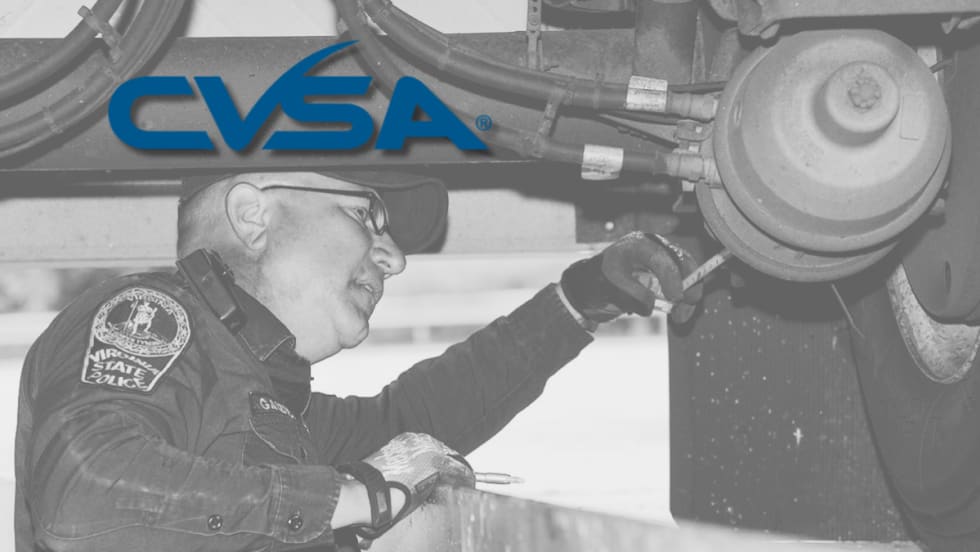
Brake Safety Week to Focus on Drums and Rotors
Commercial vehicle inspectors will be focusing on brakes during CVSA's Brake Safety Week, August 23-29.
Read More →
Trump Administration Looks to Put More Veterans Behind the Wheel
The Freedom Haulers program pulls together existing and expanded programs at several federal agencies to recruit veterans to drive commercial heavy-duty trucks and cut the red tape for them to get a CDL, training, and employment.
Read More →
$604 Million Verdict Tests Broker Liability After Supreme Court Ruling
C.H. Robinson plans to appeal after a Texas jury found it bore the largest share of responsibility for a fatal 2021 crash, in a case that follows the Supreme Court's Montgomery decision allowing negligent hiring claims against freight brokers.
Read More →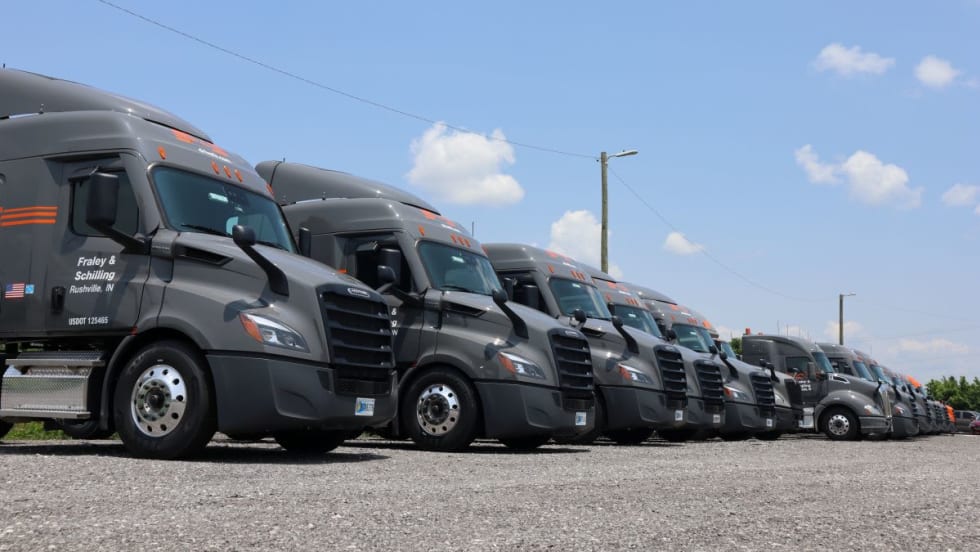
How Fraley & Schilling Improved Logbook Compliance by Over 50%
Fraley & Schilling needed a way to close a compliance workflow gap in its ELD system without adding more work from driver training, reminders, and back-office follow-ups. It found the answer in a custom driver app.
Read More →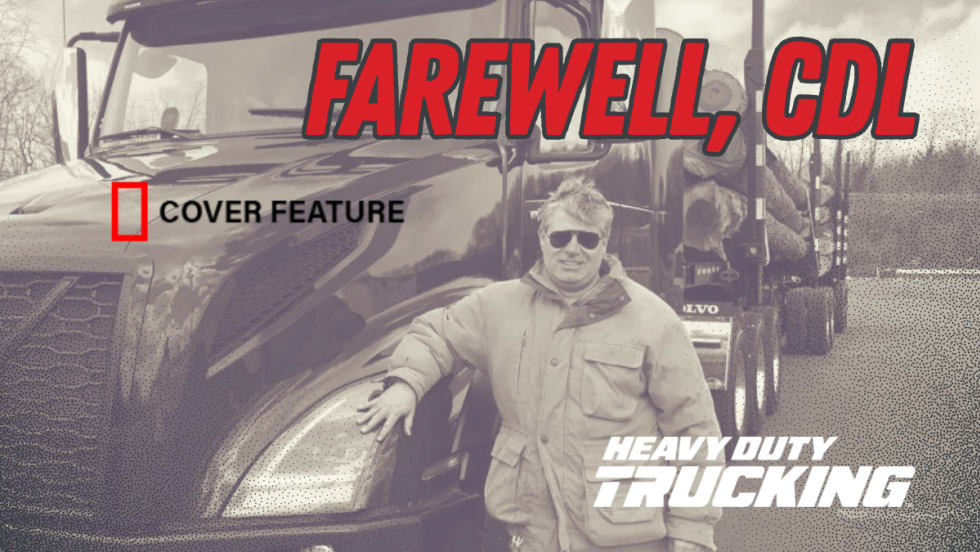
Farewell, CDL: Why I'm Giving Up My Commercial Driver's License
After more than 20 years as a CDL holder, HDT Executive Editor Jack Roberts is letting his commercial license expire. Not because he wants to — but because trucking's nuclear verdict crisis has made the risks of public-road test drives too great for editors, manufacturers, and everyone involved.
Read More →
Enhance Fleet Performance with High-Efficiency Auxiliary Power Units
Drive sustainable cost savings while increasing driver comfort during short- and long-haul logistics operations.
Read More →
Wabash Trailers Recalled for Improperly Installed Underride Guards
More than 900 Wabash dry van trailers may not comply with the Federal Motor Vehicle Safety Standard for rear impact guards.
Read More →