





Will Biden's 24/7 Port Plan Alleviate Supply Chain Problems?
U.S. DOT, California to Fund Supply Chain Infrastructure Improvements
The U.S. Department of Transportation and the California State Transportation Agency have partnered to help facilitate and finance infrastructure improvements, including truck-related projects.
November 1, 2021
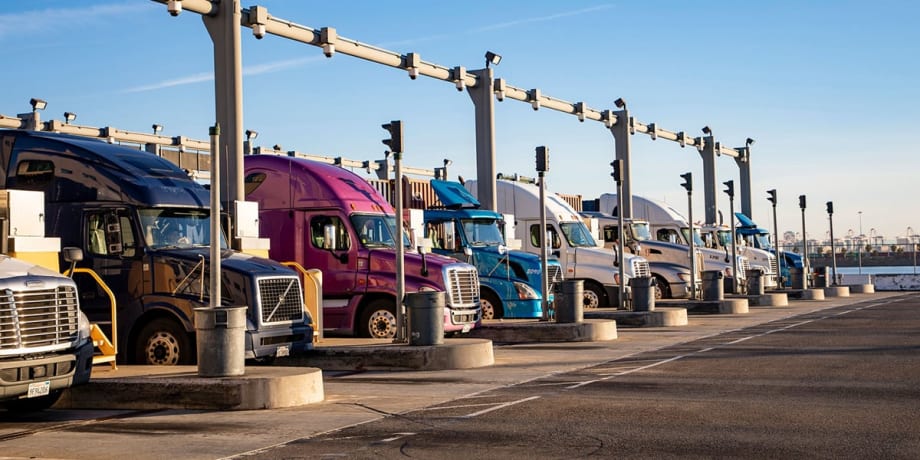
“This partnership will help us jumpstart and support multiple infrastructure projects to improve our supply chain, making sure goods get to where they need to go faster, cheaper, and more environmentally-friendly,” California Gov. Gavin Newsom said.
Photo: Port of Los Angeles
2 min to read
In an effort to create sustainable solutions in the supply chain, the U.S. Department of Transportation and the California State Transportation Agency have partnered to help facilitate and finance potentially billions of dollars’ worth of infrastructure improvements in California.
On Oct. 28, the federal-state partnership signed the Emerging Projects Agreement, which allows California to expedite work on a network of related projects – rather than using a piecemeal approach.
Projects that could receive support through this agreement include port-specific upgrades; highway upgrades to improve truck travel times; truck and railyard electrification; inland port facility development to increase warehouse storage; freight-rail capacity expansion; grade-separated crossings to reduce the number of rail-street intersections; and land ports of entry to expand trade capacity and cross-border commerce.
“This partnership will help us jumpstart and support multiple infrastructure projects to improve our supply chain, making sure goods get to where they need to go faster, cheaper, and more environmentally-friendly,” California Gov. Gavin Newsom said in a press release.
Financing opportunities for the billions in infrastructure investment will be made in part through the U.S. DOT credit assistance programs Transportation Infrastructure Finance and Innovation Act and Railroad Rehabilitation and Improvement Financing.
Both the State of California and U.S. DOT have said that infrastructure projects must be considered based on their potential for strengthening supply chain resilience and in a manner that addresses equity and environmental justice.
“The COVID-19 pandemic put a spotlight on California’s ports and the importance of our state’s infrastructure in moving goods throughout the U.S. and around the world,” CalSTA Secretary David S. Kim said. “[The] agreement will go a long way toward quickly upgrading infrastructure to support a more efficient and resilient supply chain that will flex California’s power in global trade.”
Efforts to Improve Goods Movement
The Biden-Harris Task Force on Supply Chain Disruptions is working with private companies from across the supply chain to expand supply chain operations to 24 hours a day, 7 days a week. So far, both the ports of Los Angeles and Long Beach, the International Longshore and Warehouse Union, Union Pacific Railroad, and retailers, including Walmart, Target, FedEx, UPS, and The Home Depot, have committed to expanding hours.
Further, U.S. DOT is working with local and state DMVs to cut bureaucratic red tape and make it easier for truck drivers to obtain commercial driver’s licenses. DMVs are issuing 60% more CDLs this year compared to last, according to the press release.
More Fleet Management

Sponsored•September 16, 2026
Color Match Smarter: Tools That Restore & Perform
For fleet managers and collision repair professionals keeping heavy-duty trucks on the road, getting the color right the first time isn't just about appearance — it's about efficiency, turnaround time, and bottom-line results. Discover how today's digital color tools are transforming the repair process from guesswork to precision.
Read More →
FMCSA Pauses Biennial-Update Enforcement Amid Motus Transition
Carriers whose updates were due on or after June 1 have more time, while FMCSA works to stabilize its new registration system and warns of phishing sites impersonating its new carrier registration system, Motus.
Read More →
Sponsored•September 14, 2026
2026 Blueprint for Countering Smarter Supply Chain Theft
Cargo theft is no longer just the cost of doing business. It's a multi-billion-dollar criminal enterprise exploiting vulnerabilities across your fleet, drivers, and supply chain.
Read More →


Sponsored•September 1, 2026
How Telematics Improves Visibility, Control, and Performance in Refrigerated Fleets
Explore how telematics help refrigerated fleets improve visibility, uptime, efficiency, compliance, and cargo protection across connected cold chain operations.
Read More →
What the U.S.-Canada Trade War Means for Trucking
Escalating U.S.-Canada tariffs could disrupt cross-border freight, reduce truck volumes, raise costs, and create new uncertainty for carriers on both sides of the border.
Read More →
What Are Trucking’s Top Concerns for 2026?
The American Transportation Research Institute wants to know what's worrying trucking fleet managers, drivers, and other stakeholders in its annual Industry Issues survey.
Read More →
American Trucking Associations Looks for a New Leader
ATA President and CEO Chris Spear abruptly left his job at the association on August 21, at a pivotal time for the trucking industry.
Read More →
Public Wi-Fi Cybersecurity Risks: How Truck Drivers and Fleets Can Protect Their Data
Public Wi-Fi can expose truck drivers and fleets to credential theft, malware, and other cyber threats. Here’s how to reduce the risk on the road.
Read More →
For Nicky Cupp, Fleet Innovation Starts With Frustration
HDT Truck Fleet Innovator Nicky Cupp turns everyday pain points at Fraley & Schilling into opportunities for better technology and smarter processes.
Read More →
Adam Buttgenbach’s Approach to Electric Trucks: Start With Where They Fit
HDT Truck Fleet Innovator Adam Buttgenbach helped PepsiCo build one of North America’s largest EV fleets by focusing on where electric trucks make operational sense.
Read More →