Heavy Duty Trucking Logo
MenuMENU
SearchSEARCH

UPS Scales RNG for Cleaner Long-Haul Operations

Run on Less: Messy Middle participant UPS is expanding its renewable natural gas fleet to cut emissions and improve reliability in extreme climates.

Nicole Damron
Nicole DamronNews Content Coordinator
Read Nicole's Posts
November 5, 2025
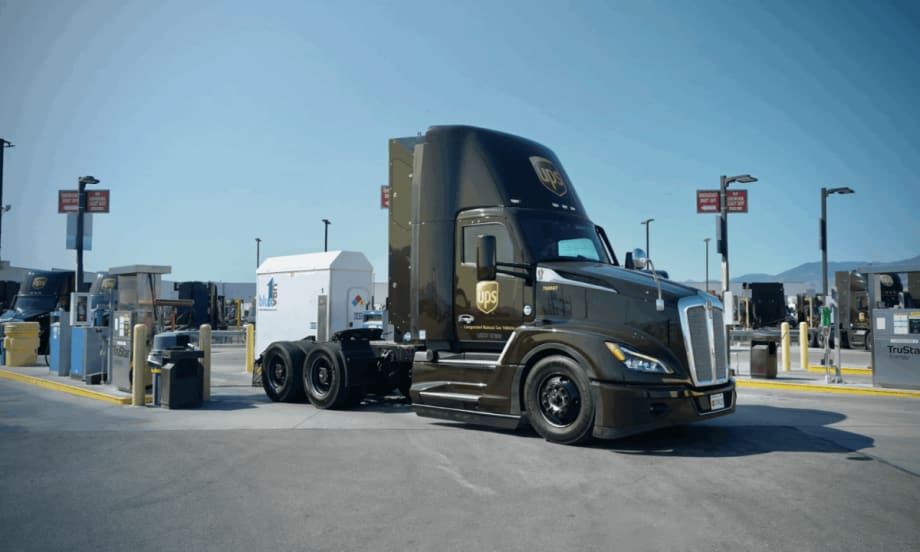
A UPS compressed natural gas (CNG) tractor is parked at a fueling station under clear skies, showcasing the company’s use of alternative fuel vehicles in its delivery fleet.

A UPS compressed natural gas tractor refuels at the company’s Salt Lake City facility, where most of the regional fleet now runs on RNG to reduce emissions and improve operational consistency.

Photo: NACFE

3 min to read


UPS operates one of the largest and most diverse fleets in the world, with more than 325,000 vehicles, including 115,000 package delivery trucks in the U.S. For Run on Less – The Messy Middle, UPS is spotlighting its renewable natural gas (RNG) operations based in Salt Lake City, Utah. 

The company has committed to using alternative fuels to reduce emissions and increase operational efficiency across its global network.

Ad Loading...

Why Natural Gas in Utah

The Wasatch Mountains around Salt Lake City create air-quality challenges by trapping emissions in the valley. To help reduce its environmental footprint, UPS has transitioned much of its regional fleet to compressed natural gas engines using renewable natural gas.

The decision to focus on RNG vehicles in Utah aligns with the company’s broader sustainability strategy to lower emissions while maintaining performance and reliability.

unknown node

UPS Fleet Profile

Location: Salt Lake City, Utah

Facility: Yard

Truck Class: Class 8 tractor

Make/Model: Kenworth T680

Route type: Interstate

Engine/Fuel type: Cummins X15N 15 liter natural gas

Estimated range: 700 to 800 miles

Fuel tank: Hexagon Agility ProCab 175 diesel gallon equivalent behind-the-cab CNG / RNG fuel system

Fuel provider: Clean Energy

Fleet Transition and Scale

UPS has steadily grown its use of natural gas vehicles over the past several years. In Salt Lake City, the majority of the company’s tractors now operate on natural gas.

“With each new generation of CNG tractors, we’ve been able to expand our operations and increase efficiency," UPS Automotive Director of Maintenance Mike Backus explained in a NACFE Run on Less video. 

"Today, about 65% of the trucks in our daily fleet run on natural gas.”

Ad Loading...

This local progress reflects a larger shift within the company to integrate advanced technologies and alternative fuels where they make the most sense operationally.

Reliability in Harsh Conditions

Operating in a region that experiences extreme weather, the company values the durability and reliability of its CNG vehicles. According to Backus, the trucks perform well even in cold temperatures.

“One advantage of the CNG trucks is their reliability in all climates," he said. "Whether in the freezing temperatures of Salt Lake City or the extreme heat of Phoenix, they start easily and run consistently without temperature-related issues — something we can’t always say for our diesel units.”

This reliability has helped UPS maintain consistent performance while transitioning away from conventional diesel.

Driver Experience and Comfort

Beyond emissions and fuel efficiency, the fleet’s drivers appreciate how the vehicles handle on the road. The lower noise levels and smoother ride create a better driving environment during long shifts.

Ad Loading...

The CNG trucks offer a noticeably smoother, quieter driving experience than traditional diesel vehicles. The reduced engine noise makes long hours on the road more comfortable, while improved steering responsiveness enhances ease of handling across a variety of driving conditions. Drivers also note that the overall ride feels more refined, with less vibration and noise in the cab, creating a more relaxed and efficient work environment during daily routes.

Commitment to Sustainability

UPS’s use of renewable natural gas helps the company reduce lifecycle greenhouse gas emissions by capturing methane from landfills and other sources. RNG offers a practical pathway toward lower emissions while using existing natural gas infrastructure.

“As I am driving home and I see those alternative fuel vehicles out on the road, it makes me proud that the company I work for is making a difference,” said Michele Galloway, UPS automotive fleet manager.

That pride extends to the company’s ongoing participation in initiatives such as Run on Less – The Messy Middle, where UPS demonstrates how large fleets can implement scalable, real-world sustainability solutions.


More Fuel Smarts

SponsoredFebruary 1, 2026

Stop Watching Footage, Start Driving Results

6 intelligent dashcam tactics to improve safety and boost ROI

Read More →
Fuel Smartsby Deborah LockridgeJanuary 29, 2026

California: Clean Truck Check Rules Still in Force for Out-of-State Trucks, Despite EPA Disapproval

The Environmental Protection Agency said California can’t enforce its Heavy-Duty Inspection and Maintenance Regulation, known as Clean Truck Check, on vehicles registered outside the state. But California said it will keep enforcing the rule.

Read More →
Illustration of Department of Justice building superimposed by truck exhaust stacks
Fuel SmartsJanuary 27, 2026

Justice Department Pulls Back on Criminal Prosecution of Diesel Emissions Deletes

The Trump administration has announced it will no longer criminally prosecute “diesel delete” cases of truck owners altering emissions systems in violation of EPA regulations. What does that mean for heavy-duty fleets?

Read More →
Ad Loading...
HDT Spotlight video on natural gas truck engines.
Fuel Smartsby Jack RobertsJanuary 26, 2026

Why the Cummins X15N Changed the Conversation About Natural Gas Trucking

Natural gas is quietly building a reputation as a clean, affordable, and reliable alternative fuel for long-haul trucks. And Ian MacDonald with Hexagon Agility says the Cummins X15N is a big reason why.

Read More →
Blue Tesla Semi pulling flatbed trailer inside warehouse or manufacturing facility
Fuel SmartsJanuary 21, 2026

First Tesla Semi for RoadOne IntermodaLogistics

RoadOne IntermodaLogistics has bought a fully electric Tesla Semi heavy-duty truck, the first of up to 10 for its Oakland, California, operations.

Read More →
Mercedes-Benz eActros trucks.
Fuel SmartsJanuary 20, 2026

Mercedes-Benz Initiates Megawatt Charging and Long-Haul EV Truck Trials

Mercedes-Benz has begun a new series of tests in Europe to validate vehicle compatibility with megawatt chargers and assess charging performance, thermal management, and usability on long-haul duty routes.

Read More →
Ad Loading...
Windrose-Greenlane truck charging bundle.
Fuel SmartsJanuary 20, 2026

Windrose Bundles Free EV Truck Charging with Greenlane Infrastructure

Windrose customers will receive unlimited charging for three months on Greenlane’s high-power charging network.

Read More →
SponsoredJanuary 19, 2026

3 New Ways Fleet Software Pays: ROI opportunities for modern fleet managers

Safety, uptime, and insurance costs directly impact profitability. This eBook looks at how fleet software is evolving to deliver real ROI through proactive maintenance, AI-powered video telematics, and real-time driver coaching. Learn how fleets are reducing crashes, defending claims, and using integrated data to make smarter operational decisions.

Read More →
SponsoredJanuary 19, 2026

Basic Tracking vs Next Generation Fleet Technology

Fleet software is getting more sophisticated and effective than ever, tying big data models together to transform maintenance, safety, and the value of your existing tech stack. Fleet technology upgrades are undoubtedly an investment, but updated technology can offer a much higher return. Read how upgrading your fleet technology can increase the return on your investment.

Read More →
Ad Loading...
Fuel Smartsby Deborah LockridgeDecember 22, 2025

From Truck APUs to Intelligent Engines: NACFE Updates Idle Reduction Report

Idle reduction for heavy-duty trucks has come a long way. An updated playbook from the North American Council for Freight Efficiency explains what technologies deliver results today — and what’s coming next.

Read More →