




Related: FHWA, NHTSA Administrators Highlight Work on ADAS, Truck Parking
Trucking Groups Bring Wish Lists to FMCSA
Infrastructure investments, including additional truck parking, and the allowance of hair testing by the DOT were among the items trucking industry lobbyists appealed for at the Federal Motor Carrier Safety Administration’s Truck Safety Summit.
by James Menzies, Today’s Trucking
August 6, 2020
Photo: Startup Stock Photos via Pexels
4 min to read
Infrastructure investments, including additional truck parking, and the allowance of hair testing by the DOT were among the items trucking industry lobbyists appealed for at the Federal Motor Carrier Safety Administration’s Truck Safety Summit.
Lewie Pugh, executive vice president of the Owner-Operator Independent Drivers Association, said his group’s wish list hasn’t changed much since it addressed a similar conference 25 years ago.
“Virtually every topic has been discussed before, going back several decades in some cases,” said Pugh. “History demonstrates these issues aren’t going to magically disappear and I sure as hell don’t want to be having this same conversation 25 years from now.”
Pugh began his driving career in 1994 and said the biggest issues facing drivers then, have only gotten worse. This includes a lack of truck parking, poor driver wages, a lack of broker transparency, and detention by shippers and receivers.
The FMCSA, he said, needs to “listen to the professional men and women who make their living behind the wheel.”
He argued the electronic logging device (ELD) mandate has only added stress for drivers, as well as higher costs and additional fatigue. He applauded coming changes to the hours-of-service rules, but feels they don’t go far enough and would like to see 6/4 and 5/5 split sleeper berth options added.
Pugh also said shippers and receivers must be held accountable when keeping drivers waiting to be loaded or unloaded.
For its part, the American Trucking Associations would like to see greater infrastructure spending – not raised through road tolls – and for the DOT to accept hair testing to meet its drug-testing requirements. ATA CEO Chris Spear also urged government to “get out of the way” of industry-led innovations, such as vehicle-to-vehicle connectivity, which can improve road safety.
Spear pointed out the trucking industry collectively invests more than $10 billion a year in safety, yet is responsible for only about a third of crashes involving a passenger car and a truck.
Steve Owings, co-founder of Road Safe America, told FMCSA more must be done to limit truck speeds. He pointed to Ontario’s speed limiter mandate as an example of what should be adopted to improve road safety in the U.S.
In Ontario, trucks built since the mid-1990s must be governed to 105 km/h (65 mph). He noted speed differentials – a point of opposition in the U.S. – have proven not to be a danger, and that fatalities involving heavy trucks have declined since the legislation was put in place in 2009. Road Safe America supports having heavy trucks mechanically limited to 65 mph, or 70 mph if equipped with automatic emergency braking technologies.
“There’s no capital cost. It just needs to be turned on and used,” he said of speed limiters. “There are dozens of countries around the world with such rules and not one has ever reversed the policy. That’s a pretty strong testimonial to its effectiveness.”
Road Safe America also supports increasing minimum insurance requirements for carriers, which were set in 1980, to better compensate victims of truck crashes.
“Can you think of anything that costs the same today as it cost in 1980?” he said. “It needs to be updated and indexed to something.”
Dan Furth, vice president of the National Tank Truck Carriers, voiced concern about requirements for dangerous goods haulers to stop at railroad crossings, putting them at risk of being rear-ended. He said the group will collect data from members to see how significant an issue this is. Jim Mullen, FMCSA’s deputy administrator, said the issue is already on the agency’s radar.
Using Hair for Drug Testing
When it comes to drug testing, ATA’s Spear said carriers would like the option to use both hair and urine testing methods for DOT testing, which currently only allows urine results. The move has been held up by the Department of Health and Human Services and in the White House’s Office of Management and Budget for several years, but Spear said ATA will continue to lobby to have hair testing accepted.
“A number of carriers for more than a decade have been using hair testing effectively,” Spear said. “It’s a proven science, there’s no question about that.”
However, those carriers must currently still do urine testing as well to meet DOT rules, adding an additional layer of cost and complexity to their operations. In addition, hair-testing results are not included in the new Drug and Alcohol Clearinghouse.
Furth agreed his membership would be “huge adopters” of hair testing if it became accepted by the DOT.
However, OOIDA’s Pugh took a different view.
“We do have some concerns at OOIDA,” he said, citing technological limitations involving certain ethnicities and hair types.
FMCSA’s Mullen said the changes to hours-of-service rules unveiled in May are still on track to be implemented at the end of September. He also praised the new drug and alcohol clearinghouse, which he said has recorded nearly 30,000 violations since being launched in January.
James Menzies is the editor of Today's Trucking, where this article originally appeared. This content was used with permission from Newcom Media as part of a cooperative editorial agreement.
Topics:Safety & Compliance
More Safety & Compliance

Tesla Wants a Self-Driving Semi. Are Cameras Enough?
Could Tesla’s camera-only autonomous driving technology work on an 80,000-pound Semi? In this commentary, HDT's Deborah Lockridge takes a look at Tesla, Cybercab, and how autonomous trucks see the road.
Read More →
What DOT’s Automated Vehicle Strategy Means for Trucking
The U.S. Department of Transportation issued a new automated-vehicle strategy that outlines plans for driverless-truck regulations, cross-state freight corridors, and federal safety standards.
Read More →
NYC Expands Speed, Pedestrian Safety Tech Across Fleet
New York City is expanding intelligent speed assistance and pedestrian-alert systems across its municipal fleet, moving the technologies from pilot programs into vehicle procurement and retrofit requirements.
Read More →
FMCSA Removes 110 Truck Driver Training Schools from Certified ELDT List
Federal regulators also are targeting more than 160 additional training providers and launching a nationwide audit of third-party CDL skills testers as part of a broader crackdown on trucking fraud.
Read More →
Beyond DOT Compliance: What Makes a Trucking Fleet Truly Safe?
A trucking fleet can follow every rule and still make unsafe decisions. The real test comes when safety conflicts with freight, productivity, or cost.
Read More →
Hours of Service Pilot Programs: FMCSA Readies for 2027 Rollout
Two pilot programs could eventually reshape hours-of-service rules, giving truck drivers options to pause their 14-hour clock or use longer split sleeper rest periods.
Read More →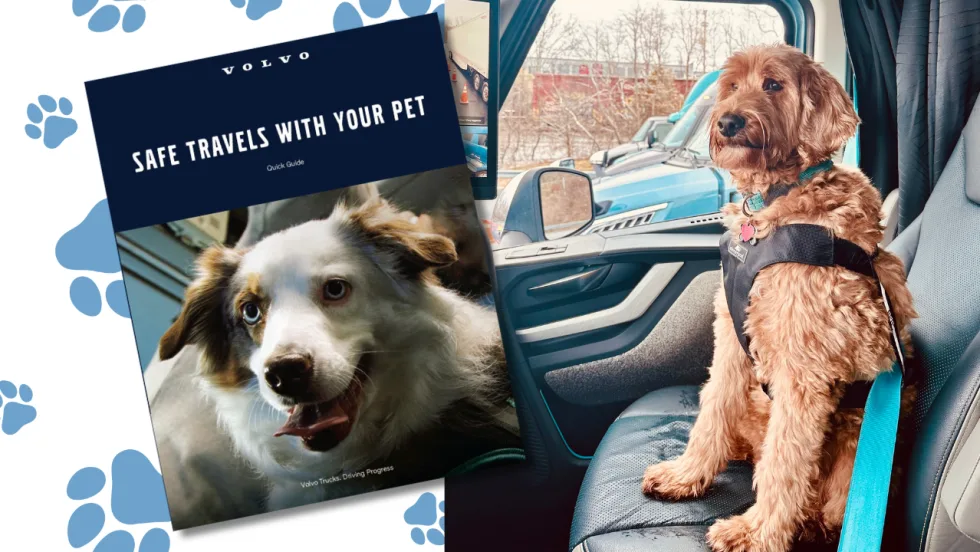
New Guide Offers Pet Safety Tips for Truck Drivers
Hundreds of thousands of pets travel in truck cabs. A new safety guide from Volvo Trucks and the Center for Pet Safety offers practical advice for truck drivers who bring dogs and cats along for the ride.
Read More →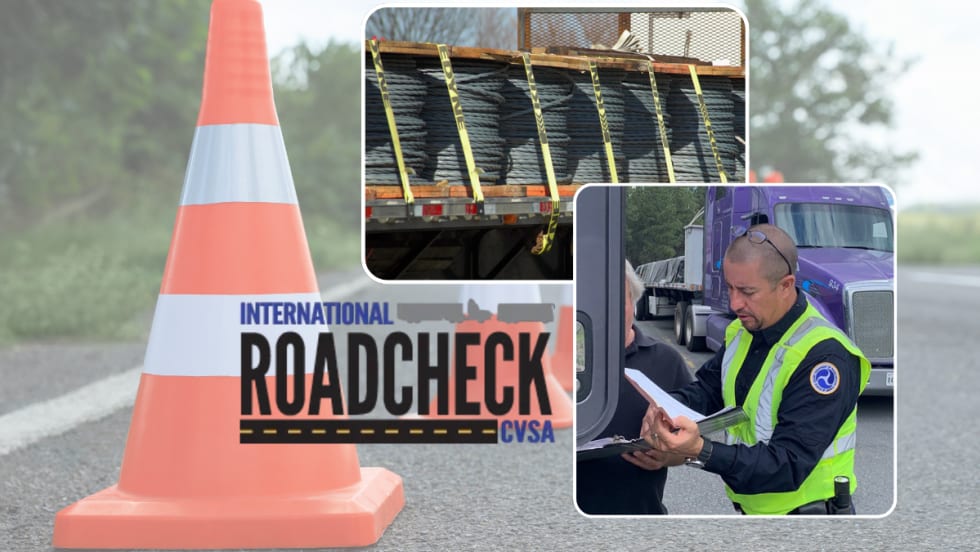
Medical Cards, English Proficiency Reshape Roadcheck Violations
Medical-card violations jumped to the top of the driver out-of-service list during CVSA’s 2026 International Roadcheck, while English-language proficiency violations appeared among the leading violations for the first time.
Read More →
How Lance Evans Turns Enforcement Experience Into Better Fleet Safety
HDT Truck Fleet Innovator Lance Evans brings lessons from law enforcement to K&B Transportation’s approach to safety technology, data, driver coaching, and compliance.
Read More →
New FMCSA Chief Safety Officer Has Trucking Industry and Law Enforcement Experience
Steve Dowling joins FMCSA after serving as senior director of safety at Covenant Logistics and in leadership roles in commercial motor vehicle industry organizations.
Read More →