





Update: Reach our March 2021 story on more things fleets need to know about the clearinghouse
6 Things You Need to Know About the New Drug and Alcohol Clearinghouse
The federal Drug and Alcohol Clearinghouse is finally rolling out this month. This electronic database will track commercial driver’s license holders who have tested positive for prohibited drug or alcohol use, as well as refusals to take required drug tests, and other drug and alcohol violations.
January 14, 2020
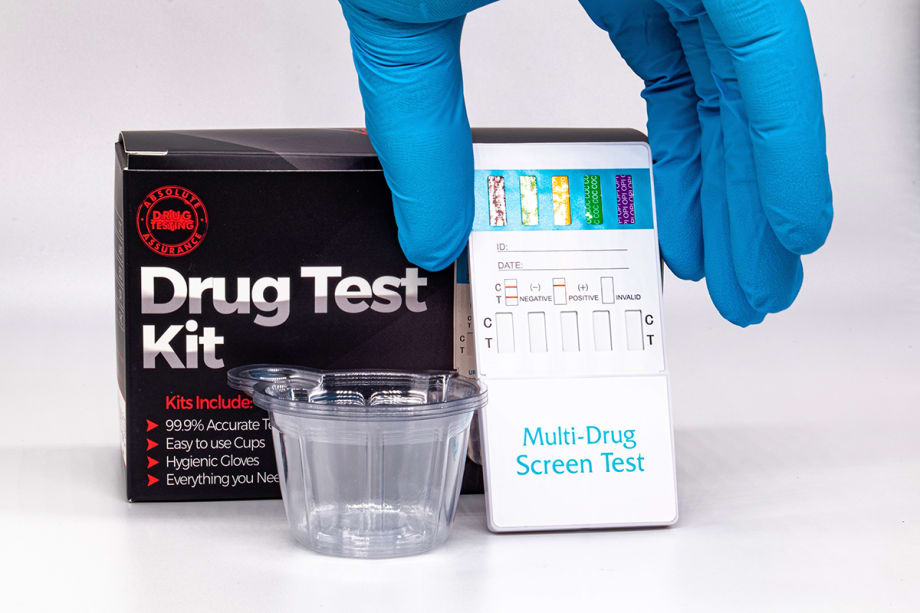
Photo: Curtis Adams via Pexels.com
7 min to read
The federal Drug and Alcohol Clearinghouse is finally rolling out this month. This electronic database will track commercial driver’s license holders who have tested positive for prohibited drug or alcohol use, as well as refusals to take required drug tests, and other drug and alcohol violations. When a driver who has been found to be in violation completes the required return-to-duty process, this information will also be recorded in the clearinghouse.
The clearinghouse has long been sought as a way to keep commercial drivers who have violated federal drug and alcohol rules from lying about those results and simply getting a job with another motor carrier.
Last month, the Federal Motor Carrier Safety Administration announced it had extended the compliance date from Jan. 6, 2020 to Jan. 6, 2023 for when state driver licensing agencies must request information from the clearinghouse before they complete certain commercial driver’s license transactions. But the original compliance date of Jan. 6, 2020, remains in place for all other requirements of the final rule – there is no delay in compliance for motor carriers.
1. Fleets must start adding data to the clearinghouse this month
Effective Jan. 6, the rule requires employers and their service agents to populate the clearinghouse with:
Their employees’ DOT drug and alcohol violations under Part 382 of the Federal Motor Carrier Safety Regulations, and
Verification of a CDL driver’s completed steps in the DOT return-to-duty process.
Employers also must now query the clearinghouse for required information for driver hiring and annual requirements.
The database will contain violation information that occurs on or after Jan. 6, 2020. So even if a violation occurs on Jan. 5 and a driver is disqualified, that doesn’t go into the clearinghouse, notes David Osiecki, president, Scopelitis Transportation Consulting.
Those required to register for and use the clearinghouse include most commercial drivers, their employers, consortia/third-party administrators used by carriers, medical review officers, substance abuse professionals, and state driver licensing agencies.
2. What data is submitted to the clearinghouse
Motor carriers must report violations of the DOT Part 382 drug-testing regulations, including positive tests, as well as refusals to take drug or alcohol tests. They also must report of “actual knowledge” violations, negative return-to-duty test results, and completion of follow-up testing/plans/programs.
Employers will have to submit a report of a drug or alcohol program violation by the close of the third business day following the date on which the employer obtained the information.
The only information allowed to be added to the clearinghouse is DOT-mandated drug or alcohol tests. Additional tests, such as hair testing that some fleets are conducting pre-employment, may not be put into the clearinghouse.
Records will remain in the clearinghouse until return-to-duty is complete and five years have passed since the violation. (After that, they won’t be in the database, but FMSCA will keep them archived.) Similarly, a fleet (or your third-party service agent) must keep records for a minimum of five years.
3. There are two types of clearinghouse queries
There are two types of queries motor carriers must make: full and limited.
Full queries must be done at the pre-employment stage. The information returned by the clearinghouse will show any violation of the drug-testing regulations in Part 382, as well as return-to-duty status once a driver has completed a treatment program following a violation.
Because the clearinghouse will not contain a full three years’ data until 2023, motor carriers in the meantime still must check with a driver’s previous employers to get drug-testing information for the past three years.
A limited query must be done at least once a year on each of a carrier’s drivers. It essentially is simply asking if there is a record of this driver in the database. If there is, then the carrier must convert that into a full query to find out what that information is (including getting the driver’s permission.) Carriers have one year to begin running limited queries on drivers employed before Jan. 6, 2020.
The “query bundle” an employer purchases from FMCSA will depend on the number of queries that need to be conducted. The flat per-query rate is $1.25, for both limited and full queries.
There are customized “bundles” available to help fit business requirements. Osiecki notes that it must be the motor carrier who buys the query plans; a third-party agency cannot buy the query bundle and bill the motor carrier for it.
4. Drivers have to give consent for queries
Before the carrier can get the information queried, the driver has to log into the clearinghouse and give his or her consent – every time there’s a full query request for his or her records.
“The industry has asked for this database for a lot of years to close this loophole, but here’s an aspect that could create some real operational challenges, or at least slow down the hiring process,” says Osiecki. “Let’s face it, some drivers will forget their log-in credentials – we’ve all done that – and it’s going to hang up the hiring process.”
Driver consent is also required for limited queries, but carriers can add that to pre-employment consent paperwork that’s already asking for consent to check things such as their criminal records and motor vehicle records.
Companies that offer driver recruiting and onboarding services have been adding features to their platforms to make the process easier for customers. “The Drug and Alcohol Clearinghouse will significantly improve highway safety and is a welcomed, much-needed, and long overdue regulation for the trucking industry,” said Jeremy Reymer, founder and CEO of DriverReach. “However, carriers will see a drastic change in compliance-related workflow, ultimately complicating the hiring process if unprepared for the increased administrative burden.”
5. Fleets can use third-party services
Employers are allowed to authorize service agents to report violations and to conduct queries of the clearinghouse on their behalf. Employers have to register in the clearinghouse first. Service agent authorizations will be required as part of an employer’s registration process. Designated service agents must register before accessing or reporting information to the clearinghouse.
If you change service agents during the year, the carrier has only 10 days to update that in the clearinghouse.
6. Drivers need to know their rights and responsibilities
Even as your company or safety department is learning how to use the clearinghouse, it’s smart to make sure your drivers know their responsibilities and rights, as well.
If drivers change companies, they will have to register in order to give permission for the motor carrier to make queries of their information.
J.J. Keller, which offers DVD training on what drivers need to know about the clearinghouse, recommends employers tell drivers what driver data will be put into the clearinghouse, as listed in Section 382.601(b)(12), and also provide drivers the following best-practices training:
An explanation of the inquiries performed by employers (Section 382.701);
Driver procedures on signing up for access to the clearinghouse;
Information on how drivers may obtain a copy of their clearinghouse records (Sections 382.707, 382.709);
Procedures for correcting information in the database (Section 382.717);
An awareness that state licensing authorities will have access to the database (Section 382.725); and
Clarification on a driver’s obligation to notify a current employer(s) (in writing) of DOT testing violations occurring under a different employer (Section 382.415).
Instructional Technologies Inc. recently added driver training on the clearinghouse to its Pro-Tread online training.
ITI Vice President Laura McMillan explains that such training is part of a system of transparent and proactive driver communication and minimizes the potential spread of inaccurate information among your drivers.
One point the lesson makes clear to drivers is that they have to give permission for people to access the information. “Of course, if they refuse to allow access that will impact their employability,” McMillan says. “They have a right to review their information, and if they find a discrepancy or disagree with records, they can write to FMCSA and dispute it and potentially correct that record.
“It’s a regulation and a system that’s designed to reduce the issue of drivers flipping from one company to another,” McMillan says. “It’s meant to catch people who are trying to game the system, frankly. But on the flip side, it is meant to keep the motoring public safe, and for drivers who have submitted to drug and alcohol treatment programs, it protects them too.”
Subscribe to Our Newsletter
More Safety & Compliance
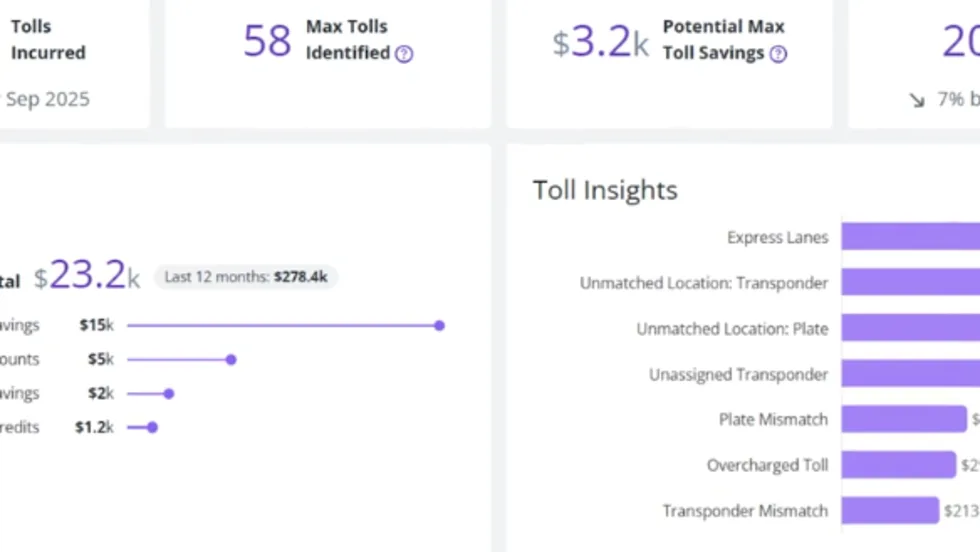
PrePass Intelligence Mines Fleet Bypass, Toll and Safety Data
PrePass Intelligence helps fleets measure bypass savings, flag potential toll overcharges, and spot suspicious transactions by combining data from separate systems.
Read More →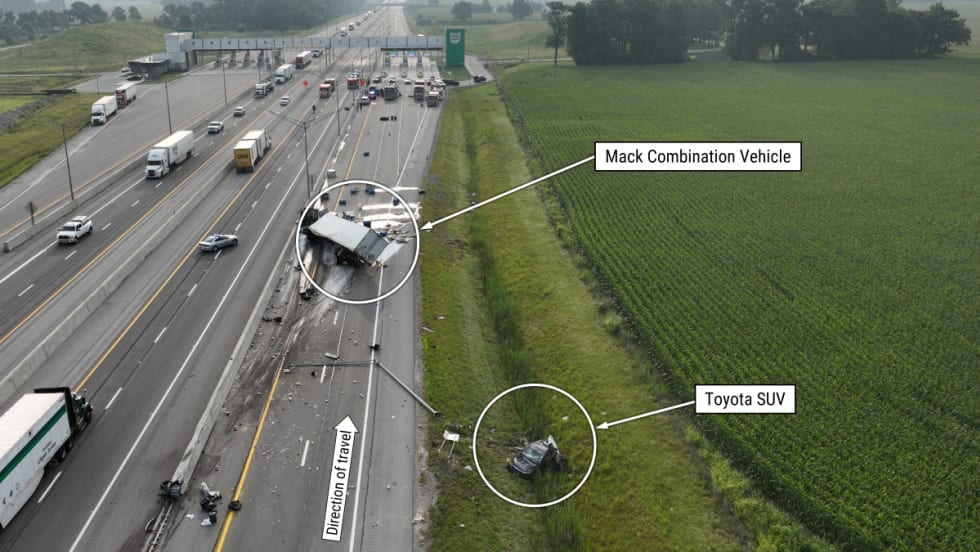
Fatal Crash Exposes Toll Plaza Risks
An NTSB investigation found that last-minute lane changes and large speed differences at an Ohio toll plaza created a hazard the truck driver couldn't avoid in time.
Read More →
When Language Stops the Truck: The Return of ELP Out-of-Service Orders
English language proficiency rules for commercial drivers aren’t new, but renewed out-of-service enforcement has raised the stakes. Here’s what carriers need to know before a driver reaches a roadside inspection.
Read More →

Sponsored•October 6, 2026
A Camera Isn't a Safety Program. Here's What Brokers Are Screening for Now
Footage alone may not be enough to pass broker vetting processes. Here's what counts as a defensible safety program now.
Read More →
Marijuana and Trucking’s Drug-Testing Dilemma
Marijuana is getting stronger, laws are changing, and drug tests still can’t reliably establish impairment. What does that mean for truck drivers and the fleets that employ them?
Read More →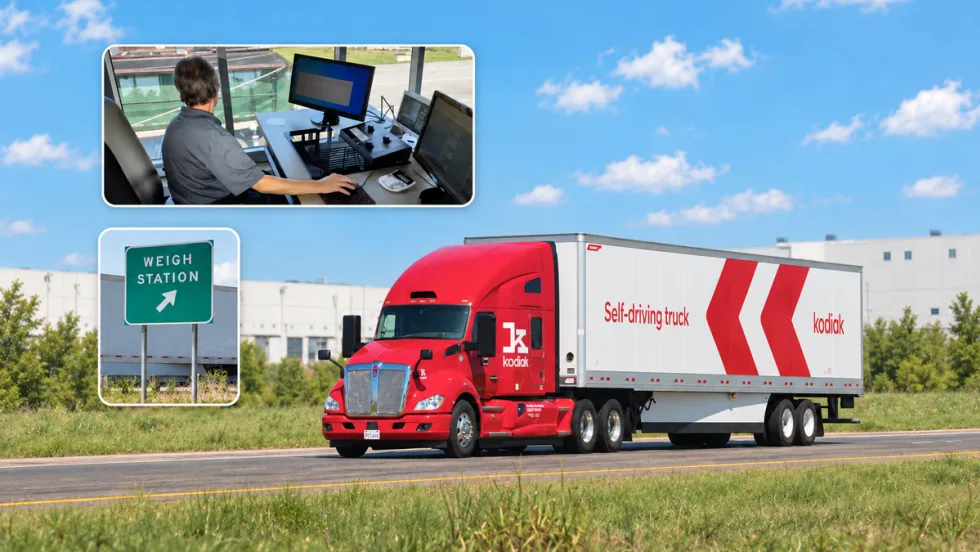
PrePass, Kodiak Connect Driverless Trucks to Roadside Enforcement
The system will allow enforcement agencies to verify Enhanced Inspection information and decide whether Kodiak’s autonomous trucks can bypass roadside screening sites.
Read More →
From One Generation to the Next: How Mentorship Builds Safer Truck Drivers
After three decades in trucking, Harold Perry shares what he's learned about driver safety, mentorship, and helping the next generation build confidence behind the wheel.
Read More →
FMCSA Pauses Biennial-Update Enforcement Amid Motus Transition
Carriers whose updates were due on or after June 1 have more time, while FMCSA works to stabilize its new registration system and warns of phishing sites impersonating its new carrier registration system, Motus.
Read More →
ZF Expands Commercial Vehicle Push in North America
ZF is expanding its North American commercial-vehicle presence with new transmission applications, electrification, trailer technology and autonomous-driving systems.
Read More →
Truck Drivers Need More Than Another Alert
Fleets have more visibility into truck health, safety events, and driver activity than ever. The next challenge is turning all that information into useful guidance for the person who has to decide what to do next.
Read More →