




Trucking Groups Call on NHTSA to Examine Truck Crashworthiness Standards
American Trucking Associations and the Owner Operator Independent Drivers Association together called on the federal government to begin researching standards for crashworthiness for heavy trucks
American Trucking Associations and the Owner Operator Independent Drivers Association together called on the federal government to begin researching standards for crashworthiness for heavy trucks.
"NHTSA has continuously developed crashworthiness standards for automobiles and light trucks, but to date has generally not applied crashworthiness standards to commercial trucks," the two groups wrote in a June 6 letter to David Strickland, head of the National Highway Traffic Safety Administration. "We believe there may be opportunities to enhance the survivability of professional truck drivers if appropriate, research-based, uniform standards are developed."
†he groups particularly pointed to rollover crashes, noting they account for approximately 63 percent of fatal injuries to truck occupants. The letter said it is estimated that an annual reduction in fatalities of approximately 23 percent is possible if cab structural integrity can be improved sufficiently to prevent crushing in rollover.
Specifically, ATA and OOIDA highlighted the need for improving cab structure and occupant restraints such as safety belts and airbags, strengthening windshields and doors to prevent occupant ejections, and installing more forgiving interior surfaces.
The letter noted that there are industry standards that original truck equipment manufacturers follow, and said NHTSA's research should also consider the merits of existing industry-driven standards and testing.
European truck maker Volvo conducts crash testing; see this YouTube video of a rollover test, where one of the crash test dummies is ejected from the cab:
More Safety & Compliance
A Camera Isn't a Safety Program. Here's What Brokers Are Screening for Now
Footage alone may not be enough to pass broker vetting processes. Here's what counts as a defensible safety program now.
Read More →
Marijuana and Trucking’s Drug-Testing Dilemma
Marijuana is getting stronger, laws are changing, and drug tests still can’t reliably establish impairment. What does that mean for truck drivers and the fleets that employ them?
Read More →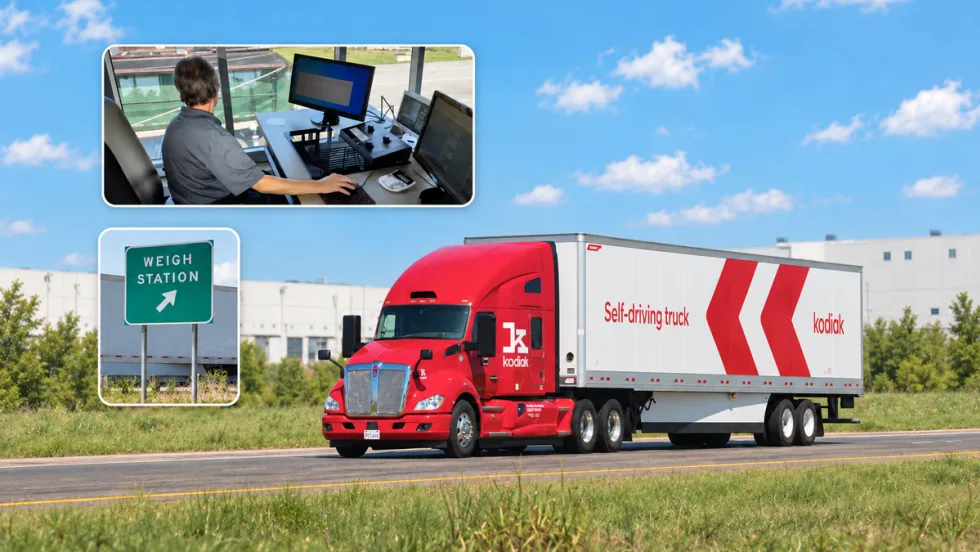
PrePass, Kodiak Connect Driverless Trucks to Roadside Enforcement
The system will allow enforcement agencies to verify Enhanced Inspection information and decide whether Kodiak’s autonomous trucks can bypass roadside screening sites.
Read More →

From One Generation to the Next: How Mentorship Builds Safer Truck Drivers
After three decades in trucking, Harold Perry shares what he's learned about driver safety, mentorship, and helping the next generation build confidence behind the wheel.
Read More →
FMCSA Pauses Biennial-Update Enforcement Amid Motus Transition
Carriers whose updates were due on or after June 1 have more time, while FMCSA works to stabilize its new registration system and warns of phishing sites impersonating its new carrier registration system, Motus.
Read More →
ZF Expands Commercial Vehicle Push in North America
ZF is expanding its North American commercial-vehicle presence with new transmission applications, electrification, trailer technology and autonomous-driving systems.
Read More →
Truck Drivers Need More Than Another Alert
Fleets have more visibility into truck health, safety events, and driver activity than ever. The next challenge is turning all that information into useful guidance for the person who has to decide what to do next.
Read More →
Tesla Wants a Self-Driving Semi. Are Cameras Enough?
Could Tesla’s camera-only autonomous driving technology work on an 80,000-pound Semi? In this commentary, HDT's Deborah Lockridge takes a look at Tesla, Cybercab, and how autonomous trucks see the road.
Read More →
What DOT’s Automated Vehicle Strategy Means for Trucking
The U.S. Department of Transportation issued a new automated-vehicle strategy that outlines plans for driverless-truck regulations, cross-state freight corridors, and federal safety standards.
Read More →
NYC Expands Speed, Pedestrian Safety Tech Across Fleet
New York City is expanding intelligent speed assistance and pedestrian-alert systems across its municipal fleet, moving the technologies from pilot programs into vehicle procurement and retrofit requirements.
Read More →