




Truck-Train Collision Leaves 14 Dead
At least 14 people died Monday night when an Amtrak train derailed after hitting a flatbed trailer loaded with steel rods in Bourbonnais, IL
At least 14 people died Monday night when an Amtrak train derailed after hitting a flatbed trailer loaded with steel rods in Bourbonnais, IL.
The “City of New Orleans” was bound from Chicago to New Orleans when it hit the truck around 9:50 p.m. at a crossing 50 miles south of Chicago. More than 100 people were injured, some critically, and several were still missing as of yesterday afternoon.
The crash, the third-deadliest in Amtrak’s 27-year history, is under investigation. The driver of the truck, who had just left a Birmingham Steel mill, says the train track warning lights didn’t go on until after he started to cross the tracks.
NBC reported that investigators were looking at the trip mechanism, where an oncoming train trips the warning system and gives anyone in the crossing 26 seconds to get out. According to NBC, investigators were trying to determine whether the mechanism was working, or whether the truck was so weighed down with steel that it couldn’t clear the tracks in time. For the train, the speed limit on that section of track is 79 mph.
The local police chief said in a press briefing that the gates did not appear to be broken and “are in up or semi-up position.” An official of Illinois Central Railroad, which operates the section of tracks involved, told NBC it was confident “the gates were working perfectly.”
The driver, 58-year-old John R. Stokes of Manteno, IL, walked away from the crash with only minor injuries. “He’s very sad and upset,” said Cy Gura, a safety engineer with the National Transportation Safety Board team at the scene. “He felt he did whatever he thought he could do to clear the train track, but he didn’t do it.”
Stokes had his license suspended earlier this year after Illinois officials learned that he received three speeding tickets in Indiana in less than a year. But he was allowed to drive on a temporary permit during the suspension because he was a first-time offender, took a safety course and paid a fee.
Frank Eagan, a former employee of the Illinois Central Railroad and a nearby homeowner, told the Chicago Tribune he sees truckers “take chances all the time” at the crossing. He said they sometimes drive around the gates at the crossing to beat oncoming trains.
Federal Highway Administrator Kenneth Wykle has ordered a compliance review of Melco Transfer Inc., the trucking company involved in the accident, “to assess the company’s adherence to federal motor carrier safety regulations.” Unconfirmed rumors have suggested the driver may have been in violation of hours-of-service regulations.
Federal regulations require truck drivers to slow down when approaching a railroad grade crossing. Drivers must maintain a rate of speed that will let them stop before reaching the nearest rail of the crossing. FHWA has proposed that truck drivers convicted of rail crossing violations should be disqualified from operating a commercial motor vehicle for a minimum of 60 days for the first conviction, and 120 days for subsequent convictions within a three-year period. Employers who knowingly allow or require drivers to violate rail crossing regulations would be subject to a maximum fine of $10,000. This proposal came after Congress ordered stiffer penalties in the 1995 Interstate Commerce Commission Termination Act. The proposal was published in the March 2 Federal Register.
More Safety & Compliance
How Waste Connections is Using Data, Telematics, and AI
How do you manage and maintain more than 18,000 connected trucks? Data. Lots of it.
Read More →
Fleet Advantage: Top Logistics Fleets Outperform National Safety Benchmarks
Fleet Advantage's latest TRUST Safety Index found leading logistics fleets maintained significantly lower out-of-service rates and stronger safety scores than national averages, while highlighting persistent challenges related to tires, brakes, and unsafe driving behaviors.
Read More →
Why Fleet Data Matters More Than Ever at Waste Connections [Watch]
Waste Connections' Chuck Palmer explains how telematics, predictive maintenance, safety analytics, and AI help keep vehicles on the road and drivers safe in this episode of HDT Talks Trucking.
Read More →
Short Takes: How K&B is Using AI
Fleets need to "get on board the train" with AI, says Lance Evans of K&B Transportation in this HDT Talks Trucking Short Takes episode.
Read More →
Short Takes: Inside K&B’s Truck Safety Tech
Listen to learn how K&B Transportation uses cellphone-blocking technology, speed management systems, weather geofencing, bridge avoidance tools, and more to improve driver safety.
Read More →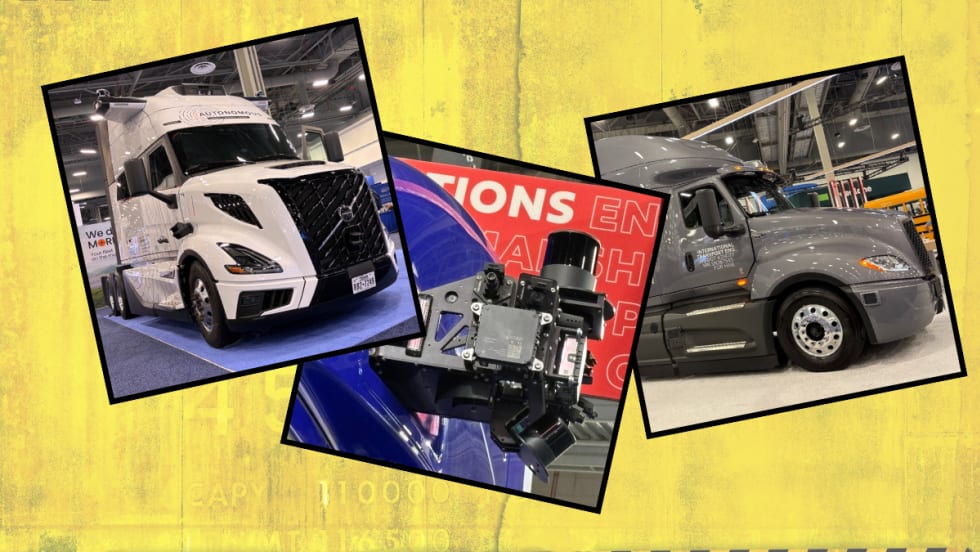
The Biggest Gap in Driverless Trucking Isn’t Tech. It’s Safety Validation
Nauto’s Stefan Heck says autonomous trucks are advancing quickly but proving they’re safe enough for large-scale deployment may be the industry’s hardest challenge.
Read More →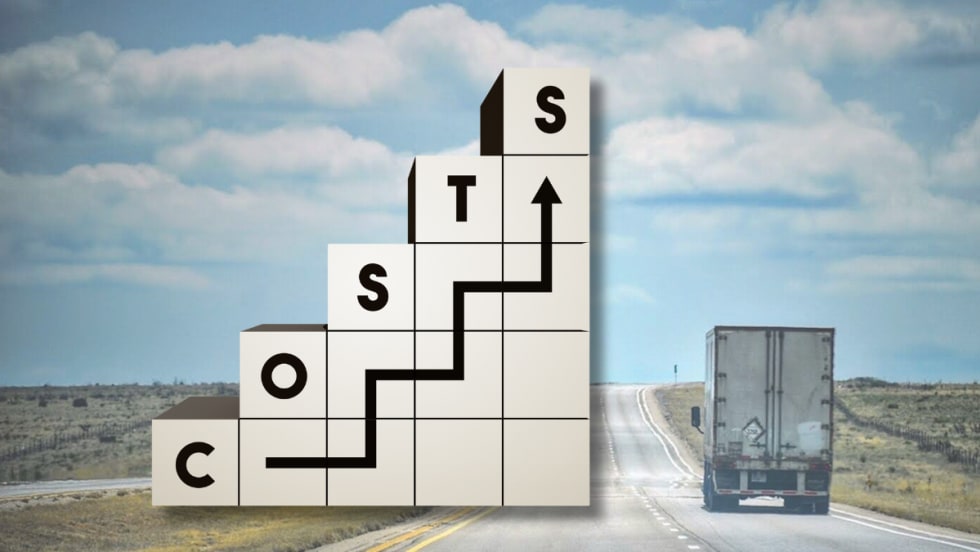
Truck Crash Rates Are Down. So Why Do Insurance Costs Keep Rising?
ATRI’s latest research points to litigation, social inflation, and soaring claims costs as key drivers behind record-high liability premiums for trucking fleets. But there are things motor carriers can do.
Read More →
FMCSA Removes More Than a Dozen ELDs from Registered List
The FMCSA continues its efforts to fight electronic logging devices that don't meet federal requirements, removing more than a dozen from the registered ELD list in May.
Read More →
How the Supreme Court Broker Liability Ruling Could Reshape Trucking’s Safety Landscape
The Supreme Court’s May 11 broker-liability ruling may not radically rewrite transportation law overnight. But industry experts say it will intensify pressure on brokers, carriers, and shippers to prove they are prioritizing safety.
Read More →
Recall of Fontaine Fusion Flatbeds Warns Owners Not to Use the Trailers
Some Fontaine Fusion flatbed trailer manufactured between February 2025, and March 2026 could have mainbeams weakened by hydrogen embrittlement because of a problem in the galvanizing process.
Read More →