




Transport Canada Publishes New ‘No Surprises’ Canadian HOS Rule
OTTAWA – Canadian truck drivers are going to have a new HOS rule in place by January 2007.
OTTAWA – Canadian truck drivers are going to have a new HOS rule in place by January 2007.
The final rule, published in the Canada Gazette, Part II, Nov. 16, won't surprise anyone who has been following the progress of the rulemaking in recent years. It's pretty much what Transport Canada described in Canada Gazette Part I, published Feb. 15, 2003.
Brian Orrbine, chief of Motor Carrier Safety Policy at Transport Canada says it's been a long time coming, "and I for one, am glad to be bringing this chapter of our regulatory evolution nearer to a close." Orrbine has been Transport Canada's point man on this issue for more than a decade.
"Transport Canada is committed to continually enhancing the safety of Canadian commercial drivers and all other users of the highway system," Orrbine said in an exclusive interview with truckinginfo.com.
"The improvements will result in a higher level of safety as well as improvements in the quality of life for drivers."
The new regulations were developed with input from the scientific community on issues such as driver fatigue, and are the result of extensive public consultation and cooperation between industry, stakeholders, and other governments across Canada.
Among the highlights of the new rule:
• Minimum off-duty time increased from 8 to 10 hours per day.
• Driving time remains unchanged at 13 hours.
• On-duty time (including driving) cut back to 14 hours from 15.
• Solo and team drivers retain the ability to split sleeper and driving time.
• Drivers may reset their hours after 36 or 72 consecutive hours off duty.
• Ferry users may combine time waiting to board the ship with off-duty time while on board, under certain circumstances, to achieve 8 hours off-duty time.
• Drivers may use one of two cycles, 70 hours in 7 days, or 120 hours in 14 days.
• Drivers may defer up to two hours of off-duty time to the subsequent day, using what's come to be known as the 48-hour averaging provision.
• All drivers must retain logs and supporting documents for 14 days.
• The 4-hour rest-reduction provision has been eliminated from the new rule.
Presently, Canadian drivers enjoy a 13-hour limit to driving, and may log as many as 15 hours on duty in total. Present rest requirements call for a minimum of eight hours off before driving again.
Canadian drivers now may avail themselves of three different duty cycles: 60 hours in 7 days, 70 hours in 8 days, or 120 hours in 14 days. There are specific demands for off-duty intervals when using the 14-day cycle, but interestingly, Canadian regulations say a driver must be out of hours in all three cycles before they can be cited for a violation.
And, drivers do not have to declare which cycle they're using. It's up to roadside inspectors to determine which of the three cycles are in use, and whether or not there's a violation.
As expected, drivers operating in Canada may drive for up to 13 hours. Drivers will not be allowed to drive after having accumulated 13 hours of driving time or 14 hours of on-duty time, including driving, in a day.
There have been two subtle distinctions added to the off-duty requirements. After having accumulated 13 hours of driving or 14 hours on-duty time, drivers may not drive again until they have had 8 consecutive hours off duty. However, drivers are required to take at least 10 hours off duty each day. The additional two hours needed to meet the 10-hours-off requirement may not be taken as part of the mandatory 8 consecutive hours off.
In other words, drivers will be required to fulfill the 8-consecutive hours rule, as well as taking an additional two hours of off-duty break time during the day. Those two hours may be taken in increments no shorter than 30 minutes.
In contrast, American drivers are forced to take the additional two hours in a single two-hour block of time. The Canadian rules at least allow the driver to choose how long the break intervals will be, and when they can be taken.
In addition, Transport Canada has added an "elapsed time" restriction to the length of the workday. Drivers may not drive if more than 16 hours has elapsed between the previous 8-hour sleeper period and the beginning of the next.
This provision is similar in nature to our 14-hour limit, but it's a little more generous.
If a driver logs 8 hours of sleep beginning at midnight, comes on duty at 8 a.m. and then works for 1 hour and drives for 13 hours (now 10 p.m.) he or she would be legal. If the driver works for 1 hour and drives for 10 hours, then takes a 3-hour off-duty break (now 10 p.m.), and then resumed driving for 3 more hours, he or she would be in violation of the 16-hour daily limit at midnight even though only 12 hours have been spent driving.
The net impact of this change will be to reduce the opportunity to drive from 16 hours in any 24 under the old rule to 13 with the new rule. Like our old rules, the present Canadian rules do not provide a limit to the length of the workday. Drivers may continue in an on and off rotation indefinitely, the end result being driver could manage to drive for 16 hours out of 24.
"Some drivers may see this as limiting their ability to earn a living," Orrbine says. "But it really was necessary to provide a realistic limit to the amount of driving in a day."
Drivers may still split their sleeper/driving time provided the combined driving time before and after a sleeper shift totals no more than 13 hours, and the sleeper time before and after the most recent driving interval totals at least 10 hours.
A minimum of 2 hours in the sleeper is required to qualify for split-sleeper time for solo drivers; 4 hours for team drivers. The 16-hour limit applies in this case as well. Drivers splitting sleeper/driving/on-duty time may not exceed 16 hours of work without the required rest (not including qualified time logged in the sleeper). This section of the rule applies to team and solo drivers.
Sleeper time (more than 2 hours duration and two periods combined totaling 10 hours) does not count toward the 16-hour period. If a driver working on a 6-on, 5-off-7-on, 5-off rotation spent 4 hours on-duty immediately after the second sleeper interval, the combination of 6 hours of driving, 4 hours on-duty, and the intended next driving interval of 7 hours would put the driver in violation of the 16-hour rule after six hours of driving.
The 2-hour off-duty deferral provision allows a driver to 8 hours off in a given day rather than 10, provided the off-duty time taken the next day includes the time deferred from the day before. In other words, 12 hours off would be required on the second day. The combined on- and off-duty totals for the 2-day period must equal the normal requirements: total off-duty time must equal 20 hours, maximum driving time may not exceed 26 hours – hence the term 48-hour averaging. Drivers operating in split-sleeper mode may not use this provision.
Canadians now have only two work cycles to worry about: 70 hours in 7 days, or 120 hours in 14 days. Drivers are required to take at least 24 consecutive hours off duty before or upon reaching the 70th hour when using the 120-in-14 cycle. Drivers may reset their cumulative hours in a cycle to zero at any time during the period by taking 36 or 72 consecutive hours off-duty, respectively. Switching from 70 to 120 requires 36 hours off; switching from 120 to 70 requires 72 hours off. There will be a check box on the log sheet to indicate which cycle drivers are using.
The emergency and adverse driving conditions provision remains the same as the old rules. The exemption for drivers who travel no further than a 160 km air radius from the terminal and return to the terminal each day has not changed.
Most of the required fields on the log sheet have not changed except there are specific notations a driver must make in the remarks section, such as when claiming deferred off-duty time, etc. The new rule now requires the l
More Equipment

Volvo Unveils New VNX Heavy-Haul and Vocational Truck
Volvo Trucks has launched the VNX, a new vocational truck also available as a tractor in day cab and two sleeper configurations, with one heavy-haul model. The Volvo VNX is powered by Volvo's D13 platform, which delivers up to 540 horsepower and 1,950 pound-feet of torque and is EPA 2027-compliant.
Read More →
How GP Transco Cuts Trucking Fuel Costs, a Tenth of a Gallon at a Time
What’s another tenth of a mile per gallon worth? GP Transco shares how equipment upgrades and driver coaching turn small gains into meaningful fuel savings.
Read More →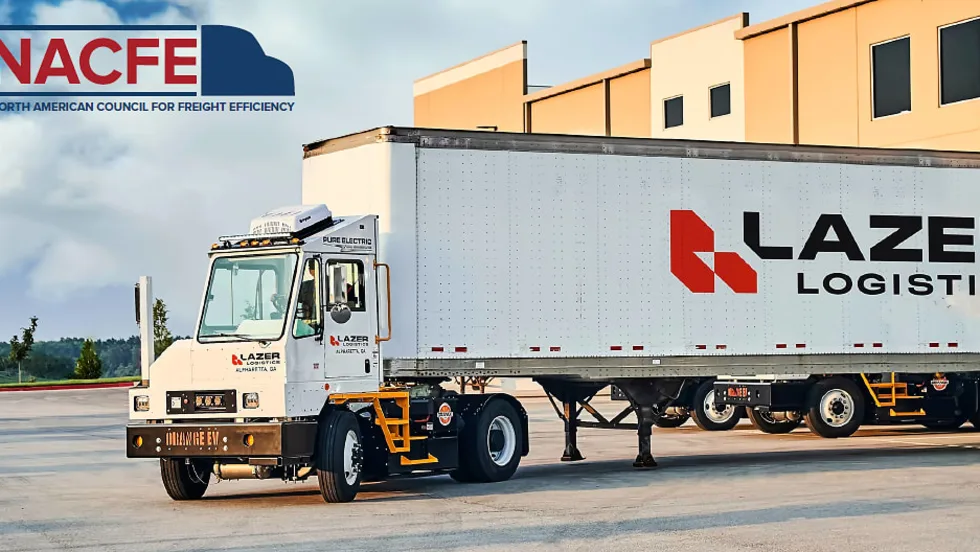
Electric Yard Tractors Move Beyond Pilots
Operating-cost savings have overtaken sustainability goals as the leading reason surveyed fleets are adopting battery-electric terminal tractors, according to new NACFE research.
Read More →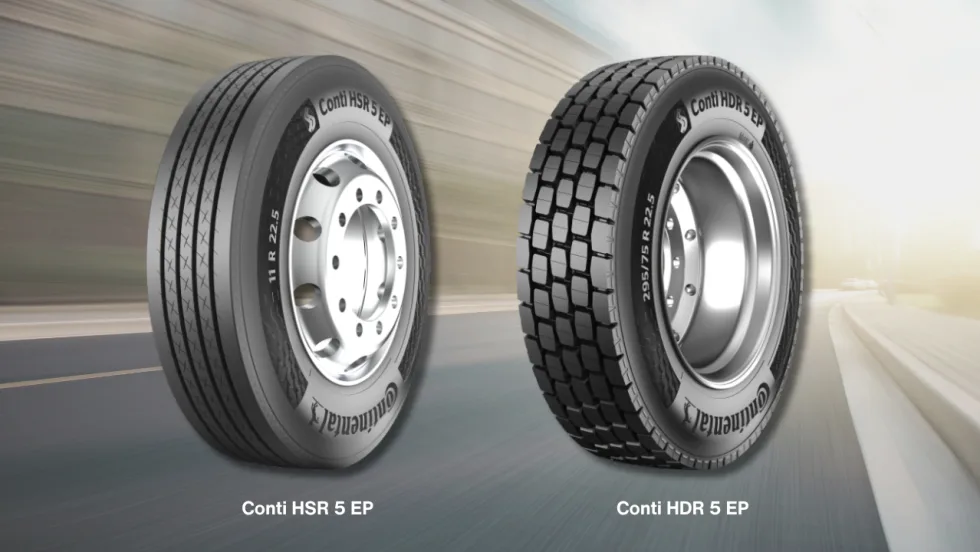
Continental Introduces New Regional Truck Tires
Continental says its new Generation 5 steer and drive tires for regional operations offer longer tread life, with estimated mileage gains of 22% and 19%, respectively.
Read More →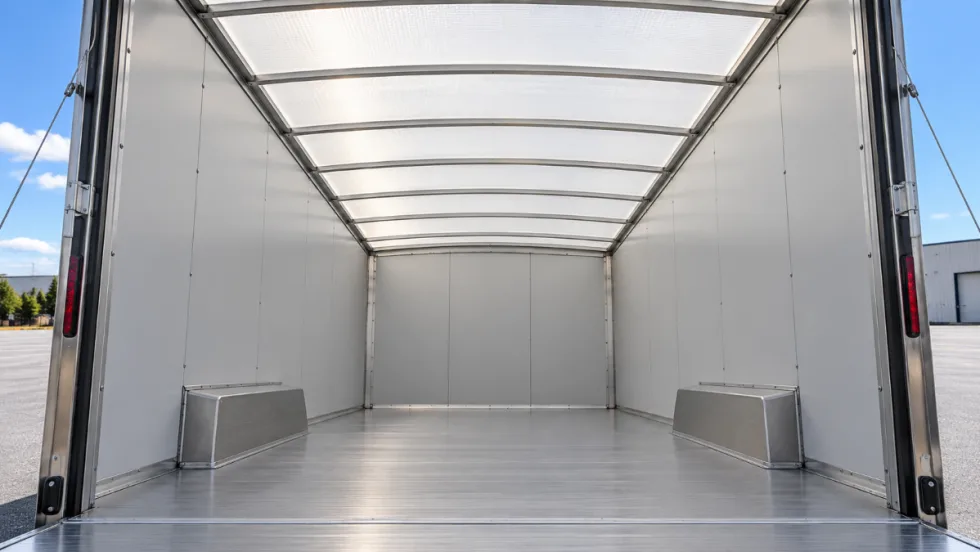
Tekmodo Introduces CargoBright Brand for Translucent Trailer Roofs
CargoBright is designed to diffuse daylight across the cargo area while performing as a working vehicle roof.
Read More →
Fleet Economics Shape Electric Truck Outlook
ACT Research expects costs, charging infrastructure, and technology improvements to drive zero-emission commercial vehicle adoption as federal regulations and incentives retreat.
Read More →
Kodiak Targets Dallas–Houston for Driverless Trucks
The company says its autonomous trucks are completing the I-45 run without a safety observer taking control. It plans to remove the observer by the end of 2026.
Read More →
Kodiak Hauls Produce in California Autonomous Truck Pilot
Kodiak AI and DTL Transport have begun hauling produce between Fresno and Los Angeles under California’s new rules for testing heavy-duty autonomous trucks. A safety driver remains behind the wheel.
Read More →
Used-Truck Remarketing Math Is Changing
Used-truck value is no longer just a concern at trade-in. Decisions made throughout a truck’s first life can influence what it’s worth years later.
Read More →
How Volvo Updated Its D13 for EPA 2027 [Watch]
Volvo’s updated D13 promises lower emissions without sacrificing performance or fuel economy. Take a closer look at what changed inside the engine in this HDT Spotlight video.
Read More →