





If you can't get more trailers, look at making the best use of the space you have:
How to Maximize Trailer Space
Cargo Visibility Better Than Ever with New Tech
Trailer Makers Struggle to Meet High Demand
With fleets "desperate for new dry vans," trailer makers continue to struggle to increase production rates to meet high demand in the face of supply chain, staffing, and material shortage issues.
August 13, 2021
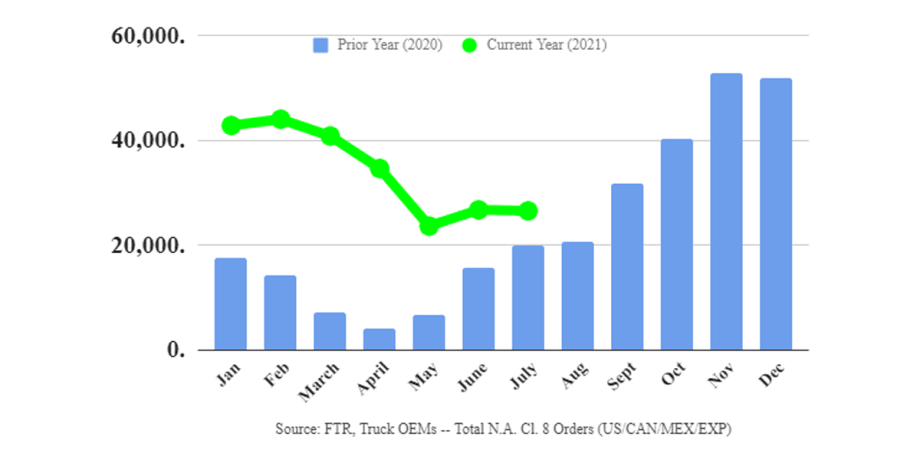
Dry and refrigerated van orders remained paltry in July, as OEMs are booked full for 2021 and not entering orders yet for 2022, according to FTR.
Graph: FTR
3 min to read
Trailer makers continue to struggle to increase production rates to meet high demand in the face of supply chain, staffing, and material shortage issues.
“Fleets are desperate for new dry vans to compensate for the shortage of new trucks and drivers in the current tight capacity environment,” said Don Ake, FTR vice president of commercial vehicles. “There is a growing amount of freight to be moved, and the industry continues to struggle to deliver it on time. Spot loads and rates remain elevated. The semiconductor shortage is limiting Class 8 production, and the driver shortage has been exacerbated by the aftereffects of the pandemic.”
Against that background, however, material and component supplies, as well as staffing issues, continue to generate headwinds for trailer makers, according to ACT Research. Initial reports indicate that OEMs were unable to increase daily production rates in July, it reported.
“OEMs continue to struggle hiring factory workers,” said FTR’s Ake. “Suppliers are struggling to keep pace due to a shortage of manpower and imported parts and components. The supply chain is still experiencing disruptions and bottlenecks.”
Some improvement in production is expected this year, with some indications that staffing challenges may be easing slightly, but there also are indications some supplies will be restricted into next year.
"Pricing and availability of components and materials are resulting in higher trailer prices and a build-up of red-tag units, with the volume of these units expected to continue growing during the upcoming months," said Frank Maly, ACT Research director of commercial vehicle transportation analysis.
Concerns about future availability and pricing are major factors in the unwillingness of OEMs to accept future orders, Maly said, causing uncertainty about when 2022 order books will officially open.
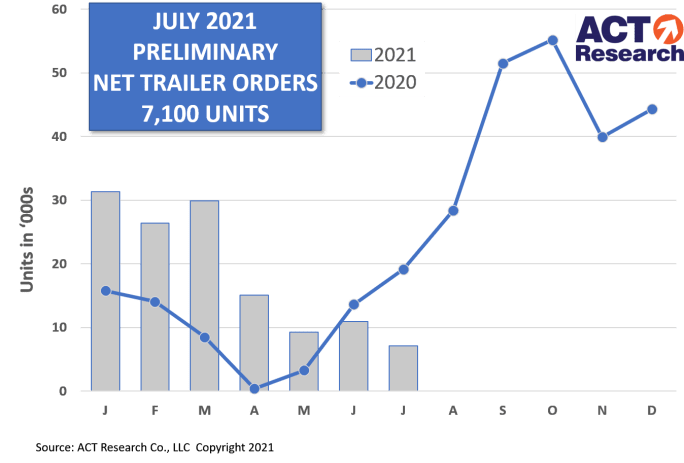
While some announcements point to additional industry capacity coming online, continuing component and staffing issues could make it challenging to fully utilize that potential in the near-term, says ACT Research.
Graph: ACT Research
“Meaningful pent-up demand is occurring due to the reluctance to accept dry van and reefer orders,” he said, with the average industry backlog-to-build ratio extending to the end of the first quarter of 2022 if the industry remains at June 2021 build rates.
July Trailer Orders
These issues are why preliminary reports show trailer orders in July remained low.
Those estimates differ depending on who you’re talking to. ACT Research said trailer OEMs posted 7,100 orders in July, while FTR’s estimate was higher at 8,200 units. Either way, we’re looking at orders about a third less than June and around 60% less than the same month last year.
“Trailer orders remained low for the fourth consecutive month in July. The issue is certainly not demand-related, as fleets remain bullish regarding equipment acquisition,” said ACT’s Maly. “When the order season eventually opens, expect a surge of pent-up volume to flood in, likely resulting in a very significant commitment of available 2022 production capacity.”
Vocational trailer orders haven’t faced as much pressure, but those orders fell in July as well, according to FTR, because fleets have most of their orders in for this year.
More Equipment
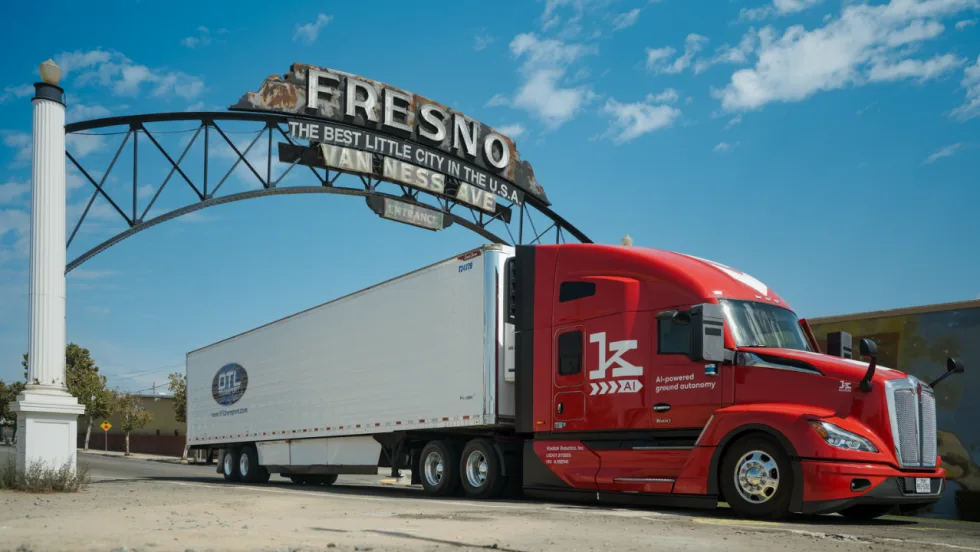
Kodiak Hauls Produce in California Autonomous Truck Pilot
Kodiak AI and DTL Transport have begun hauling produce between Fresno and Los Angeles under California’s new rules for testing heavy-duty autonomous trucks. A safety driver remains behind the wheel.
Read More →
Used-Truck Remarketing Math Is Changing
Used-truck value is no longer just a concern at trade-in. Decisions made throughout a truck’s first life can influence what it’s worth years later.
Read More →
How Volvo Updated Its D13 for EPA 2027 [Watch]
Volvo’s updated D13 promises lower emissions without sacrificing performance or fuel economy. Take a closer look at what changed inside the engine in this HDT Spotlight video.
Read More →
Michelin Tire Improves Efficiency and Durability for Regional Fleets
The Michelin X Multi Energy D2 is a regional haul drive tire engineered to help fleets improve fuel efficiency, durability and traction in demanding stop-and-go operations.
Read More →
ZF Expands Commercial Vehicle Push in North America
ZF is expanding its North American commercial-vehicle presence with new transmission applications, electrification, trailer technology and autonomous-driving systems.
Read More →
Tesla Wants a Self-Driving Semi. Are Cameras Enough?
Could Tesla’s camera-only autonomous driving technology work on an 80,000-pound Semi? In this commentary, HDT's Deborah Lockridge takes a look at Tesla, Cybercab, and how autonomous trucks see the road.
Read More →
Kodiak: Driverless Long-Haul Truck Launch on Track for 2026
Kodiak AI says its driverless long-haul safety case is 93% complete and it remains on track to begin commercial operations by year-end 2026.
Read More →
What DOT’s Automated Vehicle Strategy Means for Trucking
The U.S. Department of Transportation issued a new automated-vehicle strategy that outlines plans for driverless-truck regulations, cross-state freight corridors, and federal safety standards.
Read More →
East Coast Port Launches $45M Electric Truck Push
The Port Authority of New York and New Jersey announced millions in incentives for zero-emission drayage trucks, yard tractors, and new charging hubs near the port.
Read More →
PlusAI Going Public to Fund Autonomous Truck Launch
A SPAC deal could provide PlusAI with up to $300 million as it works toward a 2027 commercial launch of factory-built autonomous trucks.
Read More →