




Top Economists See Truck Production Falloff
Truck production, which has already begun to slide steeply from the record highs posted in 1999, will get steadily worse throughout this year and next before flattening out. But that's not all bad, agreed the six economists and transportation experts who spoke at the Economic Outlook Conference sponsored by the National Truck Equipment Association in Dearborn, Mich., this week.
Truck production, which has already begun to slide steeply from the record highs posted in 1999, will get steadily worse throughout this year and next before flattening out.
But that's not all bad, agreed the six economists and transportation experts who spoke at the Economic Outlook Conference sponsored by the National Truck Equipment Association in Dearborn, Mich., this week.
Lower production may help reduce the glut of used trucks currently on the market.
"Right now, we're seeing a rash of 'drive-through' repossessions," said Dan Lukas of American Commercial Research Co. "The driver parks his truck at the dealership, tosses his keys on the counter and says 'Bye.'"
On the other hand, Lukas said the driver shortage is so intense that many fleets may be obliged to raise driver wages to unprecedented heights. "If fleet drivers start earning $55,000 a year, a lot of owner-operators may have second thoughts about staying in business for themselves and opt to become company drivers."
Heavy truck prices also are languishing, said David Wyss, chief economist for Standard & Poors Data Resources. But he sees them leveling as production gets down to more normal levels from the 1999 sales binge.
Wyss also predicts the U.S. will lose market share in the world truck market, down from 38% this year to 30% in 2005. The U.S. will continue to be the primary producer of trucks for the Canadian and Mexican markets, but Japan and China will increase market share.
Currently, medium truck production is still holding strong -- actually reaching record levels in the first two quarters. But the experts predicted a 6% falloff by the end of the year and an additional 9% in 2001.
"The decline in heavy-duty truck production in combination with other leading economic indicators provides strong evidence of an economic downturn for segments of the commercial truck and transportation equipment industry," said Stephen Latin- Kasper, NTEA director of market data and research.
Wyss said North America's share of global truck output is expected to decline from 38% in 2000 to 30% in 2005.
None of the six conference participants predicted a major recession. "It takes several months for higher interest rates imposed by the Fed to achieve a slowing of the economy," said Wyss. "That means the economy will continue to soften through at least the middle of next year.
"But Alan Greenspan will jump on the accelerator as soon as he thinks the threat of inflation is over."
More Fleet Management
Is Your Parts Procurement Process Reactive or Proactive?
Ready to revamp your parts procurement process? Learn how now with “Strategic Parts Purchasing: A Process Checklist”
Read More →
What Trucking Events are Happening in 2026?
Looking for trucking-related conventions, expos, and other events? Heavy Duty Trucking has developed this list of national and larger regional trucking shows and events.
Read More →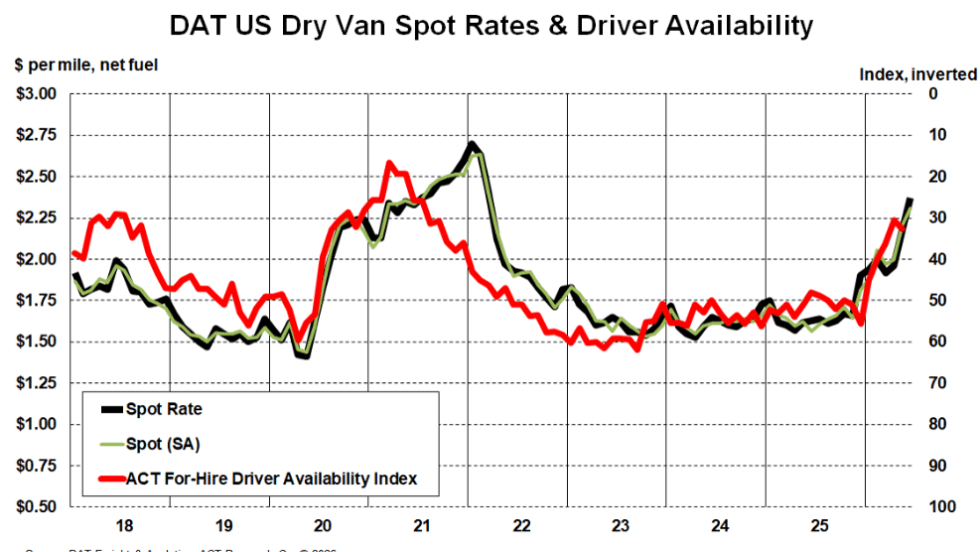
Truckload Rates Keep Rising as Tight Capacity Fuels Freight Market Recovery
Spot and contract rates continued climbing in May and June, not because freight demand is surging, but because fewer trucks and drivers are available.
Read More →
What Geotab's New AI Connector Means for Fleets
Fleets can now ask their usual AI assistants questions about maintenance, safety, fuel use, and vehicle performance, using their live Geotab data, and take action on the answers without leaving their preferred AI tool.
Read More →
New C.H. Robinson Tool Opens Door to More Predictable Freight
BidBoardX lets carriers search, bid on, and secure committed freight opportunities through a single digital marketplace.
Read More →
New York City's Microhub Project is Delivering Results
Trucking, last-mile delivery companies, and environmental advocates like what they are seeing so far with New York's microhub program.
Read More →
Why Truck Detention Keeps Costing Fleets Time and Money
A 2024 ATRI study found detention affects nearly 40% of truckload stops and costs the industry more than $15 billion annually. Despite the toll on drivers, fleets, and supply chains, the problem remains stubbornly persistent.
Read More →
Time is Running Out to Apply for Exclusive HDT Event
Heavy Duty Trucking Exchange brings fleet managers and suppliers together for the deeper conversations that lead to ideas, partnerships, and solutions. Time is running out to apply for the September event.
Read More →
Amazon Launches Less-Than-Truckload Freight Offering for All Businesses
This launch is the latest addition to Amazon Supply Chain Services, a portfolio of supply chain capabilities from Amazon, including freight, distribution, fulfillment, and parcel shipping.
Read More →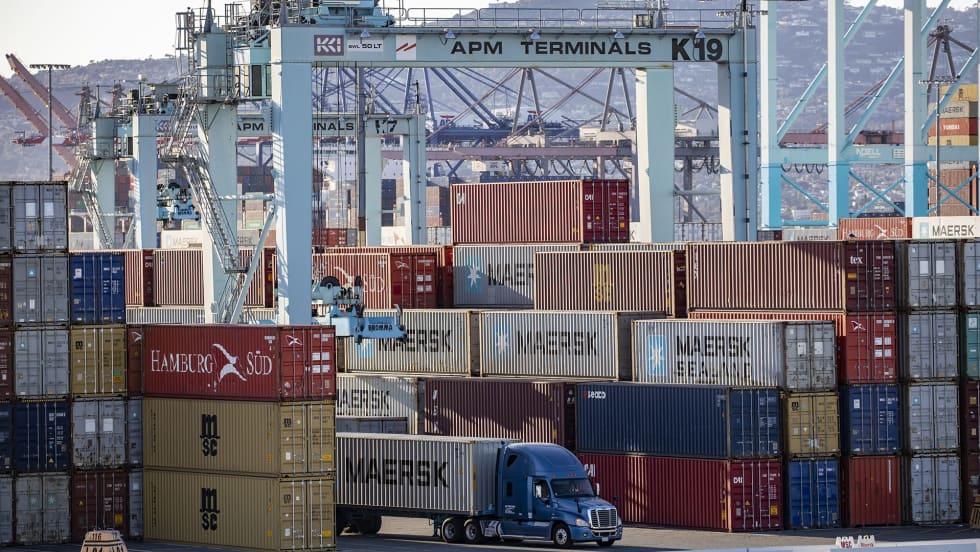
Import Cargo Volume to See Year-Over-Year Gain Again in June, Then Remain Below 2025 Levels Into Fall
After July, the report predicts a weakening in import volume as consumer uncertainty remains high and the impact of increasing inflation takes its toll.
Read More →