




Supreme Court to Hear Challenge of LA Ports' Clean Trucks Program
The U.S. Supreme Court will hear the American Trucking Associations' suit against the Port of Los Angeles' Clean Trucks Program, with a ruling expected by July
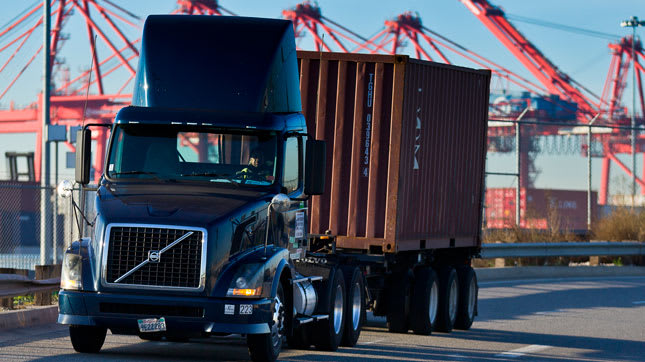
The U.S. Supreme Court will hear the American Trucking Associations' suit against the Port of Los Angeles' Clean Trucks Program, with a ruling expected by July.
The case has been making its way through the court system ever since the program went into effect more than four years ago. ATA challenged the program, arguing that federal law prohibits the locally run port from making rules that impede interstate commerce.
The Clean Truck Program, set up in 2008, established criteria for providers of drayage services at the Port, including a requirement to commit to using only employee drivers, rather than the independent contractors typically working the ports, by 2013 in a phased-in schedule. The plan would allow the port to hold those companies accountable for maintaining trucks and employing properly credentialed drivers.
The Port of Long Beach had a similar program that did not include the owner-operator ban. The ATA later settled its suit with Long Beach.
ATA released a statement saying it is pleased with the court's decision to hear the case.
"The Port's rules challenged by ATA, which range from a requirement that carriers display Port-mandated information on the sides of trucks entering and leaving the Port, to a requirement that trucks conform to the Port's off-street parking rules even when not on Port property, have nothing to do with improving air quality," ATA President and CEO Bill Graves said. "We are pleased the Supreme Court will review the erroneous decision of the appellate court."
Although U.S. District Judge Christina Snyder in Los Angeles originally granted ATA's request for a preliminary injunction against certain concessions in the plan, in 2010, she rejected the trucking industry's challenge. Last year, the U.S. 9th Circuit Court of Appeals affirmed her decision and upheld all the regulations -- except the rule restricting independent contractors.
"A container port like the Port of Los Angeles is akin to a publicly managed transportation infrastructure, like a highway or a bridge," U.S. Solicitor General Donald Verrilli Jr. told the justices in a brief filed in November, reports the LA Times. He said it could pose a problem at ports and other facilities across the nation if cities were free to impose restrictions on truckers who operate in publicly owned facilities.
The U.S. Chamber of Commerce also urged the court to hear the case, supporting the ATA's view.
Environmental groups, however, accuse the trucking industry of trying to weaken a program that delivers environmental and public health benefits.
"This continues to be a hard-fought battle against an industry clinging to its polluting practices," said Melissa Lin Perrella, senior attorney with NRDC. "The clean truck program at the Port of LA has dramatically reduced harmful air pollution from port trucking, but it won't stay that way unless trucking companies step up and shoulder the necessary costs of upkeep and care. The Ports clean truck program requires just that."
ATA begs to differ.
"Our objections to the Port's program have always been business-related, and not, as certain reactionary groups have asserted, out of a desire to cling to polluting ways," said Graves.
ATA notes that the Clean Trucks Program, "without these onerous restrictions, has improved air quality, a fact environmental groups have repeatedly conceded."
"Under the Clean Truck Program, industry and the Port have succeeded in working together to replace outdated equipment with new, efficient trucks," Graves said. "We are proud to have participated in a program that improved air quality.
"That success means there is no need to interfere with Congress' intention that the motor carrier industry be shaped by the forces of competition, under a uniform federal regulatory environment, and not by state and local governments that have their own ideas about how the industry should be structured."
Related Stories
7/20/2011 Judge Rules ATA-Long Beach Settlement Broke State Law
8/27/2010 Judge Upholds Controversial Port Plan to Ban Owner-Operators
7/29/2008 ATA Files Suit to Block Los Angeles and Long Beach Ports Concession Plans
5/19/2008 LA Port to Ban Owner-Operators
More Fleet Management

Geotab Links Fleet Card to Vehicle Data
The new card combines fuel discounts with telematics-based purchase controls. Geotab’s analysis also points to potential savings from choosing lower-priced fuel stops.
Read More →
How MFA Helps Protect Trucking Fleets
Multi-factor authentication adds protection when passwords are stolen. Here’s how it works and where fleets should start.
Read More →
How Better Freight Data Helps Trucking Teams Get Ahead of Disruption
Trucking and logistics teams have plenty of data. The problem is getting the right information in front of the right people soon enough to act. Better-connected data can help teams spot trouble earlier and make smarter decisions before small problems become big ones.
Read More →

Trimble: Taking Artificial Intelligence in Trucking Beyond Faster Tasks
At Insight 2026, Trimble executives argued that fleets may need to redesign workflows to get more from AI as it introduced new products and enhancements. AI’s value will depend on how fleets combine automation with their people's knowledge.
Read More →
Build a bulletproof fleet: Uniting ELDs and dash cams for total compliance
An ELD can prove compliance, but it cannot always prove what happened on the road. Discover how uniting accurate ELD data with AI-powered dash cam video can help your fleet strengthen compliance, defend against liability, protect drivers and reduce operational costs.
Read More →
Nominations Open for HDT Emerging Leaders
Heavy Duty Trucking is looking for accomplished trucking fleet professionals under 40 who are making an impact and helping lead the industry forward.
Read More →
Why Private Fleets Are Taking More Freight
Private fleets are putting their own trucks on demanding customers and high-cost lanes as companies seek greater control over service, costs, and capacity.
Read More →
Color Match Smarter: Tools That Restore & Perform
For fleet managers and collision repair professionals keeping heavy-duty trucks on the road, getting the color right the first time isn't just about appearance — it's about efficiency, turnaround time, and bottom-line results. Discover how today's digital color tools are transforming the repair process from guesswork to precision.
Read More →
FMCSA Pauses Biennial-Update Enforcement Amid Motus Transition
Carriers whose updates were due on or after June 1 have more time, while FMCSA works to stabilize its new registration system and warns of phishing sites impersonating its new carrier registration system, Motus.
Read More →
2026 Blueprint for Countering Smarter Supply Chain Theft
Cargo theft is no longer just the cost of doing business. It's a multi-billion-dollar criminal enterprise exploiting vulnerabilities across your fleet, drivers, and supply chain.
Read More →