




Supreme Court Nixes J.B. Hunt Appeal on Driver Break Lawsuit
By declining to hear a review of J.B. Hunt's appeal to overturn a lower court ruling, the U.S. Supreme Court has allowed a class action lawsuit filed by truck drivers against the motor carrier over meal and rest break rules to go forward. The lawsuit is headed to court in September—11 years after it was initiated.

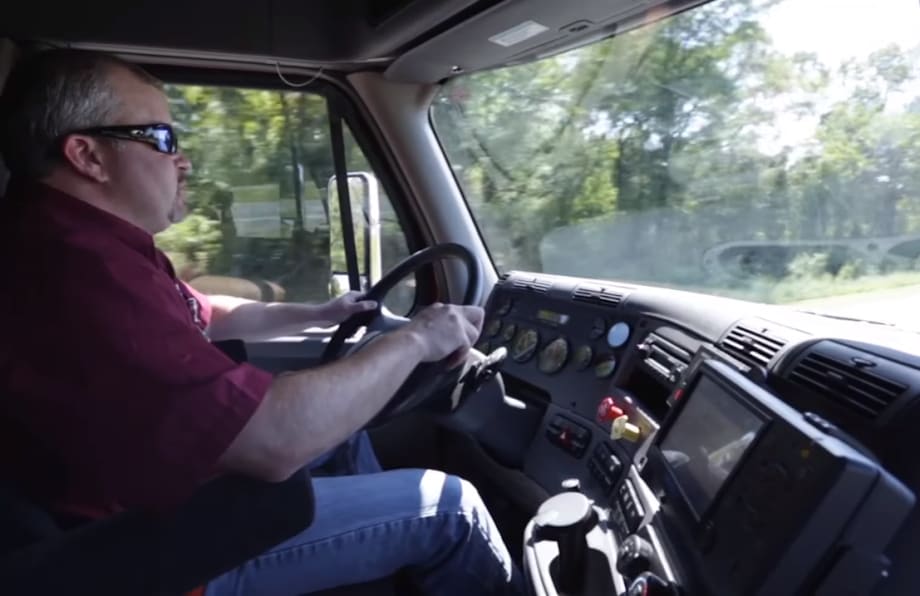
Court case on state preemptiuon of federal break rules will be heard in September.
Maverick
By declining to hear a review of J.B. Hunt's appeal to overturn a lower court ruling, the U.S. Supreme Court has allowed a class action lawsuit filed by truck drivers against the motor carrier over meal and rest break rules to go forward. The lawsuit is headed to court in September—11 years after it was initiated.
What this legal development telegraphs to trucking overall is that the surest path to resolving the issue of whether states may preempt federal hours-of-service rules for truckers remains to get a bill passed by Congress that will clarify the legalities once and for all.
To be sure, there has been no want of trying to fix this regulatory glitch. Much effort has been expended on Capitol Hill over the last few years by key trucking interests, including the American Trucking Associations and the Truckload Carriers Association.
“TCA is disappointed that the Supreme Court rejected the opportunity hear the Ortega v. J.B. Hunt appeal case and issue its opinion on such a controversial matter,” David Heller, vice president of government affairs for the Truckload Carriers Association, told HDT. “We will continue to explore every opportunity to ensure that our legislators consider language, such as the Denham Amendment, to establish one federal uniform measure that defines a truck driver’s meal and rest break.”
As pointed out in an April 25 letter to House Members by American Trucking Associations President & CEO Chris Spear, a provision of the Federal Aviation Administration Authorization (FAAA) Act of 1994 “provided motor carriers with a uniform set of rules and regulations across all states. This was because Congress, in an overwhelmingly bipartisan effort, recognized that a patchwork of state laws and regulations disrupts the free flow of interstate commerce and threatens the safety of our nation’s roads and bridges.”
But that measure apparently has lacked enough bite to convince states to back off preemption. Spear’s letter states that there has been “an erosion of this [1994] provision with the imposition of state meal and rest breaks that run counter to national uniformity.” He also contends that the offending state laws are “duplicative” and are “not grounded in safety.”
What’s more, according to Spear, these laws are not being enforced by the states. Rather, he claims, the statutes are “being used to fuel spurious litigation designed to extort the trucking industry, impairing the safe and efficient movement of interstate goods.”
As laid out in an amicus brief filed by the U.S. Chamber of Commerce supporting J.B. Hunt in the court case, the federal government has primacy over how interstate trucking is regulated. The brief sets that position up thusly: While the Motor Carrier Reform Act of 1980 deregulated trucking, “after more than a dozen years of continued tariff and price regulation of motor carriers, Congress enacted the Federal Aviation Administration Authorization (FAAA) Act of 1994… upon finding that state governance of intrastate transportation of property had become ‘unreasonably burden[some]’ to ‘free trade, interstate commerce, and American consumers.’”
The brief then argues that the language of the FAAA Act instructs that as regards motor carriers of property. no state (or political subdivision of a state or political authority of two or more states) may enact or enforce ”a law, regulation, or other provisions having the force and effect of law related to a price, route, or service of any motor carrier . . . with respect to the transportation of property.”
According to a new report by The Wall Street Journal, attorneys representing drivers in the class action suit hold that constitutional precedents establishing that federal rules supersede state regulations in interstate commerce don’t apply in the California case because the affected drivers work in operations that are almost entirely intrastate.
Back in Washington, the aforementioned amendment pushed for by Rep. Jeff Denham (R-CA) remains the vehicle of choice clarifying and codifying that states cannot set their own rules on meal and rest breaks for truck drivers. Denham’s amendment, which was attached to the latest FAA Reauthorization Act (H.R. 4), would require interstate CDL holders to adhere to federal rules ahead of any state-mandated regulations.
Related: House Approves Rider to Thwart State Preemption of Trucker HOS Rules
More Fleet Management

Color Match Smarter: Tools That Restore & Perform
For fleet managers and collision repair professionals keeping heavy-duty trucks on the road, getting the color right the first time isn't just about appearance — it's about efficiency, turnaround time, and bottom-line results. Discover how today's digital color tools are transforming the repair process from guesswork to precision.
Read More →
FMCSA Pauses Biennial-Update Enforcement Amid Motus Transition
Carriers whose updates were due on or after June 1 have more time, while FMCSA works to stabilize its new registration system and warns of phishing sites impersonating its new carrier registration system, Motus.
Read More →
2026 Blueprint for Countering Smarter Supply Chain Theft
Cargo theft is no longer just the cost of doing business. It's a multi-billion-dollar criminal enterprise exploiting vulnerabilities across your fleet, drivers, and supply chain.
Read More →


How Telematics Improves Visibility, Control, and Performance in Refrigerated Fleets
Explore how telematics help refrigerated fleets improve visibility, uptime, efficiency, compliance, and cargo protection across connected cold chain operations.
Read More →
What the U.S.-Canada Trade War Means for Trucking
Escalating U.S.-Canada tariffs could disrupt cross-border freight, reduce truck volumes, raise costs, and create new uncertainty for carriers on both sides of the border.
Read More →
What Are Trucking’s Top Concerns for 2026?
The American Transportation Research Institute wants to know what's worrying trucking fleet managers, drivers, and other stakeholders in its annual Industry Issues survey.
Read More →
American Trucking Associations Looks for a New Leader
ATA President and CEO Chris Spear abruptly left his job at the association on August 21, at a pivotal time for the trucking industry.
Read More →
Public Wi-Fi Cybersecurity Risks: How Truck Drivers and Fleets Can Protect Their Data
Public Wi-Fi can expose truck drivers and fleets to credential theft, malware, and other cyber threats. Here’s how to reduce the risk on the road.
Read More →
For Nicky Cupp, Fleet Innovation Starts With Frustration
HDT Truck Fleet Innovator Nicky Cupp turns everyday pain points at Fraley & Schilling into opportunities for better technology and smarter processes.
Read More →
Adam Buttgenbach’s Approach to Electric Trucks: Start With Where They Fit
HDT Truck Fleet Innovator Adam Buttgenbach helped PepsiCo build one of North America’s largest EV fleets by focusing on where electric trucks make operational sense.
Read More →