




Super Trucks Race in Europe
Truck racing had its origins in the United States in the 1970s. But while the sport has all but died here, on the "other side of the pond" in Europe, it's still going strong. This weekend,
Truck racing had its origins in the United States in the 1970s. But while the sport has all but died here, on the "other side of the pond" in Europe, it's still going strong. This weekend, the Caterpillar-sponsored rig run by Britain's Chris Hodge Truck Racing Developments Ltd. will see if it can keep its European Championship lead.
Last weekend, driver Harri Luostarinen took two wins, one second place and one third place in Round 8 of the FIA European Truck Racing Cup in the Czech Republic, taking the lead in the championship with just two rounds remaining.
The team competes again this weekend in Zolder, Belgium. Then the series wraps up Oct. 7-8 in Jarama, Spain. Previous races have been held in France, Spain, Italy, Austria, France, Germany and Finland.
Truck racing in Europe is divided into two leagues: Race Trucks, which are based on road-going trucks; and Super Race Trucks, which are built specifically for racing.
The TRD team competes in the Super Race Trucks category, along with three trucks from Mercedes Benz, five trucks from MAN, and a new Tatra. They race at speeds of 135 kilometers per hour (83.7 mph).
The first racing events in Europe took place in the early '80s in Holland. These consisted of regular road trucks competing in straightline drag races, then moving on to "club" competitions on short oval stock car tracks, before finally moving on to a "real" circuit at Zandvoort. It wasn't until 1983-84, when the first French "Grand Prix Camion" took place at the Circuit Paul Ricard, that the sport began to take shape.
The first UK event was held at Donington Park in 1984 and established a maximum speed limit of 160 kilometers per hour (99.2 mph). The trucks at this race were essentially standard road trucks, the only major performance modification being the "tuning" of the diesel pump to improve engine performance. The Italian who won the first Multipart British Truck GP had unhooked a trailer on Friday night and was back on the road with a new load Monday morning.
European truck racing was off and running. The events drew huge crowds and lots of media attention. Truck manufacturers started competing in these events in the late 1980s, the first being Sweden's Scania. Other manufacturers had a major, if unofficial, involvement. For instance, multiple European Champion Curt Goransson, who dominated the sport between 1986 and 1999, drove a very special Volvo N12, whose engines regularly received the attention of factory technicians. Soon, truck racing in Europe began to be recognized as a technology showcase for the truck manufacturers. And along with the new high-tech equipment came a new breed of professional race truck drivers, who could coax the thousandths of a second that made the difference between winning and coming in second.
Between 1985 and 1993, the technical regulations for the sport remained virtually unchanged. Trucks competed in three classes, based solely on engine capacity.
In 1994, the race trucks were split into the two categories: Race Trucks, production-based with only limited modifications permitted, and Super Trucks, developed to cater to the factory-supported "prototypes," allowing special chassis, transmissions and brake systems. The Super Trucks outwardly resemble their roadgoing equivalents, but underneath are high-tech mobile test beds. The engines are limited to 12 liters, but they're nevertheless producing up to 1,500 horsepower.
Harri Luostarinen is driving an all-new Caterpillar-TRD Supertruck powered by a Caterpillar C12 engine featuring a 4-valve head, twin Schwitzer S300 turbochargers and EUI fuel system. The power output exceeds 1,400 horsepower, with the power curve starting at 1500 rpm and remaining flat up to 2200 rpm. It can accelerate from zero to 100 kph (62 mph) in 3.9 seconds. The transmission is a ZF HP600, five-speed automatic with manual sequential facility. The chassis is a new TRD in-house design made from special high-tensile steel. The truck weighs 5,000 kilograms, which is the minimum allowed under the racing regulations.
These trucks don't race on oval tracks, but on road race "circuits" - irregular courses usually 1.5 to 2.5 miles in length. Lap times of the top 10 entries are covered by just fractions of a second at most circuits. The Caterpillar-TRD team won the title in 1997 and are looking forward to the possibility of repeating the feat.
For more information, visit Caterpillar Race Trucks and Chris Hodge Truck Racing Developments Ltd.
More Equipment

PlusAI Going Public to Fund Autonomous Truck Launch
A SPAC deal could provide PlusAI with up to $300 million as it works toward a 2027 commercial launch of factory-built autonomous trucks.
Read More →
NHTSA Moves to Rewrite Truck Fuel-Economy Rules
The National Highway Traffic Safety Administration says it lacks authority to regulate medium- and heavy-duty truck engines separately from complete vehicles, but the existing standards have not yet been eliminated.
Read More →
Detroit Opens Orders for EPA 2027 Engines
Detroit isn’t starting from scratch to meet EPA 2027 diesel emissions standards. Its Gen 6 DD13 and DD15 engines keep much of today’s platform while updating the fuel and aftertreatment systems.
Read More →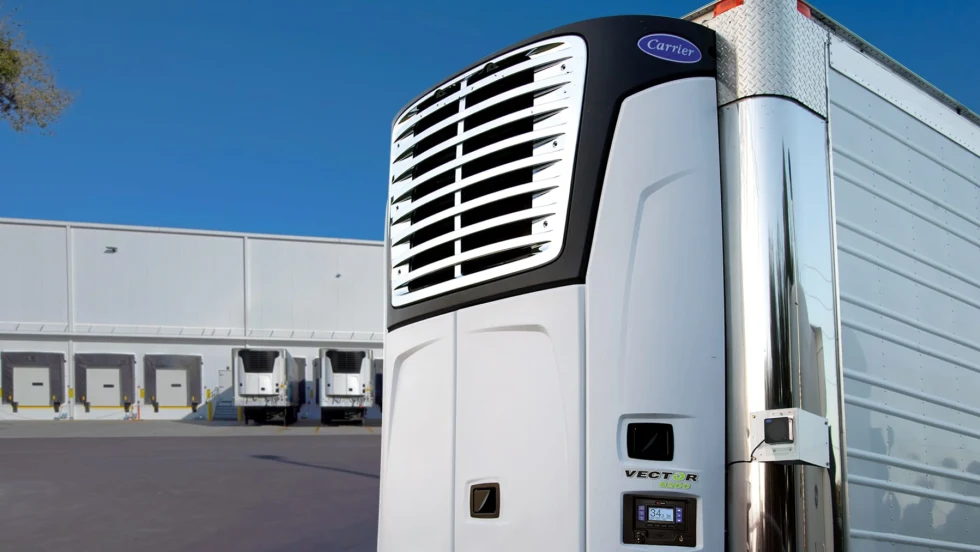
Carrier Transicold Adds All-Electric TRU for Stationary Cold Storage
Carrier Transicold’s new Vector 8200 all-electric transport refrigeration unit gives fleets a diesel-free option for temporary refrigerated and frozen trailer storage.
Read More →
A Closer Look at Kenworth’s Electric T880E Vocational Truck [Video]
Learn more about Kenworth's T880E battery-electric vocational truck at the Paccar Technical Center, including its range, applications, upfitting considerations, and PTO options, in this HDT Spotlight video.
Read More →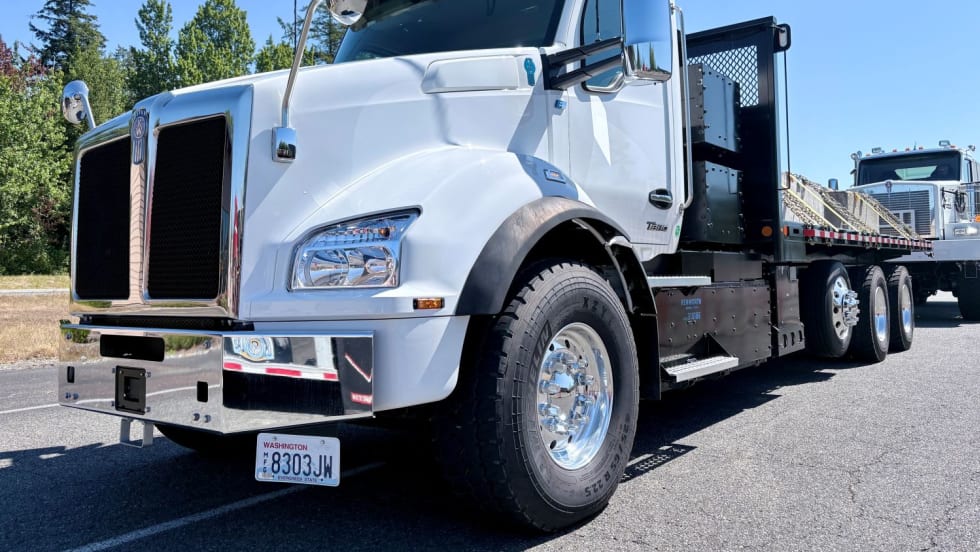
Kenworth T880E Brings EV Power to Vocational Trucks
A closer look at the Kenworth T880E’s range, charging, powertrain and upfit options — and where fleets are showing the most interest.
Read More →
What the U.S.-Canada Trade War Means for Trucking
Escalating U.S.-Canada tariffs could disrupt cross-border freight, reduce truck volumes, raise costs, and create new uncertainty for carriers on both sides of the border.
Read More →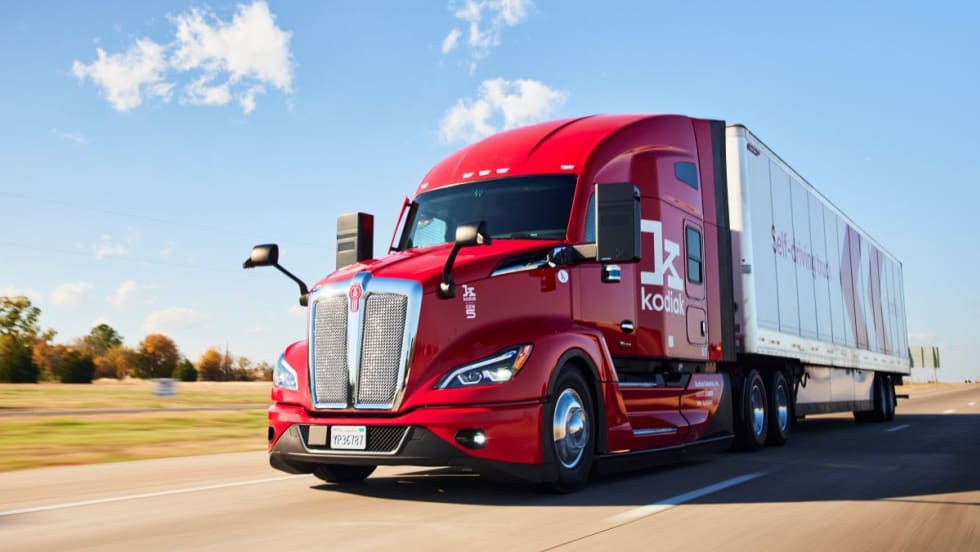
Autonomous Truck Testing Moves Ahead in California as Teamsters Challenge Rules
California has begun permitting heavy-duty autonomous truck testing, with Aurora and Kodiak among the first to receive approval, as the Teamsters sue the DMV over the new regulations.
Read More →
Behind the Wheel of the New Mack Anthem [Video]
HDT takes the new Mack Anthem around Mack’s Pennsylvania test track to see how its driver-focused design, technology, visibility and handling perform from behind the wheel.
Read More →
DTNA Plans New U.S. Truck Plant as Manufacturing Footprint Shifts
Daimler Truck North America is evaluating sites for a new assembly plant expected to open in 2029 while winding down operations at its longtime Portland manufacturing facility.
Read More →